Showing posts with label Auden. Show all posts

Friday, April 10, 2009

Temporary Victory

"The worst thing about such rhetorical devices, about any of the mechanisms and patented insights that make up so much of a style, is that they are habit-forming, something the style demands in ever-increasing quantities. The poet learns subtle variations or extensions he once would have thought unlikely or impossible; but he permits himself excesses, both quantitative and qualitative, that once would have appalled him. This is how styles and more than styles degenerate. Our victories are temporary victories; and nothing makes us more susceptible to a vice than the knowledge that we have already overcome it. (The fact that one once used an argument somehow seems to give one the right to ignore it.)"

— Randall Jarrell, Randall Jarrell on W.H. Auden, 50

Saturday, January 12, 2008

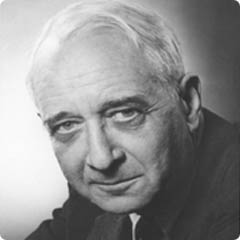
I never realized before that W.H. Auden had a skin disease. It's called Touraine-Solente-Golé Syndrome, or pachydermoperiostosis, and its symptoms include "enlargement of the fingers and toes (clubbing), a condition in which there is a fibrous covering on the ends of the long bones (periostosis), coarse facial features, increased bulk of the skin on the scalp forming folds, depressions or furrows of the scalp (cutis verticis gyrata), and/or excessive sweating of the hands and feet."

I always thought his face got that way as a result of smoking and, you know, worrying a lot.

Monday, September 24, 2007

Howl, New Jersey, Holla

Have either of you looked at a little book called The Poem that Changed America: "Howl" Fifty Years Later? Silly title, I know, but it's actually pretty useful. The collection is edited by Jason Shinder, Ginsberg's personal assistant from the late 70s on, and his introduction is kind of embarrassingly idolatrous and not very well-written. But the volume does bring together a number of interesting reactions to "Howl" (by, among others, Amiri Baraka, Marjorie Perloff (who argues that Ginsberg is a direct inheritor of Modernism [OK, fine, whatever] and that "Howl" is really about WWII [more interesting]), Billy Collins (!), John Cage, and Rick Moody) as well as including a facsimile of the original mimeographed edition, which "costed [sic] $10.00 typed by poet Robert Creely [sic] dittoed by Martha Rexroth transported by me to the hands of Robert Lavigne [sic] in exchange for several drawings," according to Ginsberg's inscription. (Doesn't $10 seem like kind of a lot of money for 1956? Seems like one could do a Lawrence Rainey-esque analysis of the economics of this first presentation.)

A couple of remarks about the poem itself: has anyone written on the possible influence of W.H. Auden on Ginsberg? Auden is mentioned in Shinder's preface as one of Ginsberg's "'enemies'," but also an "eternal presence": I don't know much about their personal relationship. But on this reading I notice quite a few touches which seem Audenesque; for one, the unexpected dropping and adding of definite articles (examples include "the drear light of Zoo" and "the last fantastic book thrown out of the tenement window"). This is something Auden does a lot, and I think the effect in his poems is usually to either particularize or universalize the rhetorical situation of any given poem: kind of a Zoom-In/Zoom-Out effect. In "Howl," Ginsberg utilizes this to keep the reader involved on a macrosociological level ("this is an important poem: it's about a generation, it's about a nation, it's about history") and on a more micro-, affective/emotional level ("this is about the author, his friends, his mother, or me"). It's a technique Whitman uses too, of course, but Ginsberg's interest in including shabby, sordid or ironic details which temporarily undercut the grandeur of the macro-phrases (e.g. "in beards and shorts with big pacifist eyes sexy in their dark skin passing out incomprehensible leaflets"; compare "Spain 1937") is closer to (early) Auden, I think.

Second idea: Ginsberg's insistent return to New Jersey place names ("Paterson," "Newark," "the filthy Passaic," etc.), among, admittedly, a lot of other place names, has to be understood, in its historical context, as a very complicated rhetorical move. Because New Jersey was not just where Ginsberg was from, and thus a signifier of the "real" or the "autobiographical," but also, by the mid-1950s, a landscape that was newly literary, thanks to the ecstatic critical reception of William Carlos Williams' still-in-progress Paterson. As Perloff points out her chapter on him in The Poetics of Indeterminacy, the publication of Paterson had finally secured a major reputation for Williams, long considered a marginal figure of the Modernist movement. Thus Paterson, which ten years earlier would have been fairly meaningless as a literary signifier, now evokes a whole complex of ideas about Modernism and American poetry that Ginsberg slyly insists upon. (And WCW also wrote the introduction to Howl's first commercial edition, as Adrienne pointed out months ago.)

Anyway, it's interesting to think of the symbolic capital that New Jersey acquires in this period, as the breeding ground of the only ideologically correct,* homegrown version of High Modernism (Williams') as well as the most incendiary updating/challenging of the academic version of Modernism: significantly a humble state, in proximity to a great metropolis but not containing it, a place synonymous with the simple, homely and plain, which also just happens to be the site of some of the worst industrial exploitation and ecological spoilage in the entire country. This is quite a different pole to orient us than London or New York, and the attitude of its writers to it is also significantly different: sure, it's a waste land, they tell us, but it's our waste land, and we like it that way. And this in turn might have something to do with the remarks by Leslie Fiedler that Adrienne just posted, about the American mediation (some would say adulteration) of Modernism through regionalism. But I'm getting hungry, so I'd better stop here and drag myself through some Brooklyn streets to go looking for a sandwich fix.

* If you ignore the Communism.

Sunday, September 16, 2007

Remembering the Thirties

By Donald Davie:

I

Hearing one saga, we enact the next.
We please our elders when we sit enthralled;
But then they're puzzled; and at least they've vexed
To have their youth so avidly recalled.

It dawns upon the veterans after all
That what for them were agonies, for us
Are high-brow thrillers, though historical;
And all their feats quite strictly fabulous.

This novel written fifteen years ago,
Set in my boyhood and my boyhood home,
These poems about "abandoned workings," show
Worlds more remote than Ithaca or Rome.

The Anschluss, Guernica — all the names
At which those poets thrilled or were afraid
For me mean schools and schoolmasters and games;
And in the process some-one is betrayed.

Ourselves perhaps. The Devil for a joke
Might carve his own initials on our desk,
And yet we'd miss the point because he spoke
An idiom too dated, Audenesque.

Ralegh's Guiana also killed his son.
A pretty pickle if we came to see
The tallest story really packed a gun,
The Telemachiad an Odyssey.

II

Even to them the tales were not so true
As not to be ridiculous as well;
The ironmaster met his Waterloo,
But Rider Haggard rode along the fell.

"Leave for Cape Wrath tonight!" They lounged away
On Fleming's trek or Isherwood's ascent.
England expected every man that day
To show his motives were ambivalent.

They played the fool, not to appear as fools
In time's long glass. A deprecating air
Disarmed, they thought, the jeers of later schools;
Yet irony itself is doctrinaire,

And curiously, nothing now betrays
Their type to time's derision like this coy
Insistence on the quizzical, their craze
For showing Hector was a mother's boy.

A neutral tone is nowadays preferred.
And yet it may be better, if we must,
To praise a stance impressive and absurd
Than not to see the hero for the dust.

For courage is the vegetable king,
The sprig of all ontologies, the weed
That beards the slag-heap with his hectoring,
Whose green adventure is to run to seed.

(1953)

Thursday, September 13, 2007

C'mere, you

I have a tremendous critical crush on Lionel Trilling. It's the dangerous kind of crush, one where you're not quite sure you really ought to like the other person, or whether your friends would approve: a certain sense of "What am I getting myself into here?" attends my reading, especially of his more sweeping and impressive moments. After all, Trilling in many ways represents what the radical energies of the 60s and 70s swept away, not without some very good reasons; and his general theoretical bent, though emerging out of Trotskyism and addressing itself to fellow liberal intellectuals of the 1940s, is usually seen as a harbinger of neoconservatism (the most substantial recent article I could find on him is from the Weekly Standard, which gives you some idea).

But as Trilling points out in his preface, "a criticism which has its heart the interests of liberalism might find its most useful work not in conforming liberalism in its general sense of rightness but rather in putting under some degree of pressure the liberal ideas and assumptions of the present time" (x). And putting ideas under pressure is what Trilling does brilliantly. I read just four essays (five including the preface) from his 1950 book The Liberal Imagination — I borrowed my dad's copy; it's apparently, Yaron informs me, out of print — but they were real doozies: "Reality and America," "The Function of the Little Magazine," "The Sense of the Past" and "The Kinsey Report." Each of them is amazing and challenging in its own way, devoting itself to very specific contemporary issues while nonetheless making up part of an expansive, deeply felt and cogently defended view of literature. (Adrienne, you might want to check out the first one; it has some really interesting insights about the realist novel and the liberal preference for Theodore Dreiser over Henry James. And he also has pieces, in the same book, on Sherwood Anderson, Huckleberry Finn, and "Manners, Morals, and the Novel.")

Anyway, all of the essays have a lot to recommend them, not least for their usefulness in summing up late 40s critical and political attitudes (often in the process of critiquing them). "The Sense of the Past," for instance, is an ambivalent meditation on the New Criticism and its methods, which Trilling argues have to be tempered with an awareness of literary works as "historical facts" — pretty much the deconstruction/new historicism debate of the 1980s in embryo. The one on the Kinsey Report, on the other hand, is the most unsettling, in part because Trilling violently resists the report's attempt to destigmatize homosexuality, a stance he takes in part because of his own strong allegiance to Freudianism. This is where you begin to see the pernicious side of Trilling's neoconservative leanings; though one wonders if Trilling were alive today, when homosexuality as a social fact seems so much more evident and has been so much more cogently argued for, if he wouldn't temper his objections so much. Maybe that's wishful thinking. At any rate, its early considerations of the role science can and should play in social discourse are fascinating and valuable.

Anyway, I'm just going to end with a list of quotes I liked. And I'm going to let out a little sigh as I finish typing each of them.

from the preface:

"in the modern situation it is just when a movement despairs of having ideas that it turns to force, which it masks in ideology" (x)

"Charles Péguy said, 'Tout commence en mystique en finit en politique' — everything begins in sentiment and assumption and finds it issue in political action and institutions. The converse is also true: just as sentiments become ideas, ideas eventually establish themselves as sentiments." (xi)

"the literature of the modern period, of the last century and a half, has been characteristically political" (xii) [interestingly contra Edmund Wilson]

"The paradox is that liberalism is concerned with the emotions above all else, as proof of which the word happiness stands at the very center of its thought, but in its effort to establish the emotions, or certain among them, in some sort of freedom, liberalism somehow tends to deny them their full possibility." (xii-xiii)

"literature is that human activity that takes the fullest and most precise account of variousness, possibility, complexity, and difficulty" (xv)

from "Reality and America":

"the culture of a nation is not truly figured in the image of the current. A culture is not a flow, nor even a confluence; the form of its existence is struggle, or at least debate — it is nothing if not dialectic. And in any culture there are likely to be certain artists who contain a large part of the dialectic within themselves …" (9)

"In the American metaphysic, reality is always material reality, hard, resistant, unformed, impenetrable, and unpleasant. And that mind is alone felt to be truly trustworthy which most resembles this reality by most nearly reproducing the sensations it affords." (13)
[Greg, I think this might be usefully applied to Pound and the Objectivists — what do you think?]

"We live, understandably enough, with the sense of urgency; our clock, like Baudelaire's, has had the hands removed and bears the legend, 'It is later than you think.' But with us it is always a little too late for mind, yet never too late for honest stupidity; always a little too late for understanding, never too late for righteous, bewildered wrath; always too late for thought, never too late for naïve moralizing. We seem to like to condemn our finest but not our worst qualities by pitting them against the exigencies of time." (18)

from "The Function of the Little Magazine":

"… [in the nineteenth century] it was the natural expectation that a serious idea would be heard and considered. Baudelaire is the poet from whom our modern disowned poets have taken their characteristic attitudes, yet Baudelaire himself was still able to think of 'success,' to believe in the possibility of being seriously listened to by the very society he flouted, and he even carried his belief to the point of standing for election to the Academy" (96)

"the emotional space of the human mind is large but not infinite, and perhaps it will be pre-empted by the substitutes for literature — the radio, the movies, and certain magazines — which are antagonistic to literature not merely because they are competing genres but because of the political and cultural assumptions that control them. Further, the politics with which we are now [1946] being confronted may be of such kind as to crush the possibility of that interplay between free will and circumstance on which all literature depends. These conditions can scarcely encourage us. On the other hand, they must not be allowed to obsess us so that we cannot work" (96-97)

"It is a striking fact about [the] literature of contemporary liberalism that it is commercially very successful — at the behest of the liberal middle class, that old vice of 'commercialism,' which we all used to scold, is now at a disadvantage before the 'integrity' which it once used to corrupt. Our dominant literature is profitable in the degree that it is earnest, sincere, solemn. At its best it has the charm of a literature of piety. It has neither imagination nor mind." (98)
[Adrienne, you mentioned you guys were talking about WCW's "earnestness" the other day — does this quote have any resonances for that discussion?]

[on the apoliticality of the great Modernists]: "If tolerance is in question, I am inclined rather to suppose that it should go to those writers from whom, whatever their difficulty, we hear the unmistakable note of seriousness — a note which, when we hear it, should suggest to us that those who sound it are not devoting their lives to committing literary suicide." (99)

"to organize a new union between our political ideas and our imagination — in all our cultural purview there is no work more necessary … There are manifest dangers in doing this, but greater dangers in not doing it. Unless we insist that politics is imagination and mind, we will learn that imagination and mind are politics, and of a kind that we will not like." (100)
[could be a gloss on Auden]

"We are dealing again with power. The question of power has not always preoccupied literature … Quality is the first, and perhaps should be the only, consideration. But in our situation today, when we think of quality, we must ask what chance a particular quality has to survive, and how it can be a force to act in its own defense and in the defense of those social circumstances which will permit it to establish and propagate itself in the world. This is not a desirable state of affairs. 'Art is a weapon' and 'ideas are weapons' were phrases that a few years ago had a wide and happy currency; and sometimes, as we look at the necessities of our life, we have the sense that the weapon metaphor all too ruthlessly advances — food is now a weapon, sleep and love will soon be weapons, and our final slogan perhaps will be, 'Life is a weapon.' And yet the question of power is forced upon us." (101)
[and this almost demands to be read vis-à-vis Marianne Moore and her constant concern with metaphorical "weapons" — maybe we can talk about this a little on Tuesday?]

"The word coterie should not frighten us too much. Neither should it charm us too much; writing for a small group does not ensure integrity any more than writing for the many; the coterie can corrupt as surely, and sometimes as quickly, as the big advertisement appropriation. But the smallness of the coterie does not limit the 'human' quality of the work." (102)

"When we try to estimate the power of literature, we must not be misled by the fancy pictures of history. Now and then periods do occur when the best literature overflows its usual narrow bounds and reaches a large mass of the people … It is what we must always hope and work for. But in actual fact the occasions are rare when the best literature becomes, as it were, the folk literature, and generally speaking literature has always been carried on within small limits and under great difficulties … But whenever it becomes a question of measuring the power of literature, Shelley's old comment recurs, and 'it exceeds all imagination to conceive what would have been the moral condition of the world' if literature did not continue in existence with its appeal to limited groups, keeping the road open." (103)
[this is problematic, probably, but so so beautiful]

from "The Sense of the Past":

"All sorts of studies are properly ancillary to the study of literature. For example, the study of the intellectual conditions in which a work of literature was made is not only legitimate but sometimes even necessary to the perception of its power. Yet when Professor Lovejoy in his influential book, The Great Chain of Being, tells us that for the study of the history of ideas a really dead writer is better than one whose works are still enjoyed, we naturally pull up short and wonder if we are not in danger of becoming like the Edinburgh body-snatchers who saw to it that there were enough cadavers for study in the medical school." (182)

"in an age of science prestige is to be gained by approximating the methods of science" (182)

"The faults of [the New Critics] we know. Perhaps their chief fault they share with the scientific-historical scholars themselves — they try too hard. No less than the scholars, the critics fall into the error that [John Jay] Chapman denounced, the great modern illusion 'that anything whatever … can be discovered through hard intellectual work and concentration.' We often feel of them that they make the elucidation of poetic ambiguity or irony a kind of intellectual calisthenic ritual [a little smack at Empson, I think]. Still, we can forgive them their strenuousness, remembering that something has happened to our relation with language which seems to require that we make methodical and explicit what was once immediate and unformulated." (184)

"even in the lyric poem the factor of historicity is part of the aesthetic experience; it is not merely a negative condition of the other elements, such as prosody and diction, which, if they are old enough, are likely to be insufficiently understood — it is itself a positive aesthetic factor with positive and pleasurable relations to the other aesthetic factors. It is part of the given of the work, which we cannot help but respond to. The New Critics imply that this situation should not exist, but it cannot help existing, and we have to take it into account." (185)

"The question is always arising: What is the real poem? Is it the poem we now perceive? Is it the poem the author consciously intended? Is it the poem the author intended and his first readers read? Well, it is all these things, depending on the state of our knowledge. But in addition the poem is the poem as it has existed in history … This makes it a thing we can never wholly understand — other things too, of course, help to make it that — and the mystery, the unreachable part of the poem, is one of its aesthet

"we have … to open our minds to the whole question of what we mean when we speak of causation in culture … 'There is no subject,' [Hume] says, 'in which we must proceed with more caution than in tracing the history of the arts or sciences: lest we assign causes which never existed and reduce what is merely contingent to stable and universal principles.' … But there is one fact, he continues, which gives us the license to speculate — this is the fact that the choice spirits arise from and are related to the mass of the people of their time … This gives us our charter to engage in cultural history and cultural criticism, but we must see that it is a charter to deal with a mystery." (188)

"We have come to believe that some ideas can betray us, others save us. The educated classes are learning to blame ideas for their troubles, rather than blaming what is a very different thing — our own bad thinking. This is the great vice of academicism, that it is concerned with ideas rather than thinking, and nowadays the errors of academicism do not stay in the academy; they make their way into the world, and what begins as a failure of perception among intellectual specialists finds its fulfillment in policy and action." (192)


I could go on and on (I haven't even gotten to the Kinsey essay yet), but if you've cared to read this far you should probably just buy the book. I'll close, though, with a sentence which might serve as Trilling's manifesto, though he attributes its idea not to himself but to Nietzsche: that "culture [should] be studied and judged as life's continuous evaluation of itself, the evaluation being understood as never finding full expression in the 'operating forces' of a culture, but as never finding expression at all without reference to these gross, institutional facts" (197). From my perspective, this is as close as we can get — as close as we need to get, maybe I should say — to a justification of what we should be trying to do.

Monday, September 10, 2007

The indifference formal

In part due to Greg's high recommendation, I reinstated Gwendolyn Brooks' Annie Allen on my list and read it today. And … wow, I'm super-glad I did. Not only is it a truly incredible book of poetry, it clarifies many things (for me) about the trajectory of certain Modernist influences in the 40s/50s. For one thing, the whole book, and especially its long centerpiece "The Anniad" which bears a clear resemblance to "The Comedian is the Letter C," seems like a giant receptacle for the influence of Wallace Stevens, a place where that influence could metastasize and develop in the fuzzy period between his early 20s vogue and his dramatic "rediscovery" by Harold Bloom and company in the late 60s and early 70s. I don't know for sure whether Brooks read Stevens, and I may be overstating the connection a bit: Brooks reminds me of all kinds of modern poets at various times in Annie Allen, including Cummings, Eliot, Hughes, Williams, Pound, etc. But Stevens is, for me, the most consistent and noticeable influence.

And yet she's not just a Stevens clone: she's Stevens with a subject (quite a few of them, in fact: childhood, sex, war, motherhood, and of course race); Stevens with opinions about other people, and experiences of pain and injustice from which to draw; even Stevens with an interest in switching her technique up, and often (in fact, the only other 20th century poet I can think of with comparable stylistic versatility is Auden); in short, Stevens with an emotional ambition and range — just a fearlessness — to match the obvious technical facility. And she's also (hoping I don't sound too reactionary here) the first poet to figure out how to use the Modernist idiom as a truly effective narrative/communicative tool: that is, she writes highly wrought, subtle, varied and ambiguous verse with an awareness of the previous 50 years of poetic history which is nonetheless not the least bit obscure, or only when she really wants it to be. (Robert Lowell, on the other hand, the most praised young American poet of the 40s, tends to lack the verbal rigor of the Modernists while keeping their obscurity — an unprofitable development.)

I read Brooks' book fast and delightedly, with the aid of some caffeine stimulants (as the tone of this post may make clear) but I know I will be returning to it in the future for a more careful analysis. I also don't know too much about its critical reception (I understand it won the Pulitzer), although this page looks like an intriguing place to start. And I may still be hung up on this Stevens Era question, and thus embroiling Brooks in a thought-process-in-progress when she really deserves her own. But right now, in the heat of the blog, I'd go so far as to say that critics like Bloom, who cream all over the Emersonian philosophical posturing in Stevens' late poetry while ignoring the enormous technical and thematic potential his early work opens up, a potential fully realized only in a poet like Brooks, are just missing the point of Stevens entirely. They are, ironically, falling for his authorial persona (albeit a highly impersonal persona) rather than responding to what Stevens, surely, would have considered his key contribution: to expand the possibilities of modern poetry.

In fact, reading the heartbreaking untitled final poem in Annie Allen, which describes the understated racism of Brooks' reception in the academic world of the 1940s, it's hard not to think of Bloom and his like, carefully expatiating on the way of the world, the weight of poetic history, and the sanctity of "the line":

Men of careful turns, hater of forks in the road,
The strain at the eye, that puzzlement, that awe —
Grant me that I am human, that I hurt,
That I can cry.

Not that I now ask alms, in shame gone hollow,
Nor cringe outside the loud and sumptuous gate.
Admit me to our mutual estate.

Open my rooms, let in the light and air.
Reserve my service at the human feast.
And let the joy continue.


Next, the indifference formal, deep and slow.

Comes in your graceful glider and benign,
To smile upon me bigly; now desires
Me easy, easy; claims the days are softer
Than they were; murmurs reflectively, "Remember
When cruelty, metal, public, uncomplex,
Trampled you obviously and every hour…"
(Now cruelty flaunts diplomas, is elite,
Deliberate, has polish, knows how to be discreet):
Requests my patience, wills me to be calm,
Brings me a chair, but the one with broken straw,
Whispers, 'My friend, no thing is without flaw.
If prejudice is native — and it is — you
Will find it ineradicable — not to
Be juggled, not to be altered at all,
But left unvexed at its place in the properness
Of things, even to be given (with grudging) honor. What
We are to hope is that intelligence
Can sugar up our prejudice with politeness.
Politeness will take care of what needs caring.
For the line is there.
And has a meaning. So our fathers said —
And they were wise — we think — At any rate,
They were older than ourselves. And the report is
What's old is wise. At any rate, the line is
Long and electric. Lean beyond and nod.
Be sprightly. Wave. Extend your hand and teeth.
But never forget it stretches there beneath." (Blacks, 139-140)

Thursday, August 30, 2007

Hugh and Ray

OK, so: two ways out of Modernist criticism: Raymond Williams and Hugh Kenner. Both start publishing in the early 50s, in England and America (via Canada) respectively, and can be seen as a sort of transition between the rapidly aging New Critical establishment and the theory-soaked generation that would emerge from the ruins of Existentialism. They both brought new intellectual leanings to the examination of familiar texts and problems and they both engaged, significantly and influentially, with Modernism — Kenner for the whole of his career, Williams at the very end of it.

Hugh first. Kenner liked the Modernists because they were geniuses, and he liked geniuses because he was one. The Marjorie Perloff quote that Adrienne posted last week noting that Kenner posited "a conjunction of literary innovation with that of the other arts, sciences, and technologies" is totally on the money: and while it's certainly a big part of his achievement and the fantastic connections he's able to make, especially in The Pound Era, it also occasionally borders on becoming a gimmick. He also, problematically, assumes that simply by virtue of living through an era in which such scientific revolutions were transpiring, men as Ludditic as Pound and Joyce must have absorbed their innovations by osmosis.

What makes up for this fast-and-loose historicism is his unquestionable awesomeness at close reading, in which he can run circles around the New Critics he succeeded (and whom he mocks in passing in A Homemade World). His typical critical method was dogged patience before the mysteries of a difficult text, coupled with complete faith that its creator had been, in every respect, on to something. (Incidentally, he has one of the most apt names in literature: over the course of his long and tireless career, more and more technical procedures, factoids and acts of random scholarship swim into his ken.) The results of this attitude are its own justification: Kenner finds and explicates problems in Ulysses and The Cantos that other readers hadn't even realized were there, and probably never would have.

But, here's the problem, as I see it, with Kenner's scientistic Modernism: if the Modernists invented a new kind of poem, then they conveniently forgot to tell us how to build one of our own; or rather, the instructions they left are so colored by the first flush of excitement at the discovery that they're often more or less indecipherable. HK admits at much by quoting at length from Williams's "explanatory" prose writing in Spring and All, which he back-handedly compliments as "homemade philosophy," but justifies thusly: "Yet as on a stage where we see nothing but a good mime leaning on the invisible mantelpiece can persuade us he knows where the fireplace would be, so Williams' gesturings around the Imagination are not random nor self-contradictory but compatible with the existence, located and perceived by him, of a reality he may not succeed in making us see" (66). The writing here is so good that you can forget what an easy time he's giving Williams, just as he does Zukofsky's "Sincerity and Objectification" in a later chapter; and, more broadly, how much he has to supply himself in order to make a coherent Modernist Weltanschauung.

In essence, then, he treated the Modernists not like scientists but like scientific phenomena, ineffably but exactly "behaving" the way molecules behave — and not like like people with ideas which could sometimes be drastically wrong. For all his emphasis on science, Kenner lacks any account of how scientific ideas are transmitted from one mind to another: it's all "Eureka" with him, all homemade breakthrough, with almost no interest in that other important aspect of science in the 20th century, the process by which radical new ideas are tested and contested in a public arena. Thomas Kuhn he ain't.

Williams, on the other hand, is all about the communication of ideas. He's considered important for, among other things, finding a synthesis of Leavisism and Marxism to combat the reactionary political climate of Britain in the 50s, which in practice meant rehabilitating the problematic ideas of "culture" and "tradition" for a progressive democratic agenda. In the late 50s and early 60s Williams became a sort of academic celebrity and spokesman for the British New Left, called by Edward Thompson "our best man" (a designation that recalls Auden's position in the mid-30s — there's something very English about this sort of left-wing hero worship, evidently). His 1958 essay "The Masses" (excerpted from the conclusion of Culture and Society), though specifically arguing against "mass-communication" and the conservative fear of a lowering of cultural standards due to the influence of film and television, can also be read as an insistence on communication over aesthetics, intelligent discourse about standards replacing — or rather, constituting — standards themselves. This is a version of Modernism, if it is Modernism, with a politics quite removed from the meritocratic bias of the Pound tradition championed by Kenner. Williams writes that "much of what we call communication is, necessarily, no more in itself than transmisson: that is to say, a one-way sending. Reception and response, which complete communication, depend on other factors than the techniques" (50). Ideas, or poetic styles, in other words, aren't just right or wrong, good or bad, or even qualitatively "of their time"; there are no self-evident "discoveries" in the realm of culture; they take hold only if they are presented and defended in such a way that the people receiving them realize their benefit. (This is close to sounding like John Dewey, but I can't tell if that's me or Williams.) Contra his Canadian contemporary's faith in "a reality [someone else] may not succeed in making us see," Williams would seem to say that there is no reality (in the realm of culture, anyway, which by any definition is where literature belongs) that is not communicated, and communicated well: not, at any rate, for other people.

Well, I hope I'm communicating some kind of reality, at least to myself (hello there, self) in the future. Bottom line: I see Kenner and Williams as engaged in two markedly different attempts to keep Modernism going, Kenner by ensuring that its texts remain influential (and readable), and Williams by keeping the communication channels it opened within the academy free and clear. Kenner makes his name by digging indefatigably into the texts of Pound, Eliot, Joyce, &c, revealing unsuspected depths in them; while, at approximately the same time, Williams takes up the philosophical concepts associated with Modernism, and particularly with Eliot — the volume's editor John Higgins notes that RW's 1958 manifesto "Culture is Ordinary" was a kind of late response to Eliot's 1948 Notes Towards the Definition of Culture — in an attempt to revise and broaden them so they can be applied to new texts and new fields of study (notably politics, sociology and film).

(And now this is really just a suggestion for further study, but it might be interesting to compare Williams and Kenner in the light of the rise of communication theory; Kenner's early association with Marshall McLuhan would be particularly important in such a narrative. And lookee here: that ever-reliable conduit of communication Wikipedia informs me that McLuhan's "interest in the critical study of popular culture was influenced by the 1933 book Culture and Environment by F.R. Leavis and Denys Thompson." It all goes back to Leavis, it appears. Gotta read Leavis now, I guess.)

Thursday, August 23, 2007

Jarrell on Moore

Greg, I'm curious what you think of this passage by Randall Jarrell on Marianne Moore, written in 1945 in response to her volume Nevertheless. He's commenting specifically on her poem "In Distrust of Merits" (which is here, if you're unfamiliar with it) which Auden and others called the best war poem of WWII. Of particular interest is the end of the third paragraph, which puts Moore in the context of other Modernist poets who were reacting against the memory of the poets of the Great War.

Anyway:

"Miss Moore's war poem, 'In Distrust of Merits,' has been called the best war poem so often that it should be treated in detail.

"The title is humility, not understanding — she distrusts her own merits, but trusts, accepts almost as if she were afraid to question, those of the heroic soldiers of her poem. She does not understand that they are heroes in the sense that the chimney sweeps, the factory children in the blue books, were heroes: routine loss in the routine business of the world. She sees them (the recurring triplet is the major theme of the poem) fighting fighting fighting; she does not remember that most of the people in a war never fight for even a minute — though they bear for years and die forever. They do not fight, but only starve, only suffer, only die: the sum of all this passive misery is that great activity, War.

"Miss Moore thinks of the war in blindingly moral terms. We are fighting 'that where there was death there may be life.' This is true, in a sense; but the opposite is true in a more direct sense. She writes at the climax of her poem, 'If these great patient / dyings — all these agonies / and woundbearings and bloodshed / can teach us how to live, these dyings were not wasted'; and ends the poem with 'Beauty is eternal / and dust is for a time.' (The armies and the peoples died, and it meant that Beauty is eternal.) Since Pharaoh's bits were pushed into the jaws of kings, these dyings — patient or impatient, but dyings — have happened, by the hundreds of millions; they were all wasted. They taught us to kill others and die ourselves, but never how to live. Who is 'taught to live' by cruelty, suffering, stupidity, and that occupational disease of soldiers, death? The moral equivalent of war! Peace, our peace, is the moral equivalent of war. If Miss Moore had read a history of the European 'colonization' of our planet (instead of natural histories full of the quaint animals of those colonies) she would be astonished at nothing in the last world war, or in this one, or in the next. She would distrust us and herself, but not at the eleventh hour, not because of the war (something incommensurable, beside which all of us are good): she would have distrusted the peace of which our war is only the extrapolation. It is the peace of which we were guilty. Miss Moore's seeing what she sees, and only now, betrays an extraordinary but common lack of facts, or imagination, or something. But how honest and lovable — how genuinely careless about herself and caring about the rest of the world — Miss Moore seems in this poem, compared to most of our poets, who are blinder to the war than they ever were to the peace, who call the war 'this great slapstick,' and who write (while everyone applauds) that they are not going to be foolish enough to be 'war poets.' How could they be? The real war poets are always war poets, peace or any time.

"For this poem Miss Moore has given up her usual method, because of the emotion and generality that have overwhelmed her. I wish that she had — as the world has — taken her little animals, her bric-a-brac with all their moral and aesthetic qualities, her individuals with their scrupulous virtues, and shown them smashed willy-nilly, tortured, prostituted, driven crazy — and not for a while but forever: this is, till the day they died. As it is she has handled not these real particulars but abstractions she is unfamiliar with and finds it hard not to be heroic about; and her poem is neither good nor bad, but a mistake we sympathize with thoroughly.

"I don't want to finish my review of Miss Moore without saying what a good poet she is, and how lucky we are to have her." (Kipling, Auden & Co., 129-130, emphasis mine)

Saturday, August 18, 2007

"I would tot up my factors"

Goddamn is post-partition Ireland ever a depressing place! In the most pessimistic view, the nation's cultural and global life after the Civil War is a flatline punctuated by occasional distant crises which only serve to consolidate a feeling of introspective disengagement and torpor. When people talk about the Irish modernists of the 30s, with the exception of Beckett, it's almost always prefaced by a kind of awe at wild-flowers growing in stony soil, asking that their parochial context be a bit of an excuse for their critical neglect. A lot of authors writing in the grim 30s-50s find weird homes in the 60s: Austin Clarke starts using his inwoven English approximations of Gaelic sound patterning to describe his gnarled consciousness when he had been stuck in mental hospitals, which makes for an Irish Mode confessionalism (akin especially to Snodgrass's Heart's Needle) in 1966's Mnemosyne Lay in Dust. Denis Devlin, long championed by Beckett (and a translator of Breton, Mallarme, Apollinaire and others into Gaelic!), is taken up by the Fugitives/New Critics and Allen Tate and R.P. Warren edit and introduce his 1963 Selected Poems. Couple these career turns with MacNeice's new haunted-carnival-ride lyric direction in 1963's The Burning Perch and Patrick Kavanagh's early 60s attempts to toggle the lyric with the epic, and you have a really solid post-Yeats/Joyce foundation for the barrage of amazing poets who form the "Ulster Renaissance" (Montague, Heaney, Mahon, Longley, Muldoon, etc.). Intensified civil rights efforts and political strife give this next generation's verse new urgency, but with tools honed by more than just "Easter 1916".


But I'm getting ahead of myself: 1966 was also the 50th anniversary of the Easter Rising, which - along with the resulting War of Independence, Partition and Civil War (fought, essentially, to exhaustion) - shaped Irish poetry of the 20s and 30s in a way particularly divergent from English High Modernism as it can be said to have risen from the trenches. We've looked at the enabling disillusionment of WWI as it ramifies in all that experimental good stuff. For Ireland, both WWI and the 1916 Easter Rising, particularly to a certain middle and upper-class audience, could be seen as poetic reifications that were affronts to common sense: one of a magnitude to quash Edwardian national pieties and the other, conversely, a revolutionary proof of romantic conceptions of the nation - born in books and shown, all too quickly, to be a bourgeois revolution at its heart.


MacNeice writes as a part of a committed lefty poetic community in England, who comes from a country that had its revolution and is now sticky with its afterbirth. Unlike English retrenchment in the 30s in the face of a crumbling empire (the "Shrinking Island" described by Jed Esty), Ireland's localism was paradoxically what made it "big" enough to be divided against itself: both fringe and cause of the empire's dissolution. As MacNeice writes in The Poetry of W.B. Yeats (1941), Ireland's "characteristic smallnesses [by which he means population, income and even meals], while uniting the country against England which is regarded as essentially big, divide it against itself." Thus, for MacNeice it's both easy and not easy being green: easy because "the Irishman can trade on the glamour of minorities" but tough cause the modern world makes the "traditional Irish aim" of spiritual self-support (think the last chapter of Portrait) as impracticable in the small country as is material self-support.

As Esty writes, "the end of British hegemony was a fait accompli to the Auden-Greene generation...they inherited the cultural detritus and political guilt of empire without the corresponding advantages of metropolitan perception" (8). MacNeice partakes of this guilt, and it's weird that he does because he also (to borrow something he says of the later Yeats) can and does "parade his sensuality like a released prisoner conscious of his freedom" [for "sensuality" here read literally: some accumulation of sense data, all those newspaper details]. Esty describes the Auden generation's characteristic desire to eulogize English culture as one result of growing up at the start of shift toward England being home to a "minor literature"; and it might be worthwhile to compare this generational trend to MacNeice's relentless need to eulogize puritanical Ireland in the days of its history-fraught infancy (or, furthermore, interesting to put his eulogistic 'farewell...in perpetuum' alongside the Irish gothic tradition - still being well represented at this point by Elizabeth Bowen, among others - which could imply a need for constant eulogizing in traumatized response to the nation figured as constantly dying, being reborn, dying, etc.).

So, with these historical conditions perhaps too determinately in mind, check out all the images of fire freezing in MacNeice's early books. In fact, check out all of "Snow" from Jan. 1935:

The room was suddenly rich and the great bay-window was
Spawning snow and pink roses against it
Soundlessly collateral and incompatible:
World is suddener than we fancy it.

World is crazier and more of it than we think,

Incorrigibly plural. I peel and portion
A tangerine and spit the pips and feel

The drunkenness of things being various.


And the fire flames with a bubbling sound for world
Is more spiteful and gay than one supposes -
On the tongue on the eyes on the ears in the palms of one's hands -

There is more than glass between the snow and the huge roses.


A poem about portioning and about partition, with a little or a big "p", describing how borders create the things they separate. It is a view of snow falling past a window, as at the end of "The Dead," that conversely describes profusion, confusion, incompatibility rather than generality over Ireland. At the center is the lyric I as the familiar Joycean God, sitting back and paring his fingernails - here peeling a tangerine (i.e. specifically not an orange, to point the more obliquely at the Protestant majority in the North). His "spit" seems to grow without clear provocation to "spite" when reflected in the fire's mirror. MacNeice's omission of articles and pieces of sentences convey the sense that by imposing form the speaker is finding ways to deal with surplus and where to "leave" it, though this vague, spreading "more"-ness cannot be named and is "incorrigible" or incapable of reform/re-form.


As in the "Last Will and Testament" to which Evan pointed us yesterday, MacNeice's "Train to Dublin" (Sep-Oct 1934) ends with a list of gifts, including "I give you the disproportion between labour spent/ And joy at random". The last stanza is basically "Snow" in reverse ("suddenly rich" to "more than glass between" vs. "give you more" to "they are rich"):

I would like to give you more but I cannot hold
This stuff within my hands and the train goes on;
I know that there are further syntheses to which,
As you have perhaps, people at last attain
And find that they are rich and breathing gold.


The knowledge in the poem's closing "I know" is that of "half-thought thoughts divid[ing]" (line 1), or further portioning and division. Notice that the inability to maintain the surplus - "I cannot hold/ this stuff" - recalls Yeats's vision in "The Second Coming," where "the centre cannot hold". Yeats's vatic assurance that a new golden age is "at hand" comes down to stuff, falling apart, and an "I" put boldly but hazardously at the centre.

David Lloyd has argued persuasively that "A major literature is established as such precisely by virtue of its claims to representative status, or its claims to realize the autonomy of the individual subject to such a degree that this individual subject becomes universally valid and archetypal." MacNeice's best poems puzzle along on the fault line between the ability to assume that universality, especially as it would be an ordering principle, and the sense that systems of archetypes must be, if not rejected, at least revealed as systems. Yeats gave one particularly polarized model of Anglo-Irish claims to universality, as is stated in 1940 by a skeptical T.S. Eliot in a talk he delivered as the first annual Yeats lecture at the Abbey Theater (with Patrick Kavanagh in attendance), where T.S.E. notes "that in becoming more Irish, not in subject-matter but in expression, [Yeats] became at the same time universal." By the time of Autumn Journal, Yeats's "rough beast slouching" may as well be the diaspora, "Who slouch around the world with a gesture and a brogue/ And a faggot of useless memories" (section XVI, my italics). Much of MacNeice's book on Yeats is written with a flat objectivity that registers Yeats's fabrications about and of Ireland as strategic, rather than malicious or misinformed; and it is thus the next generation's task to try to be less strategic in the use of national history - more quotidian, less vatic reportage.

He writes, "Poets like Auden and Spender abandoned this feminine conception of poetry and returned to the old, arrogant principle - which was Yeats's too - that it is the poet's job to make sense of the world, to simplify it, to put shape on it" (223). Could it be said that in this sense MacNeice is both of and to the side of the Auden generation? To put a shape on the world is to begin portioning up the world, and will result, he knows, in an uncountable pile of spit pips.

Friday, August 17, 2007

Highlights from the Last Will and Testament of W.H. Auden and Louis MacNeice

As put down in 1937's Letters from Iceland. It's an amazing poem, a crazy mixture of undergraduate in-jokeyness, sincere political concern, and a sort of passionate desperation to bid farewell to the "low dishonest decade" of the 30s three years early. You get the feeling that Auden and MacNeice really believed they were going to die soon, or that the world would end. These were some of the choicer bits that I copied out in the New York Public Library; I really need to get a copy of this for myself:

"First to our ancestors…
We leave the values of their periods,
The things which seemed to them the things that mattered"

"all the lives by France gently stopped
We leave to Rome"

"Item, to Wittgenstein who writes such hits
As the Tractatus Logico-Philosophicus
We leave all readers who can spare the wits"

"…the Surrealists shall have
J.A. Smith as an Objet Trouvé in disguise."

"To our fellow writers, to the whole literary race
The Interest itself in all its circumstances
That each may see his vision face to face."

"To our two distinguished colleagues in confidence,
To Stephen Spender and Cecil Day-Lewis, we assign
Our minor talents to assist in the defence
Of the European Tradition and to carry on
The Human Heritage."

[W.H.A.] "For my friend Benjamin Britten, composer, I beg
That fortune send him a passionate affair."

"…to Alfred Hitchcock, with sincerest praise of Sabotage"

[L.M.] "a copy of Marx and £1000 a year
And the picture of Love Locked Out by Holman Hunt"

[both] "To Dylan Thomas a leek on a gold plate"

"A terrible double entendre in metre or in prose
To William Empson"

"We leave with our best compliments the Isle of Wight
To Robert Graves and Laura Riding, because
An Italian island is no good place to write."

"The twin towers of the Crystal Palace we would leave
To Leonard and Virginia Woolf"

"our pudenda we leave or rather fling
Our biographers and The Thames Conservancy Board"

"Our humour, all we think is funny,
To Dr. Leavis and almost every psychoanalyst"

[W.H.A.] "hope that Erika, my wife, may have her wish
To see the just end of Hitler and his unjust rule"

[both] "We leave their marvelous native tongue
To Englishmen, and for our intelligent island pray
That to her virtuous beauties by all poets sung
She add at last an honest foreign policy."

Wednesday, August 8, 2007

Tuesday, August 7, 2007

Specters of Eliot

This week it's the 30s. A little depressing after all that terrible honesty and sexy Surrealism, but what are you gonna do, we've got to get to the 60s somehow.

Anyway. Anyone remember two weeks ago when I noted that T.S. Eliot seems to have developed a split personality in the mid-1920s? Well, what's interesting me currently is that these two sides of Eliot seem to have borne fruit in two different writers: significantly, one a novelist, one a poet. I'm reading Henry Green's Living at the moment, which I highly recommend to both of you and to anyone else who may be reading this: it's really an extraordinary book, and certainly a neglected Modernist text (it was first published in 1929). I sort of expected Green to be basically a novel-of-manners type, and I suppose in a way he is, but he's much weirder than I expected. He writes a very spare, almost telegraphic kind of prose, not a million miles away from Hemingway or D.H. Lawrence or even at times Gertrude Stein, full of abbreviated syntax and dropped articles (for example, here are the third and fourth sentences: " 'What we want is go, push,' said works manager to son of Mr. Dupret. 'What I say to them is — let's get on with it, let's get the stuff out,' " 207). But Green pushes it further, and to more striking effect, in my opinion, than any of them. At times it anticipates David Mamet! At other times, William Gaddis! As well as more expected people like Green's friend Graham Greene, especially his early stuff like Brighton Rock.

As the above comparisons should indicate, what Green is especially good at, and what his reputation rests on, is dialogue. The range of voices in Living is pretty extraordinary, encompassing upper-class and lower, young and old, male and female, etc. And he's especially interested in his working-class characters, the rhythm of their speech, their slang, their reflection of motifs and phrases from movies, music, and other pop culture. As I wrote before, this was a talent of Eliot's which he largely neglected to develop after Sweeney Agonistes, perhaps deciding that it wasn't really suitable to lyric poetry: at any rate, I think Green must have read Sweeney, and the relevant sections of The Waste Land, before writing his book. John Updike's introduction makes it seem as if Green wasn't all that avant-garde of a guy (for one thing, he was the managing director of an engineering firm, just like "Mr. Dupret's son" in Living) and suggests that his style is modeled on Charles M. Doughty's 1888 Travels in Arabia Deserta (also a big favorite of Marianne Moore's; clearly I need to take a look at this book); but I'm thinking that there just have to be some Modernist skeletons in Green's closet as well: certainly Eliot and Lawrence, if not Stein. He does admit to reading Proust (and refers to him, very amusingly, on page 261; apparently he was a big tipper) but that influence is more or less undetectable, whereas the English writers — who would, of course, have been right under Green's nose — are all over the place.

At the same time, more or less, W.H. Auden is making the first significant advance on Eliot's style and sensibility in English (as opposed to American) letters. And he does it by taking the bleak, blasted landscapes that Eliot's poetry had colonized (in "What the Thunder Said," "The Hollow Men" and "Ash-Wednesday") and making them more specifically English, both in their descriptive particulars and in their metrical expression. But it largely lacks Eliot's irony, or sense of humor (though Auden would soon manifest one of his own); Auden, at this stage anyway, is not really interested in colloquialism, or vulgarity: he's interested in refining Eliot's style (and "refining" seems like an appropriate word here, since one of the things Auden does is put factories into Eliot's waste lands). The sense of sinister atmosphere that Eliot conjures in his poetry of the 20s becomes absolutely oppressive in Auden's early work: and for the Laforguean Symbolist lightness that Eliot always retains, even when seriously bumming us out, Auden substitutes a very English heaviness, experimenting with alliterative verse in imitation of William Langland's Piers Plowman (e.g., "Doom is dark and deeper than any sea-dingle") and other lugubrious effects. (The Doughty influence seems to sneak in in places as well, particularly in the prose sections of The Orators.)

I will probably write about Auden again soon so I'll stop here. But for now, in order to radically oversimplify everything and help me see what's wrong with my own argument (a useful tactic, I've often noted), I'll say that Eliot, in his early years, was equally interested in the way the modern world talked (which both delighted and repelled him) and the way it looked (which just filled him with disgust). Green is only interested in the former, Auden the latter.