 R.I.P. Sir Frank Kermode.
Showing posts with label Death. Show all posts
Showing posts with label Death. Show all posts
Wednesday, August 18, 2010
Tuesday, December 1, 2009
"…We all know that we have to live for a certain time and then
unfortunately we must die, and after that none is sure what happens. Accounts vary. But we
most of us feel we'll be made comfortable for much of the time after that, and get credit
for the (admittedly) few nice things we did, and no one is going to make too much
of a fuss over those we'd rather draw the curtain over, and besides, we can't see
much that was wrong in them, there are two sides to every question. Yet the facts
fascinate one, we become one of those persons who are only satisfied with thoroughly
reliable information — the truth, if there could ever be such a thing. Our journey
flows past us like ice chunks, maybe it is that we are stationary.
O so much God to police everything and still be left over to flatter one's
harmless idiosyncrasies, the things that make us us, which is precisely
what is fading like paint on a sign, no matter how much one pretends it's the same
as yesterday. And children talk to us — that, surely, must be a plus?"
— John Ashbery, Flow Chart, 35
unfortunately we must die, and after that none is sure what happens. Accounts vary. But we
most of us feel we'll be made comfortable for much of the time after that, and get credit
for the (admittedly) few nice things we did, and no one is going to make too much
of a fuss over those we'd rather draw the curtain over, and besides, we can't see
much that was wrong in them, there are two sides to every question. Yet the facts
fascinate one, we become one of those persons who are only satisfied with thoroughly
reliable information — the truth, if there could ever be such a thing. Our journey
flows past us like ice chunks, maybe it is that we are stationary.
O so much God to police everything and still be left over to flatter one's
harmless idiosyncrasies, the things that make us us, which is precisely
what is fading like paint on a sign, no matter how much one pretends it's the same
as yesterday. And children talk to us — that, surely, must be a plus?"
— John Ashbery, Flow Chart, 35

Tuesday, November 24, 2009
Un Cadavre
 "Comparison and analysis need only the cadavers on the table; but interpretation is always producing parts of the body from its pockets, and fixing them in place.”
— T.S. Eliot, "The Function of Criticism" (1923)
Tuesday, November 3, 2009

Friday, March 13, 2009
The Gift of Death
 In American literature departments, "the death of the subject" was also the birth of the subject: unlike with Nietzsche's God, no one used this term before we heard it had died.
Tuesday, January 27, 2009

Saturday, September 20, 2008
Death Is Not The End
 I've been wanting to write something more substantial than this about David Foster Wallace's suicide, which affected me much more powerfully than I would have ever expected. There are a number of reasons for this, I think, and I hope it won't seem to coldly analytical, or too self-indulgent, if I try to work them out here.
I first read Wallace's Girl with Curious Hair in college, when I was considering becoming a fiction writer myself, and many of my efforts in that line were pretty blatant imitations of one or another of his styles. The problem I ran into with my writing, I now realize, was also a problem Wallace had, a weakness which he was able, through sheer force of will, to make into a kind of strength: the tendency to be relentlessly monologic and interior, to explore individual consciousness in excruciating depth. I had a lot of trouble getting anything to happen in my stories, just moving characters around or getting them to talk to each other. So Wallace as a fiction writer was a bad influence (for me, at least), a dead end, although I think a case could be made that he raises the project of a certain strain of modernist fiction (the introspective tradition of Joyce, Woolf, Proust) to the level of the sublime. As in literally sublime: terrifying, infinite, inhuman.
I also relate to Wallace, and was particularly upset by his death, because I've also had some experience with clinical depression, though at nothing like the level he experienced. The exhaustive descriptions of psychic pain in Infinite Jest and in many of the stories in Brief Interviews with Hideous Men (like "The Depressed Person," for instance, one of the most harrowing pieces of short fiction ever written) are so scarily accurate precisely because they capture what's worst about that kind of pain, the fact that you can understand intellectually more or less exactly what's happening to you, and yet can't seem to get out from under it. Wallace wrote about this emotional aporia more and more in his later years, which now seems doubly sad, since he clearly was in so much pain that he could think of nothing else, and it is, in the end, not such a rich subject for literature. In this context, his last book Oblivion — and particularly the metafictional suicide fantasy "Good Old Neon" — now seems like an oblique extended suicide note, a work with a certain horrific power but not what he set out to accomplish in the earlier, less obsessive part of his career.
I realize I should be careful in conflating Wallace's work with his illness, but honestly it's hard not to. Many people, understandably, have been urging Wallace's readers not to interpret his suicide as an inevitable outcome of his writing, or as a response to the current state of American culture, or according to any other tempting existential narrative: it's merely a case of an illness, they say, a chemical misfiring clouding the judgment of an otherwise humane and brilliant man and making him do a stupid, horrible thing. I completely agree with the wisdom behind this warning, but I find I have difficulty heeding it. After all, speculation about the relationship between a person's suicide and the world view and cultural circumstances of that person is exactly the sort of speculation Wallace himself wouldn’t — couldn’t — have refrained from indulging in; and to not speculate, to decide beforehand that his fate was a pure biological accident, seems to place an arbitrary limit on the consciousness that Wallace always insisted was possible (if not exactly desirable). He also would have struggled mightily with the cliché of it all — the romantic topos of the self-destructive genius, or the idea of himself as a pure product of America gone crazy — both of them exactly the kinds of truths tranformed into clichés while still remaining truths, thus becoming all the more inaccessible as truths, that Wallace habitually obsessed over. (For a late example of this, see his much-circulated, retrospectively chilling 2005 Kenyon Commencement Address.)
So while I wouldn't presume to draw the moral of Wallace's death, I will say that it feels especially dispiriting to me that he passes away on the eve of this Presidential election, at a time when empathy seems to be hitting an all-time low, on both sides of the aisle (as they say). One of the big losses, I think, is that Wallace isn't here to comment on the American political situation, which he was in many ways uniquely placed to analyze, as a liberal Democrat who wrote an admiring profile of John McCain in 2000.+ Of course it’s idle to speculate about such things, and who knows if he even knew what was going on in the wider world in his last few weeks, but it’s hard not to wonder if McCain’s choice of Sarah Palin as his running mate wasn’t particularly painful for Wallace (who I think took politics a lot more personally seriously, and certainly wrote about it more intelligently, than many more obviously engagé authors). The current Palin/Obama popularity contest seems to be staging, in the crudest possible terms, a confrontation between populism and intellectualism that was at the heart of Wallace's work. A recurrent theme in pretty much everything he wrote is the need to balance high — sometimes impossibly high — standards of intellectual and social achievement (whether represented by postmodern fiction, prescriptive grammar, prodigious athletic ability or poststructuralist literary criticism) and a passionate need to believe in the moral life of others, including those not able to communicate their moral lives in a way that intellectuals can respect or understand. For me, this was the essence of Wallace, and it accounts for much of the best, as well as some of the worst, in his work. This internal conflict was part of his persona: he wore his polymathic brilliance and educational credentials on his sleeve, while also working absurdly hard to communicate with "regular people," addressing himself — at least in theory — to readers of all levels and tendencies, fighting to recover that Dickensian popular voice he felt had been ceded by the modernists and postmodernists in the name of formal sophistication and authorial autonomy. To this end, he also wrote about people that most intellectuals refrain from considering as anything other than scapegoats or statistics: state-fair attendees, cruise ship passengers, working-class halfway-house inhabitants, right-wing radio talk show hosts, old ladies moved by the events of 9/11. The vexed question of élites, in other words, about which we hear so much right now, was a real question for Wallace who, like any self-respecting genius, believed in the principle of meritocracy, yet could also understand exactly how lonely and angry those outside the magic circle of social and academic recognition could feel.
Lastly: the legacy question. I think Wallace will be remembered as a great writer, especially of nonfiction, and an important figure in the history of American literature, a link from the age of Pynchon/Gaddis/DeLillo into whatever we come up with next. He's also almost guaranteed that he will have perpetual cult status, that the hero-worship that's always been directed at him will continue, and that people will continue to read his work for what are (to me) bad reasons. I've tried to reread some of his stuff recently, as a sort of mourning process, and it all seemed, in this new context, just completely repellent and hermetic and tragic. I hope that changes for me — I’m guessing it will. (Right now I'm planning to reread Infinite Jest this summer, and probably A Supposedly Fun Thing I'll Never Do Again as well.) But I want to add one final thought, more in the way of self-analysis than tribute to Wallace: one reason I like writers, probably the main one, is because they live. That is, I'm interested in literature not so much as a production of aesthetic monuments, but as a record of how one particular human being, who I'm interested in for whatever reason, dealt with the various opportunities, challenges and obstacles that history threw their way. So I guess, more than anything else, I feel angry at David Foster Wallace — who, I now realize, was my favorite living novelist — for giving a new kind of interest to his life's work, a tragic and hopeless one, at the expense of what was, for me, the highest interest of all imaginative literature: the interest of observing how one unique and fascinating person copes with the world.
* I think this conflict probably had something to do with the fact that Wallace was from Illinois, and spent much of his writing life there; it's been interesting to see how many of the writers that have written in tribute to Wallace (particularly at the McSweeney's website, which has transformed itself into a kind of temporary shrine) mention his distinctively Midwestern sensibility, often expressed as "kindness" or "decency."
+ Wallace in the Wall Street Journal just a few months ago gives some idea of his later thoughts on McCain: "McCain himself has obviously changed; his flipperoos and weaselings on Roe v. Wade, campaign finance, the toxicity of lobbyists, Iraq timetables, etc. are just some of what make him a less interesting, more depressing political figure now—for me, at least. It's all understandable, of course—he's the GOP nominee now, not an insurgent maverick. Understandable, but depressing. As part of the essay talks about, there's an enormous difference between running an insurgent Hail-Mary-type longshot campaign and being a viable candidate (it was right around New Hampshire in 2000 that McCain began to change from the former to the latter), and there are some deep, really rather troubling questions about whether serious honor and candor and principle remain possible for someone who wants to really maybe win." (WSJ, May 31, 2008). He also notes that "the previous seven years and four months of the Bush Administration have been such an unmitigated horror show of rapacity, hubris, incompetence, mendacity, corruption, cynicism and contempt for the electorate that it's very difficult to imagine how a self-identified Republican could try to position himself as a populist." For another tantalizing hint of what Wallace's contemporary political commentary could have been like, see this.
Thursday, September 4, 2008
Hmm
 "The sole fact of experience that demonstrates that life is generally good is that the overwhelming majority of men prefer it to death."
— Émile Durkheim, The Division of Labor in Society, trans. W.D. Halls, p. 190
Wednesday, August 27, 2008
Sick in Trieste
 "In the end we agreed that a truly sick man and an imaginary sick man were equal. In his nephritis, in fact, a warning sign from the nerves had been absent, and still was; whereas my nerves, on the contrary, were perhaps so sensitive that they were alerting me to the sickness I would die of some decades later. So they were perfect nerves and had the sole disadvantage of not allowing me many happy days in this world. Now that he had managed to catalog me among the sick, Copler was quite content."
— Italo Svevo, Zeno's Conscience, trans. William Weaver, 172
Wednesday, August 29, 2007

Monday, August 20, 2007
Writers who have been hit by cars
1. John Wheelwright
2. Renato Poggioli
3. Randall Jarrell
4. Frank O'Hara
5. Roland Barthes
6. Italo Svevo
7. James Weldon Johnson (by a train, while in a car)
2. Renato Poggioli
3. Randall Jarrell
4. Frank O'Hara
5. Roland Barthes
6. Italo Svevo
7. James Weldon Johnson (by a train, while in a car)
Thursday, August 16, 2007
Two Elegies for Delmore Schwartz
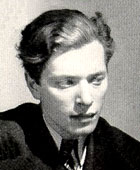

 By two of his former students:
My House
By Lou Reed
The image of the poet's in the breeze
Canadian geese are flying above the trees
A mist is hanging gently on the lake
my house is very beautiful at night
My friend and teacher occupies a spare room
he's dead, at peace at last the wandering Jew
Other friends had put stones on his grave
he was the first great man that I had ever met
Sylvia and I got out our Ouija Board
to dial a spirit, across the room it soared
We were happy and amazed at what we saw
blazing stood the proud and regal name Delmore
Delmore, I missed all your funny ways
I missed your jokes and the brilliant things you said
My Dedalus to your Bloom, was such a perfect wit
and to find you in my house makes things perfect
I really got a lucky life
my writing, my motorcycle and my wife
And to top it all off a spirit of pure poetry
is living in this stone and wood house with me
The image of the poet's in the breeze
Canadian geese are flying above the trees
A mist is hanging gently on the lake
our house is very beautiful at night
Our house is very beautiful at night
our house is very beautiful at night
Our house is very beautiful at night
A Momentary Longing To Hear Sad Advice from One Long Dead
By Kenneth Koch
Who was my teacher at Harvard. Did not wear overcoat
Saying to me as we walked across the Yard
Cold brittle autumn is you should be wearing overcoat. I said
You are not wearing overcoat. He said,
You should do as I say not do as I do.
Just how American it was and how late Forties it was
Delmore, but not I, was probably aware. He quoted Finnegans Wake to me
In his New York apartment sitting on chair
Table directly in front of him. There did he write? I am wondering.
Look at this photograph said of his mother and father.
Coney Island. Do they look happy? He couldn't figure it out.
Believed Pogo to be at the limits of our culture.
Pogo. Walt Kelly must have read Joyce Delmore said.
Why don't you ask him?
Why don't you ask Walt Kelly if he read Finnegans Wake or not.
Your parents don't look happy but it is just a photograph.
Maybe they felt awkward posing for photographs.
Maybe it is just a bad photograph. Delmore is not listening
I want to hear him tell me something sad but however true.
Delmore in his tomb is sitting. People say yes everyone is dying
But here read this happy book on the subject. Not Delmore. Not that rueful man.
It's striking how similar these portraits are, and how both of them express a Yeatsian desire to communicate with Schwartz's spirit. The difference is that Reed is successful in speaking to Delmore — even has him living with him in his house! – while Koch only longs for contact.
It's also interesting to think about how Koch and Reed both cast Schwartz as the epitome of "seriousness," a role he also often claimed for himself (as in 1938's "Father and Son": "My father … taught me to be serious"). And I don't think I'm stretching it to say that the concept of "seriousness" is key for both of them: Koch making an effort to alleviate the monumental seriousness of mid-century American poetry (or rather, as he claimed many times, to give it a new definition of seriousness), and Reed, when he wasn't just trying to get or stay famous, to bring literary seriousness to rock music. In doing this both take enormous risks (Koch of being called trivial, Reed of being called pretentious) which ultimately pay off in some of the most exciting art of their respective fields and eras, at least in this blogger's opinion. What's funny is that both could have derived inspiration for these respective missions — in which they are, as it were, tunneling toward each other from opposite directions — from the same figure, although in different decades and in different cultural circumstances.
In "My House," Reed is settling into his self-consciously "mature" phase, which entails not only writing literary lyrics but also withdrawing from New York City, settling down with a woman after a few decades of bisexuality, and reclaiming the literary heritage of seriousness he had jeopardized by making records like Rock'n'Roll Animal. Schwartz is thus invoked like a guardian angel at the start of the record: "a spirit of pure poetry" to guide his passage back into the land of critical prestige, not so much Dedalus to his Bloom as Virgil to his Dante.
Koch's poem centers even more obviously around the question of seriousness, the value of the seriousness of culture, which of course was a more of a live issue in the "late Forties" (cp. Adorno's Dialectic of Enlightenment, which I'll be trying to wrestle with next week) than it seems to us now. Schwartz, in the scene recalled, shows a 40s intellectual's cautious approval of popular culture ("Believed Pogo to be at the limits of our culture") which nonetheless must still be assumed to spring from a reputable highbrow source ("Walt Kelly must have read Joyce"). Schwartz's uncertainty about the cultural status of Pogo somehow fuses, heartbreakingly, with his uncertainty about his parents' past happiness; and the fact that he is putting either of these questions to a student is, in itself, somewhat sad. Koch, of course, can't answer either of these questions for him: only Walt Kelly and Schwartz's parents can, all of whom are, momentarily or permanently, absent.
But the important thing is not just that Delmore Schwartz was depressed and tortured while Koch is/was saner and happier; I want to resist reading the poem reductively, according to the "Modernism = grumpy and conflicted / Postmodernism = well-adjusted and jouissant" fallacy. The starting point, after all, is the fact that Koch now "want[s] to hear him tell me something sad but however true." Leaving aside any temptation to read biography into it (oh why bother: the poem was written in 2001; New York had been attacked by terrorists and Koch was dying of leukemia), we see that Koch is nostalgic for Schwartz's "rueful" perspective, his High Modernist values, though that nostalgia is as tentative and uncertain as Schwartz's appreciation of Walt Kelly once was. I'll stop myself from going any further than that, for now, but what I'm interested in is the way both works interweave a sympathetic portrait of Schwartz the man with Schwartz — who might also, if we want to push things still further, stand in for "the university poet" as such — the bulwark of seriousness and bearer of cultural capital.
Sunday, June 17, 2007
Richard Rorty R.I.P.
 Maybe I'll have to put Contingency, Irony, Solidarity on my generals list after all.
Subscribe to:
Posts (Atom)


