"No man is just an island."
— John Ashbery, "Surprising Announcement"
Showing posts with label Ashbery. Show all posts
Showing posts with label Ashbery. Show all posts
Tuesday, December 1, 2009
"…We all know that we have to live for a certain time and then
unfortunately we must die, and after that none is sure what happens. Accounts vary. But we
most of us feel we'll be made comfortable for much of the time after that, and get credit
for the (admittedly) few nice things we did, and no one is going to make too much
of a fuss over those we'd rather draw the curtain over, and besides, we can't see
much that was wrong in them, there are two sides to every question. Yet the facts
fascinate one, we become one of those persons who are only satisfied with thoroughly
reliable information — the truth, if there could ever be such a thing. Our journey
flows past us like ice chunks, maybe it is that we are stationary.
O so much God to police everything and still be left over to flatter one's
harmless idiosyncrasies, the things that make us us, which is precisely
what is fading like paint on a sign, no matter how much one pretends it's the same
as yesterday. And children talk to us — that, surely, must be a plus?"
— John Ashbery, Flow Chart, 35
unfortunately we must die, and after that none is sure what happens. Accounts vary. But we
most of us feel we'll be made comfortable for much of the time after that, and get credit
for the (admittedly) few nice things we did, and no one is going to make too much
of a fuss over those we'd rather draw the curtain over, and besides, we can't see
much that was wrong in them, there are two sides to every question. Yet the facts
fascinate one, we become one of those persons who are only satisfied with thoroughly
reliable information — the truth, if there could ever be such a thing. Our journey
flows past us like ice chunks, maybe it is that we are stationary.
O so much God to police everything and still be left over to flatter one's
harmless idiosyncrasies, the things that make us us, which is precisely
what is fading like paint on a sign, no matter how much one pretends it's the same
as yesterday. And children talk to us — that, surely, must be a plus?"
— John Ashbery, Flow Chart, 35

Monday, November 30, 2009
"…It took
two weeks to lead up to this. The stores are quiet now.
I say lie down in it. I already asked Santa about it.
And then, you see, it became part of our cultural history. We can't ignore it
even though we'd like to, it's so mild and hurtless. And you thought
you had it bad, or good. With as many associations as that
to keep thumbing through, one winks at the legal filigrane that penetrates every
page of the mouldering sheaf down to the last one, like a spike
through a door. Somebody dust these ashes off, open
the curtains, get a little light on the subject: the subject
going off on its own again."
— John Ashbery, Flow Chart, 20
two weeks to lead up to this. The stores are quiet now.
I say lie down in it. I already asked Santa about it.
And then, you see, it became part of our cultural history. We can't ignore it
even though we'd like to, it's so mild and hurtless. And you thought
you had it bad, or good. With as many associations as that
to keep thumbing through, one winks at the legal filigrane that penetrates every
page of the mouldering sheaf down to the last one, like a spike
through a door. Somebody dust these ashes off, open
the curtains, get a little light on the subject: the subject
going off on its own again."
— John Ashbery, Flow Chart, 20
Saturday, November 28, 2009
Wednesday, November 5, 2008
Tuesday, March 25, 2008

 "He gets compared to Ashbery and Wallace Stevens sometimes when critics reach for literary reference points, and fair enough, but one could make an equally strong case for Malkmus as the Thomas Hardy of rock…" (me)
You know who really is like Ashbery, though, is Dan Bejar. Neither of them are afraid of the gaudiness of the purely ornamental style, though neither of them give into it completely (key difference from Stevens (Wallace and/or Sufjan)): they always make sure to keep a line open to the demotic. And neither of them go in for rhyme and meter (with occasional, significant exceptions) but both have a very sure and characteristic sense of rhythm, albeit one which dances blithely between music, speech and prose. They're natural (I know, I know). They don't pretend to be craftsmen, but don't pretend to be spontaneous either: what they do is exemplify the mind of the highly aesthetically cultured individual, stuffed with bits of finery it's not sure it needs.
The more I think about this the more it seems like an apt comparison, especially w/r/t the new Destroyer album. Trouble in Dreams could be an Ashbery title; doing an eight-minute track called "Shooting Rockets (From the Desk of Night's Ape)" shares his sense of outrageousness.
Monday, October 29, 2007
A Worldly Country
By John Ashbery:
Not the smoothness, not the insane clocks on the square,
the scent of manure in the municipal parterre,
not the fabrics, the sullen mockery of Tweety Bird,
not the fresh troops that needed freshening up. If it occurred
in real time, it was OK, and if it was time in a novel
that was OK too. From palace and hovel
the great parade flooded avenue and byway
and turnip fields became just another highway.
Leftover bonbons were thrown to the chickens
and geese, who squawked like the very dickens.
There was no peace in the bathroom, none in the china closet
or the banks, where no one came to make a deposit.
In short all hell broke loose that wide afternoon.
By evening all was calm again. A crescent moon
hung in the sky like a parrot on its perch.
Departing guests smiled and called, "See you in church!"
For night, as usual, knew what it was doing,
providing sleep to offset the great ungluing
that tomorrow again would surely bring.
As I gazed at the quiet rubble, one thing
puzzled me: What had happened, and why?
One minute we were up to our necks in rebelliousness,
and the next, peace had subdued the ranks of hellishness.
So often it happens that the time we turn around in
soon becomes the shoal our pathetic skiff will run aground in.
And just as waves are anchored to the bottom of the sea
we must reach the shallows before God cuts us free.
Not the smoothness, not the insane clocks on the square,
the scent of manure in the municipal parterre,
not the fabrics, the sullen mockery of Tweety Bird,
not the fresh troops that needed freshening up. If it occurred
in real time, it was OK, and if it was time in a novel
that was OK too. From palace and hovel
the great parade flooded avenue and byway
and turnip fields became just another highway.
Leftover bonbons were thrown to the chickens
and geese, who squawked like the very dickens.
There was no peace in the bathroom, none in the china closet
or the banks, where no one came to make a deposit.
In short all hell broke loose that wide afternoon.
By evening all was calm again. A crescent moon
hung in the sky like a parrot on its perch.
Departing guests smiled and called, "See you in church!"
For night, as usual, knew what it was doing,
providing sleep to offset the great ungluing
that tomorrow again would surely bring.
As I gazed at the quiet rubble, one thing
puzzled me: What had happened, and why?
One minute we were up to our necks in rebelliousness,
and the next, peace had subdued the ranks of hellishness.
So often it happens that the time we turn around in
soon becomes the shoal our pathetic skiff will run aground in.
And just as waves are anchored to the bottom of the sea
we must reach the shallows before God cuts us free.
Thursday, August 30, 2007
Friday, August 3, 2007
Surrealism
 So, Surrealism. This was a fun week, and more cohesive and immediately relevant to the rest of my reading than I expected (or feared) it would be. The thing to realize about the Surrealists is that their intellectual background is, despite the language barrier, in many ways much closer to our own than that of many of the English and American Modernists: they are products of the same French tradition of philosophical education that would later produce Derrida, Foucault, Deleuze, and all the other sacred monsters of High Theory that have been forcibly absorbed, for better or worse, by our discipline in the past forty years. So we are part of the same intellectual tradition, at least by proxy; and even if we don't consider ourselves experts on Descartes or Hegel, the odds are we've picked up more of the gist of their systems and ways of thinking than we have of, I don't know, F.H. Bradley or C.H. Douglas or something.
Add to this the French emphasis on rhetoric and you have a pretty good explanation for the high caliber of the Surrealists' programmatic writing (seen primarily in Breton's manifestoes, of course, but this tone tends to infect their more strictly literary output as well). Eliot, Pound, Stevens, Moore, Lawrence, and Williams, despite their various levels of formal schooling, were all sort of (and of necessity) autodidacts, a fact that accounts for much of the continuing strangeness of their work and their ways of justifying it. By contrast, Breton and Aragon are like confident schoolboys: they know they can encase their artistic efforts in a watertight carapace of theory, and for this reason their self-justifications feel natural in a way that the Modernists' rarely do, in fact more natural than some of the writing it justifies. Even Lautréamont — whose work pre-dates Surrealism proper by about forty years and as far as I can tell was absolutely fucking insane — is just flat-out convincing, able to put together a series of declaratory sentences or marshal a quotation or an epigram in a way that puts most full-faculty-possessing American academics of our time to shame. (The one Anglophone Modernist who shares this tendency, of course, is James Joyce, thanks to his Jesuit training I suppose. No wonder he's always been so big in France.)
The ironic implication of this is that, for me at least, Surrealist writing today often says more about the culture that they supposedly hated so much than it does about their individual campaigns of revolt against it. How much of the attraction of Paris Peasant or Nadja, or even The Magnetic Fields or Soluble Fish, has to do with their "pooling" of a communal poetic subconscious (as Breton puts it in the Second Surrealist Manifesto, 179) and how much of it has to do with the particular debris floating around in that pool, and the fact that it was filled in a time and place that now seems so romantically alien (Paris in the 20s… sighs)? Of all of them, Aragon was probably the most aware of this contradiction, which is why he grounds Paris Peasant in the particulars of the group's milieu; and certainly Walter Benjamin, in his fantastic essay on "Surrealism" from 1929, realizes that it's their specific attitude toward Paris itself ("the most dreamed-of of their objects") that constitutes the Surrealists' real originality. (My pet theory is that the New York School, and particularly Ashbery, was also especially attuned to the culturally exemplary aspect of Surrealism, and it's this that accounts for his strange marriage of insurrectionary European absurdity with homely American sentimental pragmatism. Which in turn has significant effects for contemporary American poetry, much of which is running with one or the other half of Ashbery's synthesis.)
The other thing that fascinates me about the Surrealists is their constant propping up each other's proper names, in a way that would seem to belie Breton's repeated insistence that the individual is of no significance, that none of them have any talent in the usually accepted literary sense. One could certainly (someone probably already has) write a very interesting book on homosociality and Surrealism; Exhibit A would have to be Breton's little phantasmagoria in the first Manifesto about an imaginary castle "in a rustic setting, not far from Paris … [where] a few of my friends are living … as permanent guests," surrounded by "gorgeous women," where "[t]he spirit of demoralization has elected domicile," a place which sounds like a cross between Axel's castle and the Playboy Mansion. (Speaking of guys who live together: this reminds me, I decided that the four major Surrealists each correspond to a Beatle. In case you're interested, here's what I came up with:
ANDRE BRETON = PAUL McCARTNEY
Always trying to keep everything together. Talks a lot about love but you just know he's an asshole.
LOUIS ARAGON = JOHN LENNON
Most realistic, most cynical, perhaps most brilliant. Eventually decides he doesn't really like his friends.
PAUL ELUARD = GEORGE HARRISON
Spiritual, and a little remote.
ROBERT DESNOS = RINGO STARR
The silliest one; the one who has the most troubled solo career.
PHILIPPE SOUPAULT = PETE BEST
Kicked out of the band early on.
I'll add that I tend to think of any grouping of four people in Beatles terms. Anyone want to try this with Joyce, Pound, Eliot and Williams?)
A few other random observations:
Surrealists were the first hipsters (and hippies). In the countercultural realm as well as the academic, the Surrealists seem more our contemporaries than the Modernists. Breton shops at flea-markets for "objects that can be found nowhere else: old-fashioned, broken, useless, almost incomprehensible, even perverse" (Nadja, 52); Aragon drolly observes the ravages of gentrification without being interested in doing much about it; Eluard drops a lot of names ("Max Ernst," "Pablo Picasso," "Arp"); and Desnos, and for that matter all the rest of them too, elevate "love" to the state of a ridiculous transcendental abstraction. We (OK, I) may recognize these attitudes as unsavory, hypocritical, or stupid; but they're certainly familiar.
Surrealism often overlaps with pastoral. Subjects for further study: Lautréamont (op cit.), Aragon's "A Feeling for Nature," Desnos' "Of the Flower of Love and the Wandering Horses," and various passages in Breton's first Manifesto and Soluble Fish. Also: of all animals the Surrealists seem to prefer birds (Eluard) and fish (Breton). Both are small, familiar, and difficult to anthropomorphize, one of them identifiably "poetic," the other conventionally "weird." Compared to the Americans, like Moore and Pound, a surprising dearth of dogs and cats: why? Because they're too domesticable?
Breton may have influenced Nabokov. This never occurred to me before, but the style of Breton's Nadja seems in many ways to be a model for Lolita: an anecdotal first-person account of a love affair with an obviously inappropriate partner (insane woman, underage girl) who is very dubiously portrayed as the chief instigator and controller of the situation, which ends with an extended bout of moral and intellectual self-justification on the part of its self-involved narrator. They even have a similar way of mixing aesthetic, emotional, and dramatic registers, all under a slightly detached, man-of-the-world tone; and they also both use fate and coincidence as the basic framing-device for their narratives (maybe more so in other Nabokov novels, like Pale Fire, than Lolita). The crucial difference is that Breton claims to be writing about himself, and offering us random episodes and coincidences taken from his everyday life, trusting that there is some pattern which neither he nor the reader can immediately perceive; whereas Nabokov uses an unreliable narrator, and reverse-engineers the ephemera from a pre-arranged pattern (I wonder if the link to Breton can be tied in with his famous hatred of Freudian analysis somehow.) Still, the similarities are striking. I don't know off-hand if VN ever made any statements on Surrealism (which I would guess he'd have been skeptical about: then again, he loved Queneau), but he lived in Berlin in the 20s and Paris in the late 30s and presumably would have been aware of the Surrealists in some capacity. In any case, it'd be an interesting avenue to explore, and if I'm right it would be another way Surrealism snuck in through the back-door of the American literary establishment.
Wednesday, August 1, 2007
Pooley-wah
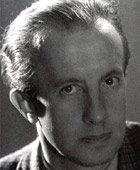 is really quite a bit like early John Ashbery. It's funny when you have a sort of "you're busted" moment with a writer you know very well: seeing all of a sudden where they lifted a significant part of their literary personality. I'd even say, too hastily, that Eluard stands to Ashbery as Jules Laforgue does to Eliot. I need to think more about how to back this claim up (also whether, and when, and how closely, Ashbery read him), but for now I'll just post a brief juxtaposition of texts, the first by Eluard, the second by Ashbery:
Max Ernst
(translated by Mary Ann Caws and Patricia Terry)
In a corner agile incest
Circles the virginity of a little dress.
In a corner the sky turned over
To the spines of the storm leaves white balls behind.
In the brightest corner of every eye
We're expecting the fish of anguish.
In a corner the car of summer
Immobile glorious and forever.
In the light of youth
Lamps lit very late.
The first one shows its breasts that red insects are killing.
Two Scenes
We see us as we truly behave:
From every corner comes a distinctive offering.
The train comes bearing joy;
The sparks it strikes illuminate the table.
Destiny guides the water-pilot, and it is destiny.
For long we hadn't heard so much news, such noise.
The day was warm and pleasant.
"We see you in your hair,
Air resting around the tips of mountains."
It's the quiet, careful oddness of these poems, the uncanny coupling of abstract nouns ("virginity," "anguish," "joy," "destiny") with spatial and physical descriptors ("corner," "eye," "car," "table," "mountains"), negotiated between a teasingly ambiguous "we" and "you," that makes them similar. Note that compared to the stuff each of these poets' contemporaries (the Surrealists and the New York School) were up to in this period, this is incredibly restrained writing.
Saturday, July 28, 2007
The End of the 20s (Part 1)
Monday: T.S. Eliot vs. Ezra Pound

 Rematch! This time Eliot fared a litle better: I read his two works published in 1925, "The Hollow Men" and two scenes from his unfinished first play Sweeney Agonistes. What I'll remark on here is the fact that, three years after The Waste Land, it's as if Eliot has wholly compartmentalized the two sides of his poetic personality: "The Hollow Men" has all the oracular gravitas, the violent imagery, the mantraic repetitions, the dried-out landscape, just as if it were a continuation of "What the Thunder Said." Sweeney Agonistes, on the other hand, has all the dark humor, dramatic interest, and fascination with pop culture and the underclasses typical of "The Burial of the Dead," "A Game of Chess" and "The Fire Sermon." I wonder if this was a reaction to negative criticism of The Waste Land as being too divided, or schizophrenic? It would be interesting to compare Eliot's use of repetition in the two works: the first operating more, I guess, "poetically" (the words taking on strength and symbolic/rhetorical power through reiteration), and the second more idiomatically, to indicate the inadequacy of contemporary conversation. (Words to live by: "I gotta use words when I talk to you / But if you understand or if you dont / That's nothing to me and nothing to you / We all gotta do what we gotta do," Complete Poems, 84). Of course, the two might not really be so different after all… In any case, I find Sweeney (which I'd never read before) by the far the more intriguing piece of writing, particularly in its recordings of the language of American businessmen (named, um, Klipstein and Krumpacker), an idiom which Eliot had now been separated from for about a decade. (There are no Americans in The Waste Land, are there?) There's a kind of conflicted loving irony in the way Eliot presents these characters; it reminds me of John Ashbery's remarks about his addiction to American newspapers and comic books when he was living in Paris in the early 60s.
As for Pound, I read the first sixteen Cantos (first published together in 1925). If Eliot was trying to separate out the strands of his sensibility in this period, Pound was clearly going in the other direction: developing the "ply over ply," hopelessly texturally enmeshed style that becomes literally inescapable for him in his later work. I don't have much to say about The Cantos (yet) except that they become much more fun to read over time, once you stop worrying about "getting it" (or worse, agreeing with it) safe in the knowledge that no-one ever really has or will and just bask in its shameless Poundness. I also never noticed before how many animals there are in the beginning of the poem, especially cats. Modernists love their critters!
Winner: Eliot.
Tuesday: Langston Hughes vs. E.E. Cummings

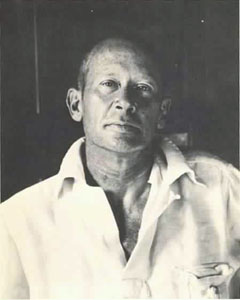 What these two dudes have in common is a reliance on a semi-consistent "poet" persona: they both usually write in the first person, tackle time-honored topics like love, nature and sadness, and in many ways dispense with more than a century's worth of abstruse poetic theory in order to embody the good old Wordsworthian values of "a man speaking to men" and "emotion recollected in tranquility." Though adopting such a mode might seem like the path of least resistance today, in the context of both High Modernism and traditional verse culture of the 1920s, it does feel fairly radical — and, of course, radically populist.
I think Hughes could do this because he was stepping into a cultural role that, by 1926 when The Weary Blues was published, was firmly, if newly, defined: that of a "Negro poet." Because writers like Countee Cullen and Claude McKay had preferred to demonstrate competence in traditional English versifying in order to back up their claims of racial and social equality, Hughes' insistence on using loose, non-English forms like the blues and Whitmanian free verse is especially provocative, opening himself up to hostile charges of simplicity, primitivism, or illiteracy. But it also gives his work the force of naturalness, and allows his inexhaustible talent for image selection and turn of phrase maximum room to maneuver. (I'm also interested, and this something to return to, in the traces here and there of a Symbolist inheritance in Hughes, though, particularly from Verlaine, in a poem like "Black Pierrot," for instance. What did Hughes read?)
One could make the argument that Cummings is playing with the expectations engendered by a similar readymade role, "the modern (or modernist) poet." Cummings' first book was published in 1922, the year of The Waste Land and Ulysses, "the year modernism broke," making him sort of New Wave to Joyce and Eliot's Punk: the slightly belated successor who can come in and benefit from the cultural capital accrued by previous experimentation (it is true, I think, that Cummings was more popular, at least in America, than any of the more reputable High Modernists). Cummings, at least by the time of is 5 (which I read), is aware of this precarious position and uses it to generate effects within his poetry: "what's become of (if you please) / all the grandja / that was dada?" (is 5, 11). Likewise all his unabashed liking for jazz and Krazy Kat, which Greg's analyzed well already. In Cummings, I see one of the first American expressions of what Stanley Cavell eventually comes to call a signal feature of modernist art: "the possibility of fraudulence" (Must We Mean What We Say?, 176). He exaggerates the distance between his technical oddity and his lyrical ego to the point where he's almost a "poet" before he is a writer of poetry. (One indicator of Cummings' almost Duchampian provocativeness is his extensive treatment in Laura Riding and Robert Graves' 1927 Survey of Modernist Poetry, which effectively calls Cummings' bluff by deciding that he is a real poet after all — just not a very interesting one.)
In any case, I think he certainly sets the stage for the Beats, and their particularly male forms of poetic self-display (and incidentally, take a look at that photo: EEC's definitely the buffest Modernist by a considerable margin).
Winner: Hughes. When it comes down to it, Cummings, for all his historical importance and surface amiability, is just too jokey — without being all that funny.
I'm going to stop at hump day for the time being, but there's more to come. Next up: Hart Crane vs. the Atlantic Ocean!
Rematch! This time Eliot fared a litle better: I read his two works published in 1925, "The Hollow Men" and two scenes from his unfinished first play Sweeney Agonistes. What I'll remark on here is the fact that, three years after The Waste Land, it's as if Eliot has wholly compartmentalized the two sides of his poetic personality: "The Hollow Men" has all the oracular gravitas, the violent imagery, the mantraic repetitions, the dried-out landscape, just as if it were a continuation of "What the Thunder Said." Sweeney Agonistes, on the other hand, has all the dark humor, dramatic interest, and fascination with pop culture and the underclasses typical of "The Burial of the Dead," "A Game of Chess" and "The Fire Sermon." I wonder if this was a reaction to negative criticism of The Waste Land as being too divided, or schizophrenic? It would be interesting to compare Eliot's use of repetition in the two works: the first operating more, I guess, "poetically" (the words taking on strength and symbolic/rhetorical power through reiteration), and the second more idiomatically, to indicate the inadequacy of contemporary conversation. (Words to live by: "I gotta use words when I talk to you / But if you understand or if you dont / That's nothing to me and nothing to you / We all gotta do what we gotta do," Complete Poems, 84). Of course, the two might not really be so different after all… In any case, I find Sweeney (which I'd never read before) by the far the more intriguing piece of writing, particularly in its recordings of the language of American businessmen (named, um, Klipstein and Krumpacker), an idiom which Eliot had now been separated from for about a decade. (There are no Americans in The Waste Land, are there?) There's a kind of conflicted loving irony in the way Eliot presents these characters; it reminds me of John Ashbery's remarks about his addiction to American newspapers and comic books when he was living in Paris in the early 60s.As for Pound, I read the first sixteen Cantos (first published together in 1925). If Eliot was trying to separate out the strands of his sensibility in this period, Pound was clearly going in the other direction: developing the "ply over ply," hopelessly texturally enmeshed style that becomes literally inescapable for him in his later work. I don't have much to say about The Cantos (yet) except that they become much more fun to read over time, once you stop worrying about "getting it" (or worse, agreeing with it) safe in the knowledge that no-one ever really has or will and just bask in its shameless Poundness. I also never noticed before how many animals there are in the beginning of the poem, especially cats. Modernists love their critters!
Winner: Eliot.
Tuesday: Langston Hughes vs. E.E. Cummings
What these two dudes have in common is a reliance on a semi-consistent "poet" persona: they both usually write in the first person, tackle time-honored topics like love, nature and sadness, and in many ways dispense with more than a century's worth of abstruse poetic theory in order to embody the good old Wordsworthian values of "a man speaking to men" and "emotion recollected in tranquility." Though adopting such a mode might seem like the path of least resistance today, in the context of both High Modernism and traditional verse culture of the 1920s, it does feel fairly radical — and, of course, radically populist.I think Hughes could do this because he was stepping into a cultural role that, by 1926 when The Weary Blues was published, was firmly, if newly, defined: that of a "Negro poet." Because writers like Countee Cullen and Claude McKay had preferred to demonstrate competence in traditional English versifying in order to back up their claims of racial and social equality, Hughes' insistence on using loose, non-English forms like the blues and Whitmanian free verse is especially provocative, opening himself up to hostile charges of simplicity, primitivism, or illiteracy. But it also gives his work the force of naturalness, and allows his inexhaustible talent for image selection and turn of phrase maximum room to maneuver. (I'm also interested, and this something to return to, in the traces here and there of a Symbolist inheritance in Hughes, though, particularly from Verlaine, in a poem like "Black Pierrot," for instance. What did Hughes read?)
One could make the argument that Cummings is playing with the expectations engendered by a similar readymade role, "the modern (or modernist) poet." Cummings' first book was published in 1922, the year of The Waste Land and Ulysses, "the year modernism broke," making him sort of New Wave to Joyce and Eliot's Punk: the slightly belated successor who can come in and benefit from the cultural capital accrued by previous experimentation (it is true, I think, that Cummings was more popular, at least in America, than any of the more reputable High Modernists). Cummings, at least by the time of is 5 (which I read), is aware of this precarious position and uses it to generate effects within his poetry: "what's become of (if you please) / all the grandja / that was dada?" (is 5, 11). Likewise all his unabashed liking for jazz and Krazy Kat, which Greg's analyzed well already. In Cummings, I see one of the first American expressions of what Stanley Cavell eventually comes to call a signal feature of modernist art: "the possibility of fraudulence" (Must We Mean What We Say?, 176). He exaggerates the distance between his technical oddity and his lyrical ego to the point where he's almost a "poet" before he is a writer of poetry. (One indicator of Cummings' almost Duchampian provocativeness is his extensive treatment in Laura Riding and Robert Graves' 1927 Survey of Modernist Poetry, which effectively calls Cummings' bluff by deciding that he is a real poet after all — just not a very interesting one.)
In any case, I think he certainly sets the stage for the Beats, and their particularly male forms of poetic self-display (and incidentally, take a look at that photo: EEC's definitely the buffest Modernist by a considerable margin).
Winner: Hughes. When it comes down to it, Cummings, for all his historical importance and surface amiability, is just too jokey — without being all that funny.
I'm going to stop at hump day for the time being, but there's more to come. Next up: Hart Crane vs. the Atlantic Ocean!
Subscribe to:
Posts (Atom)


