Showing posts with label Ransom. Show all posts

Wednesday, April 16, 2008

Director's Cut

So I'm preparing my conference paper for the 26th, which is largely composed of quotations from letters by famous poets writing about little magazines, followed by tiny little commentaries from me. However, there a few choice quotes I'm not able to fit into the paper proper. Once again, legitimate academia's loss is the blogosphere's gain! Behold:

Randall Jarrell on the Partisan Review coterie:

“Although its politics are doctrinaire and academic in that funny New York professional-left way, they haven’t prevented it from printing other groups, Stalinists excepted. It’s an awfully shrewd, professional, competent magazine, so far as the editing is concerned. The worst things about it are its extraordinary limitations and lack of imagination: everything is looked at from the point of view of someone who’s semi-Marxist, fairly avant-garde, reasonably Bohemian, anti-bourgeois, cosmopolitan, anti-Stalinist, lives in New York, likes Mondrian, etc., etc., etc. It assumes that New York is the Paris of America, that the United States is Europe all over again, a backward Europe: in fact, it’s barely an American magazine, and always sinks with a sigh of joy into the friendly harbor of Sartre, Camus, [unreadable], the great European writers. (This Sartre-Camus isn’t my joke: I heard two of the editors said to me saying that American writers would be as good as Camus and Sartre if they had a movement like existentialism to organize and inspire them.)”


William Carlos Williams on Poetry:

“I have come to distrust the magazine Poetry. We are not fostering kindergartens and there’s no use paying good money for the sake of sentimentalizing over some new writer prodigy unless he produces. And if he does produce and is a prodigy there us [sic: is] no room for him in a mag like that because of ‘previous commitments’ with the young. It’s a rotten policy and produces unreadable drivel. The general criticism offered is litte [sic: little] better. Once in a while something does happen, of course, but that isn’t the point. The critical standards involved are woefully sophomoric. I don’t see any sense in paying good money for that. Perhaps such a first step should be retained because of its undoubtedly important history, perhaps there is no other way to serve the newcomer - keep the door open and all that. A hell of a lot of cheap stuff wanders in though. Certainly it’s unattractive to me.”
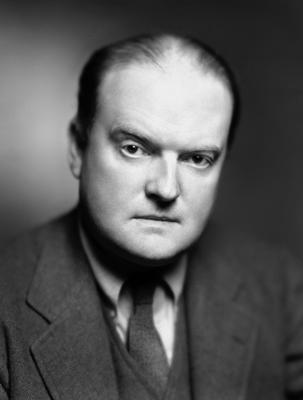

Edmund Wilson on The Kenyon Review:

“The Kenyon Review is indescribably awful.”

And on The Sewanee Review:

“Allen Tate, before he left the Sewanee, never succeeded in lifting the shadow of the influence of J.C. Ransom or being able to refuse filling its space with the writings of his cousins and aunts.”


Similarly, Kenneth Burke on Kenyon:

“I can’t discuss the matter at any length. For, honest to God, I just don’t know. Ransom gets all the farm boys to wiping the mud off their shoes in the name of ‘nice’ thinking – and the choice seems to be between that and muddy thinking.”


And, finally, Williams on better days:

“The vistas are limitless. But had damn well better be limited if any good is to be done.
“I think I’d vote for Whitman, in his time."

Thursday, January 24, 2008

Christgau and the New Critical Connection

Aha! I knew there was a reason I was doing this. From "Subjects for Further Research":

Bruce Cockburn This born-again Episcopalian (he's the type who appreciates oxymorons) is genuinely literate as well as genuinely musical. But I've been boycotting poetic types who admire the Church of England ever since escaping John Crowe Ransom as an undergraduate.

Wednesday, August 8, 2007

Anyone reading this?

Like cyberpunk was supposed to save literature, Robert Penn Warren was supposed to be the 20th century Melville according to mid-century American critics. Womp Womp. Anyway, I checked this out from the library, haven't had time to really look at it, but wondering if anyone else was planning on it/had heard of it

From wikipedia:

The Agrarians evolved from a philosophical discussion group known as the "Fugitives" or "Fugitive Poets", whose studies of poetic modernism and of H. L. Mencken's stinging critique of Southern culture led them to confront the effect of modernity on Southern culture and tradition. The informal leader of the Fugitives and the Agrarians was John Crowe Ransom, though he formally repudiated agrarianism in a 1945 essay. The most eloquent exponent of the Agrarian philosophy eventually proved to be Ransom's student and Donald Davidson's friend, Richard M. Weaver. Rather surprisingly, Weaver taught at a Northern institution, the University of Chicago.

The Agrarians were opposed to unbridled modernism and industrialism and bemoaned the loss of traditional Southern culture. Their manifesto was an attack on modern industrial America and posited an alternate direction based on a return to traditional American values, especially what later was called republicanism.

Seward Collins, editor of The American Review, which published some essays by Agrarians in 1933, praised Benito Mussolini and Adolf Hitler for thwarting a communist revolution in Germany. Allen Tate published a critique of fascism in the 1936 The New Republic, to distance himself (and the other Agrarians) from Collins.

Robert Penn Warren eventually emerged as the most accomplished of the Agrarians, not only as a major American poet but also as a novelist, especially for his 1946 All the King's Men. Warren's later political and social views, in particular his espousing of a liberal political philosophy and his support for racial integration, set him apart from the conservatism of the Agrarians.

I'll Take My Stand was originally criticized as a reactionary and romanticized defense of the Old South, and viewed as little more than useless nostalgia. In recent years, scholars such as Carlson, Scotchie, Genovese and others have taken a second look at this book in light of the problems of modern industrial society and its effect on the human condition and the environment.