Showing posts with label Symbolism. Show all posts

Tuesday, October 30, 2007

Scared Straight

William Empson to Charles Madge, upon receipt of (in Madge's words) a "long and probably half-baked and undigested manuscript about Chaucer, Spenser, and Milton":

"The shape of the book I think is bloody insolent. The idea that one must write very esoteric stuff because nobody will read [it] anyway seems to me nonsense — you get plenty of readers if you give anybody a chance. Surely even a communist can have a reasonable amount of democratic feeling; the point about writing as plainly as you can is that you are testing your ideas against somebody who is not a specialist and just knows about life in general. Really subjective writing seems to me nasty to touch, gluey on the outside like David Gascoyne. I feel I have some right to be rude about this because [I am] so much open to the same faults. You had much better imagine before you write anything that England has long been a settled communist state, and that the only difficulties before you are (a) making the comrades hear what you want to say (b) convincing them you are not talking nonsense; assuming the future to have arrived is a piece of symbolism quite in your manner; you will find it works much better both as making you write better and making people buy your books. Actual chapters of quotation without confessing what you quote for, actual articles in quotation without confessing who they are quoted from, all that kind of thing, is merely indulging yourself in madness without the excuse of being mad. Of course there isn't much money in the kind of criticism we write anyway; but the kind of thing one needs in the way of sales and success, enough recognition and criticism to go on doing one's stuff without the insanity of isolation, you can get in presentday [1936] England at once, but only if you don't pretend to be mad. You must expect me to take you seriously if you left the MS to ask my view of it, and I advise you very heartily not to publish this as it stands. Better make it several books and put in a great deal of your political opinions; I don't see that you lose anything by putting them in, it will make the thing far more human, and you may become sufficiently interested to find the main things you wanted to say. I myself generally find what I was trying to talk about while I am re-writing so as to try to be intelligible …

"I smack this out in a state of moderate beer assuming that you are not appallingly sensitive. The difficult thing would be to say it tactfully, but I don't believe you are as neurotic as your piece of writing. As to a public, of course there is a real muddle; the recent events have kept on showing a public opinion I find I agree with, its muddle is my own, and
I feel I can write decent (of course unselling) books with a notion that it is part of the country that provides the language. A man who doesn't feel that at all has of course a different situation, and I should have thought the straight way out was to bring in the politics firm and clear … Anyway, just as a point of theory, literary symbolism demands a public for symbolism; by all means imagine a public, and as a matter of fact you will imagine a real one; but those who write for no public are ever unconscious of their asylum.

"Love to you and Kathleen

"Bill Empson
"

Tuesday, August 14, 2007

A brisk trade in messages in bottles

Kenneth Burke on Art for Art's Sake, from Counter-Statement (1931):

"Closely allied with the 'mystification' of the new [Symbolist] movement, came the tour d'ivoire or 'pure' art movement. The most pretentious writing, that is, was done by men whose methods and preoccupations seemed certain to limit their reading public considerably. They were 'experts,' and nothing was more abhorrent to a civilization of specialists than artists who likewise were specialists … In any event, the rarity and electness of 'pure' art seemed — in an age of propaganda — negative, retiring, and powerless. What was the value of neglected excellence, when the world was glutted with crude fiction? Had not the spread of literacy through compulsory education made readers of people who had no genuine interest in literature? Would not this group henceforth form the majority of the reading public? And would not good books pale into insignificance, not because they had fewer readers than in the past (they had more) but because an overwhelming army of bad readers had been recruited? The Art for Art's Sake slogan now began to apply more specifically to the art of the minority, those writers for whom, so far as the vast public was concerned, the publication of a new work was like putting a bottle out to sea.

"A masterpiece, privately printed in a limited edition of two hundred copies, seemed to furnish some cause for derision. Yet The Little Review had a much larger circulation than the magazine published by Goethe and Schiller." (69-70)

This is a useful passage, I think, for understanding how the idea of Art for Art's Sake came about, why it made people at the time so angry, and — most important of all — how it obscured the real historical conditions of literary Modernism, making it seem as if obscure or radical literature had become less popular, when in fact it had an unprecedentedly large readership. Put that in your pipe and smoke it, Lawrence Rainey.

Monday, June 25, 2007

Symbolism

Here are the names of some Symbolist authors I've been reading over the past couple of weeks: Charles Baudelaire, Stephane Mallarmé, Jules Laforgue, Paul Verlaine, Arthur Rimbaud, Auguste Villiers de l'Isle-Adam (on whom more later — this guy is insane). What do these writers have in common? Nothing really very definitive, I would say, other than their historical placement in late 19th century France, and certainly nothing that can be meaningfully summed up by the term "Symbolism." (Arthur Symons writes, unhelpfully, that “[w]ithout symbolism there can be no literature; indeed, not even language” (3); so, these Symbolists, they tend to use words, then?) A better term might be "Vague-ism" (la Vieille Vague?) since they all seem to make a point of avoiding the traditional precision of the French language in an effort to capture impressions, sensations, spiritual essences. Certainly there are some family resemblances beyond their vague interest in vagueness: viz., an orientation toward classicism and antiquarianism in general (Baudelaire, Mallarmé, Villiers); an abiding obsession with sin and apostasy left over from an (often lapsed) Catholicism (Baudelaire, Rimbaud, Villiers, Verlaine); a somewhat colloquial bent (Laforgue, Rimbaud, Verlaine); a tendency to compose lyric cycles (Baudelaire, Verlaine, Rimbaud); an interest in the English language, if not England itself (Verlaine, Mallarmé, Laforgue); a persistent attention to Paris and the habits of the bourgeoisie (Baudelaire, Laforgue); and, bien sur, a concern with modernity and the "new" (Baudelaire, Rimbaud, Laforgue).

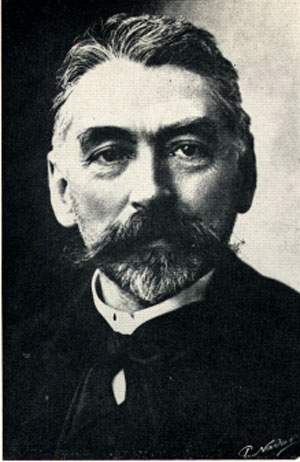
The term "Symbolism" is probably most apt for Mallarmé, who specializes in multiply overdetermined, head-spinningly allegorical literary symphonies like L'Àpres-midi d'une jeune faune. Unsurprisingly he's the one Derrida likes best; see his essay "Mallarmé" in Acts of Literature, where he appreciates SM's syntactical ambiguities and "chains" of signification which are "as if without support, always suspended." I probably like him least, if only because he's the most untranslatable into English and because the criticism about him is the most fatuous (although do I note that his endlessly extended streams of syntax probably had some kind of substantive influence on Proust).


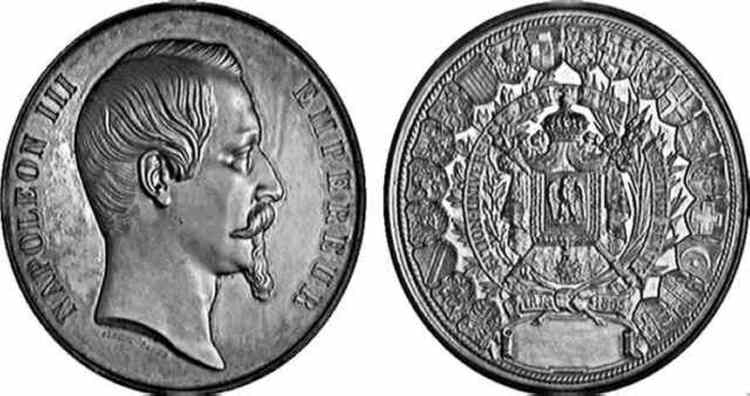
It's been interesting to juxtapose my exploration of this colorful cast of characters with my continued reading of Marx, and specifically “The Eighteenth Brumaire of Louis Napoleon,” his exhaustive account of the deterioration of the French Second Republic (1848-1852) into the neo-imperial era of Napoleon III. The impression I get from this essay is that Paris, beginning in the latter half of the nineteenth century, is largely struggling to deradicalize itself, even within the republic's own ranks. Marx brilliantly shows how every political move made by the bourgeois-controlled social republic was made in the name of restoring order, regularizing trade, and preventing another bloody revolution. Essentially it was this republican timidity and caution, Marx argues, that allowed Louis Bonaparte, Napoleon's nephew and (in Marx's view) a thoroughly uninspiring figure, to gain the support of the French peasantry and accomplish his coup d'état, thus establishing the Second Empire, the milieu of Baudelaire's Les fleurs du mal.

And it does seem to me that Baudelaire, and the Symbolists later on, for all their ostensible hatred of the bourgeoisie and deliberate provocation and strangeness, are essentially engaged in the same process of deradicalization that Marx describes so well in "The Eighteenth Brumaire." Baudelaire's, and later Laforgue's, cynical portraits of Parisian society in fact tend toward a reification of the social order: as if it were an easier way forward for artists to make themselves marginal in a capitalist society than risk being made irrelevant in a socialist one; or, worse, having their ultimate relevance endlessly deferred in the name of a society that never arrives.

I don’t know if you guys have read Walter Benjamin’s essay “The Paris of the Second Empire in Baudelaire,” but it very compellingly represents CB as a sort of ghostly figure walking through the limbo of early late capitalism, inhabiting an economically prosperous but spiritually barren period in which Republican ideals were being sacrificed to “order.” In such times, a lyric poet like Baudelaire is more or less forced to throw in his lot with the bourgeois, who are the ones trying to maintain a society in which poetry can have any kind of place; but this necessitates accepting a very marginal position within that order, and one which is gradually pushed further and further to the margins, in much the same way as the interests of the proletariat are betrayed over time by the compromises of bourgeois republicans (in Marx/Engels' view of things, at least). Hence Benjamin's great claim for Baudelaire, that he “was a secret agent — an agent of the secret discontent of his class with its own rule” (261): i.e., a poet who was fated not to envision a new society, but instead to reflect on and criticize the only order that would allow him to exist at all.


The big question here, I suppose, is why the Symbolists weren’t more politically engaged (in their work, I mean; Rimbaud, Villiers, and I think Verlaine did briefly fight alongside the Paris communards), given that they were so deeply dissatisfied with bourgeois society in an era in which there were more than a few opportunities to try and do something about it. The reason I’m inclined to give is that writers, when they’re being “political,” aren’t just reacting to political realities: they’re reacting to the history of literature, which is no less real to them for being essentially an illusion. In other words, the Symbolist ennui is not simply a reaction to bourgeois progress, it's also a reaction to Romanticism, a mode which they would have associated with a certain revolutionary fervor. It does seem like Romanticism, in France, was much more of a political project than it was in England (or in Germany? don't know much about Germany). There, the poetic "revolution" of Romanticism corresponds, roughly, to a political revolution: and this revolution is then exhaustingly prolonged, and partially betrayed, over the course of more than a century. By the time of Baudelaire, let alone that of Rimbaud and Verlaine, there is an exhaustion with the very concepts underlying the revolutionary and the “modern.” At the same time, there’s a sense that the modern has not yet really arrived: that the world heralded in the literary works of Hugo and c. is not in fact the one in which they themselves are living. This discrepancy manifests as an almost pathological hatred of the complacent bourgeoisie (as in Flaubert) but also as a hostility to idealism and to the narratives of progress that were so crucial to revolutionary politics (and certainly to Marxism).

To put it another way: French literature never had the time to really enjoy its Romanticism. It was too busy trying to maintain the state of human affairs that Romanticism had encouraged them toward, that Rousseau and Lamartine and Victor Hugo taught them to desire. England, on the other hand, had a little too much time to play around with the consequences of Romanticism, ironically as a result of refraining from demanding its ideals as a life-condition; and the result of this is the sort of hypertrophy of imaginative sensibility, unrealized but endlessly elaborated. Indeed, there's a surprising formality of French poetry even in the Symbolist period: I think part of what's interesting about the Symbolist poets, perhaps Verlaine and Rimbaud in particular, is that their elaborate self-involvement is forced into forms that don’t really lend themselves to it. They tend to favor sonnets and other strict metrical forms, and hardly ever abandon rhyme. As far as I know it doesn’t seem as though any French poet before 1900 even goes as far as blank verse — if they want to do away with rhyme, then they just write in prose. So there’s nothing comparable to Wordsworth’s Prelude in French, for instance, or (to choose a more contemporaneous example) Swinburne’s endless “narrative” poems.

This is the pragmatic, or formalist, or literary-historical, way of explaining Symbolism's apoliticality. But to try again, in a more theoretical register: maybe an aesthetic like Symbolism, by its very nature, can't be (politically) revolutionary: perhaps it needs an established order, to ground its flights into the empyrean and provide it with iconography to distort and deform: unlike Romanticism, it’s essentially not progressive but ruminative and speculative. Baudelaire writes in "Le Cygne": Paris change, mais rien dans ma mélancolie n’a bougé! (Paris changes, but it’s nothing compared to how my melancholy soul moves.) You can’t say something like that with conviction when you’re trying to make Paris change: your concern is with how fundamentally separate your soul is from the order which, nevertheless, goes on without and around you. (Ironically, though, it is nineteenth-century France’s unionizing tendency — its habit of grouping its citizens into movements, of issuing manifestoes — that renders even such a- or anti-political aesthetics as Symbolism and l’art pour l’art visible, and therefore possible; as Arthur Symons puts it in his introduction to The Symbolist Movement in Literature: “France is the country of movements, and it is naturally in France that I have studied the development of a principle which is spreading throughout other countries, perhaps not less effectually, if with less definite outlines.” And I would argue that the artists of England and America had to struggle to make their homelands into "countries of movements" to be able to have Modernism in the first place.)

Hope some of this makes some kind of sense; I feel like I'm starting to get somewhat "vague-ist" myself. What I want to register primarily, I guess, is the irony of the first stirrings of the twentieth century’s aesthetic avant-garde turning out to be so deeply intertwined with an antipathy not just for the modern (that we expect) but also for the revolutionary, and even the socially progressive.

Thursday, June 7, 2007

Wilson's Castle


So I’ve been reading, alongside Papa Yeats, this crazy cat name of Stéphane Mallarmé. Don’t get me started. As I understand it, Mallarmé’s oeuvre is pretty much the beginning of French literature’s transformation from a highly classical, conservative corpus into what we know it as today: i.e. the sexy mess of decadence, philosophical theory, radical rhetorical gestures, delicate aestheticism and willful oddness that proves so endlessly generative for English and American literature over the course of our long twentieth century. I’ll try to say more about the actual poetry of M. Mallarmé in the coming days; I’m still coming to grips with it at the moment. It’s difficult stuff, especially for someone with as shaky a grasp of French as my recent experiences in Paris have just proven me to have.

Lucky for me, I have the most reassuring tour guide I could wish for, that redoutable Princeton alumnus Edmund Wilson. His first book
Axel’s Castle deals with the legacy of French Symbolism in the work of several of the major Modernists, including Yeats, Eliot, Proust, Joyce and Stein. Wilson’s thesis, set forth in his first chapter, is that what we call Modernism is “not merely a degeneration or an elaboration of Romanticism, but rather a counterpart to it, a second flood of the same tide." Both Modernism (a term not yet in vogue by 1931, the year of Wilson’s writing) and Romanticism are seen as reactions against a rational, scientific view of the universe and human nature, which he associates with classicism and an obsession with perfected form, in favor of a more subjective aesthetic grounded in individual singularity, experience, and fantasy.

What I find more interesting than this basic framework is Wilson’s account of the triangulation of influence between American, French and English literature in the mid-19th century. According to Wilson, English literature had largely been running on its own steam, reacting to the anomaly of eighteenth-century classicism with the revolt of Romanticism and then a steady tempering of that impulse with Victorian poets, like Browning and Tennyson. Meanwhile France, which has a much stronger tradition of classicism than England, adopts the measures we associate with Romanticism, or even Elizabethan poetry (irregular meters, mixed metaphors) but value those measures not as though they were traditional but as though they were radical, which for French poets they were. “The French called [poetry written in English meters]
vers libre, but it is ‘free’ only in the sense of being irregular, like may poems of Matthew Arnold and Browning." The technical innovations of Symbolism, then, are in a certain way only a catching up to what the English had already, unintentionally, done: “it will not be till the advent of the Symbolists that French poetry will really become capable of the fantasy and fluidity of [Shakespearean] English.”

Where America comes in, according to Wilson, is in providing a kind of late-Romantic aesthetic theory which the British, finding the gestures of Romanticism to be more or less conventional, had little interest in formulating. The French, on the other hand, eat aesthetic theory for breakfast, and so stuff like Poe’s theory of poetic composition (translated by Baudelaire in the 1850s) becomes a key basis of Symbolist thought and self-explanation. What we have emerging here is a picture where the British are Romantic, or anyway steeped in Romanticism, without even having to think about it; the Americans, having inherited the English language and culture, are slightly more prone to analyzing that tradition; and the French, emerging out of a completely different and more rigorous tradition, are dutifully striving after a freer, more irregular aesthetic which they feel they can only achieve by following the dictates of American literary theory. (I think, to a reader today, the similarity to the situation of New Critically-trained Americans attempting to absorb French existentialism and post-structuralism in the 50s and 60s will be immediately striking.) What the French really bring to the table, then, is an idea that the old Romantic ideas and methods are somehow new and unprecedented — and more than that, that their newness, their ability to bring about and sustain a sort of poetic revolution, constitutes their
a priori literary value. Thus the revolutionary, generative strangeness of much late 19th-century French poetry is, in Wilson’s account of things, more a matter of revaluation than actual innovation; a decision that literature is at the beginning of something, despite historical evidence to the contrary.

Then there’s the question of the actual
symbols used in Symbolism, and what they have in common with the more immediately readable symbols of a writer like Yeats. Greg mentioned Yeats’ investment in allegorical figures like Cathleen ni Houlihan as a hallmark of Modernism’s simultaneous oldness and newness, its appeal to ancient communal traditions without losing the emphasis on strangeness, fantasy and subjective experience which Romanticism had brought in. Wilson is very good on these matters, I think, and interestingly he seems to define French Symbolism in contradistinction to the sort of national and religious symbols Yeats is habitually attracted to: he says that "the symbols of Symbolism are to be defined a little differently than symbols in the ordinary sense – the sense in which the Cross is the symbol of Christianity or the Stars and Stripes is the symbol of the United States. This symbolism differs even from such symbolism as Dante’s. For the familiar kind of symbolism is conventional and fixed; the symbolism of the Divine Comedy is conventional, logical, and definite. But the symbols of the Symbolist school are usually chosen arbitrarily by the poet to stand for special ideas of his own — they are a sort of disguise for those ideas."

In light of this formulation, then, could we say that Yeats is applying the personalizing techniques of the Symbolists, which they used only for very specific idiosyncratic constructions without obvious referents (Mallarmé's faun, for instance), to the more definite symbols of conventional allegory, ones like a cross or a flag or a Cathleen or an Uncle Sam? In order to reveal how these seemingly “definite” symbols (Barthes, of course, would call them signs) are themselves “a sort of disguise for … ideas”? I think Yeats is both too much of a mystic and too much of a propagandist for the charge to really stick, but we could certainly say it of Joyce, and Yeats’ dual engagement with the arcane algebra of French Symbolism on the one hand and the rallying points of Irish national feeling on the other clearly points the latter author on his way. I’ll say for now that I’m very interested in how Yeats gets from attending Mallarmé’s salons in Paris where “literature was unknown as a trade” (according to Arthur Symons’
The Symbolist Movement in Literature) to being “the sixty-year-old smiling public man” of “Among School Children,” without ever fully renouncing the aesthetic stance of the former — and I’ve got a feeling this dual definition of the symbol as personal mask and cultural totem has something important to do with it.