Showing posts with label O'Hara. Show all posts
Showing posts with label O'Hara. Show all posts
Monday, November 16, 2009
my love for you… your love for yoghurt
Frank O'Hara reading "Having a Coke with You" in 1966. My friend Meghann read the same poem at our other friend Lauren's wedding this weekend. Mazel tov Lauren and Jesse!


Thursday, September 27, 2007
Keeping Up with LeRoi Jones
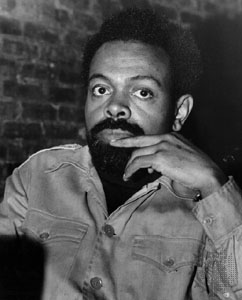 If one wanted a pocket history of late-fifties American avant-garde poetry that was under fifty pages and all by one author, one could do worse than to read LeRoi Jones' 1961 Preface to a Twenty-Volume Suicide Note. A teasing little note at the beginning of the book states that "these poems cover a period from 1957 until 1960 … I have arranged the book in as strict a chronological order as I could manage … for reasons best known to other young (?) poets" (parenthetical question mark Jones's). What this refers to I'm not entirely clear, but it's certainly true that Preface to a Twenty-Volume Suicide Note, more even than most books of poetry so arranged, is clarified enormously by proceeding chronologically. Jones covered a lot of distance in those three years, ending up, on the surface at least, at almost the diametrically opposite point to where he began.
The early poems have a casualness and humor that brings to mind the Beats and Frank O'Hara (all of whom were personal friends of Jones, and published by his Totem Press and Yugen magazine), as well as bearing plenty of traces of E.E. Cummings' easygoing satire. "Hymn for Lanie Poo," the second poem in the book, is a good example: a record of a black man's experiences in white urban bohemia, it features a provocative epigraph from Rimbaud ("Vous etes de faux Négres") and has references to John Coltrane, offhand travesties of academic "high" culture ("Read Garmanda's book, '14 Tribes of / Ambiguity,' didn't like it") and a generally breezy tone. Except for the heightened racial consciousness and occasional dips into a more Gothic register ("Beware the evil sun… / turn you black // crawl your eyeballs // rot your teeth"), this could be a late-fifties poem by O'Hara.
But Jones (like O'Hara himself, in fact) eventually becomes interested not just in expressing his personality but in critiquing it, a process which begins with the (great) sixth poem, "Look For You Yesterday, Here You Come Today." It begins: "Part of my charm: / envious blues feeling / separation of church & state / grim calls from drunk debutantes," the beginning of a poem-long anatomy of Jones' personality and lifestyle which is intricately bound up, not just with his status as a black man in a mostly white subculture, but with his role as literary editor as well:
terrible poems come in the mail. Descriptions of celibate parties
torn trousers: Great Poets dying
with their strophes on. & me
incapable of a simple straightforward
anger.
It's so diffuse
being alive. (15)
From there, Jones goes on to muse O'Hara-ishly about not being a painter, quote O'Hara himself on the value of quietism, contra Kerouac ("Frank walked off the stage, singing / 'My silence is as important as Jack's incessant yatter'"), associate his thoughts with Baudelaire's ("All these thots / are Flowers Of Evil"), get lost in a nostalgic reverie ("What has happened to box tops?"), and finally imagine his own death ("F. Scott Charon / will soon be glad-handing me / like a legionaire / My silver bullets all gone / My black mask trampled in the dust"). Thus the interior movement of this one poem anticipates the movement of Jones' development on the level of oeuvre.
What happens there is unexpected. As I read it, it entails a move away from O'Hara towards an engagement with the canonical texts of High Modernism: in particular, with exactly the quality of Modernism that poets like O'Hara, Ginsberg, Ashbery and Koch were most concerned to protest, its thoroughgoing depressiveness. Two poems in the middle of the book, "Way Out West" and "The Bridge," initiate a new phase in Jones' poetry by imitating and investigating what I'm going to call here the mode of "FUBAR Modernism," the sense of an entire environment gone to pot that in Eliot expresses itself elegiacally and, often through the use of the affective fallacy, lyrically as well. This return to Eliot, who Koch would later call "the Great Dictator / Of literature" (and not even exactly a return: let's keep in mind that Eliot was still alive in 1961, and if he was out of fashion with the avant-garde he was, in many ways, at the peak of his cultural power in the literary mainstream), is pretty surprising in a fellow-traveler of the Beats, Black Mountain and New York School, none of whom had much use for Eliot, preferring Pound and Williams if they had to have Modernist forebears at all.
I feel I could make a case for Eliot's pervasiveness throughout the whole second half of Preface to a Twenty-Volume Suicide Note, but for simplicity's sake I'll stick to the two poems aforementioned. Here's "Way Out West" in its entirety:
As simple an act
as opening the eyes. Merely
coming into things by degrees.
Morning: some tear is broken
on the wooden stairs
of my lady's eyes. Profusions
of green. The leaves. Their
constant prehensions. Like old
junkies on Sheridan Square, eyes
cold and round. There is a song
Nat Cole sings … This city
& the intricate disorder
of the seasons.
Unable to mention
something as abstract as time.
Even so, (bowing low in thick
smoke from cheap incense; all
kinds questions filling the mouth,
till you suffocate & fall dead
to opulent carpet.) Even so,
shadows will creep over your flesh
& hide your disorder, your lies.
There are unattractive wild ferns
outside the window
where the cats hide. They yowl
from there at nights. In heat
& bleeding on my tulips.
Steel bells, like the evil
unwashed Sphinx, towing in the twilight.
Childless old murderers, for centuries
with musty eyes.
I am distressed. Thinking
of the seasons, how they pass,
how I pass, my very youth, the
ripe sweet of my life; drained off…
Like giant rhesus monkeys;
picking their skulls,
with ingenious cruelty
sucking out the brains.
No use for beauty
collapsed, with moldy breath
done in. Insidious weight
of cankered dreams. Tiresias'
weathered cock.
Walking into the sea, shells
caught in the hair. Coarse
waves tearing the tongue.
Closing the eyes. As
simple an act. You float (24)
That the poem describes the contemplation of suicide should be obvious (even if Jones' book title didn't nudge us toward that reading). But it also narrates the passing of a day, beginning with "opening the eyes" and ending with "closing" them, though both are understood as "simple … act[s]" that contain within them the possibility of death, which is just as easy to bring on as wakefulness or sleep. As in Eliot, there is a constant toggling between dramatic or autobiographical details and purer image-making. There is also a tension between lyric and jeremiad, if we take the former to be the questioning of the self and the latter to be the questioning of the world. The textbook lyrical move of describing his "lady's eyes" leads him first to the natural world ("The / leaves. Their constant prehensions") and then to a corruption of it, as those eyes are in turn compared to "old / junkies on Sheridan Square" in a way that gives a wider characterization of the urban landscape in which our narrator dwells, a landscape which, as in Eliot, undermines the lyric impulse while paradoxically strengthening its effects (cf. Kant on disgust). The speaker, thrown once again into this sordid world, thinks of but does not quote from one of its more pleasant manifestations, a "Nat [King] Cole" song (an obvious update of the music hall numbers Eliot inserted into The Waste Land), and then free-associates across an ellipsis about "[t]his city / & the intricate disorder / of the seasons": an intricate disorder which recalls that which "breeds lilacs out of the dead land," the "stony rubbish" of "The Burial of the Dead." (I take it as significant that there is natural growth in Eliot's poem: it just appears as perverse, unnatural.) Writing a poem in what he sees as a waste land, but after Eliot, and after the avant-garde reaction against Eliot, Jones feels unentitled to the later Eliot's devices for coping with such misery: he is "[u]nable to mention / something as abstract as time" as in the redemptive Four Quartets (though of course Jones, in asserting this, has just mentioned it). Moving a little faster, we find "creep[ing]" "shadows," a personal "intricate disorder" ("your disorder") to match that of the city's, a dip into the rhetoric of pastoral elegy ("Thinking / of the seasons, how they pass, / how I pass, my very youth, the / ripe sweet of my life; drained off…"), horrible visceral images of the kind Eliot's early poetry is full of ("Childless old murderers," "giant rhesus monkeys") and then a final double echo, first of The Waste Land ("No use for beauty / collapsed … Tiresias' / weathered cock") and then, climactically, of "Prufrock" ("Walking into the sea, shells / caught in the hair. Coarse / waves tearing the tongue"): walk, sea, hair, drowning.
The next poem in the book, "The Bridge," takes up a different High Modernist author, one less eminent and influential than Eliot but perhaps even better as a symbol of the FUBAR aesthetic, since he actually killed himself: Hart Crane. The poem is not formally much like Crane, but it pays him unmistakable homage in its title and in its imagery.
I have forgotten the head
of where I am. Here at the bridge. 2
bars, down the street, seeming
to wrap themselves around my fingers, the day,
screams in me: pitiful like a little girl
you sense will be dead before the winter
is over.
I can't see the bridge now, I've past
it, its shadow, we drove through, headed out
along the cold insensitive roads to what
we wanted to call "ourselves."
"How does the bridge go?"
Here the bridge is also a musical bridge, and the poem can be understood as written from the perspective of a jazz musician. This realization renders the first strophe almost Metaphysical in its playfulness, with existential confusion figured as losing one's way in a song ("I have forgotten the head / of where I am") and "bars" meaning both measures of time in music and places where you drink alcohol, both of which are felt as mysteriously constricting ("seeming to wrap themselves around my fingers"). But music really appeals to Jones as a symbol of the unfreezable flow of time, a forward-rushing movement that cannot be seized at any one moment without losing its integrity: "The changes are difficult, when / you hear them, & know they are all in you, the chords // of your disorder meddle with your would be disguises." The obvious play is on "changes" as both chord changes and historical changes, both of which are "difficult" in the sense of jarring but which are felt as corresponding to some innate and inchoate need of the self, "your disorder" as opposed to "your would be disguises." My claim, a little bit of a stretch maybe, is that it's not just free jazz — and the postwar, postmodern moment associated with it — that Jones is talking about here, but also Crane's The Bridge, and Modernism. This has been left behind for what is already, by the late 50s, observable on the horizon as the coming of Confessionalism, which Jones presciently sees as abandoning monumental expression to travel down "the cold insensitive roads to what / we wanted to call 'ourselves.'"
The second half of the poem starts: "(Late feeling)," indicating a kind of postscript I suppose, the morning after the jazz performance maybe, but also continuing the theme of time, and of belatedness. It continues:
Way down till it barely, after that rush of
wind & odor reflected from hills you have forgotten the color
when you touch the water, & it closes, slowly, around your head.
Another image of immersion, death by water, suicide. But:
The bridge will be behind you, that music you know, that place,
you feel when you look up to say, it is me, & I have forgotten,
all the things, you told me to love, to try to understand, the
bridge will stand, high up in the clouds & the light, & you,
(when you have let the song run out) will be sliding through
unmentionable black. (26)
"The bridge will be behind you": literally in time (because the performance is over) but also figuratively in memory (because the forward-looking avant-garde is leaving The Bridge behind, and The Waste Land, or so they think). I read the passage, then, as expressing a certain melancholy for the moment of 20s/30s Modernism — a time when, arguably, jazz and avant-garde writing were more closely socially associated; in any case, a monumental timelessness ("the bridge will stand") placed in opposition to contemporary triviality, "all the things, you told me to love, to try to understand" (the pop cultural detritus celebrated in O'Hara's work, and in Preface's first six poems). Without the fixity and permanence of "the bridge" (a bridge between white and black experience? a testament to the potential of communal, human making?), the speaker of the poem is doomed to slide into solipsism, to racial and social isolation, "unmentionable black."
I guess what interests me most about this reading of Jones (which could be totally off the mark: I should admit I don't know almost any of his later, more militant work) is that it really fucks with the historical narrative that sees postwar poets, particularly ones with political leanings, rebelling against the High Modernist aesthetic of Eliot, Pound, Crane, etc. I'd argue that this is truer of essentially apolitical poets like Robert Lowell and (gulp) John Ashbery, who refuse High Modernism for affective reasons — it's not the mood, the tone they want to project — rather than because they see it is ideologically or communicatively faulty. This doesn't have to be a question of competing metaphysics, or its objectification ("poetics"), it's just rhetoric: the language of and The Waste Land and The Bridge is more "political" — i.e. more strident, stirring, closer to agitprop and soapbox speeches — than the language of Life Studies and Self-Portrait in a Convex Mirror. Even if "the personal is the political," the persons involved have to speak to and convince each other: as Eliot puts it in Sweeney Agonistes, "I gotta use words when I talk to you."
For the trajectory of influence in Preface to a Twenty-Volume Suicide Note is so clearly from O'Hara to Eliot, and not the other way around: that is, from personality to impersonality. And it is exactly personality, in O'Hara's sense, which is rejected by Jones as hegemonic, pedagogical, and totalizing ("all the things, you told me to love, to try to understand"). The mode of Eliot (and the example of Crane), on the other hand, offer him a different kind of expression.
Tuesday, September 25, 2007
Translatedness
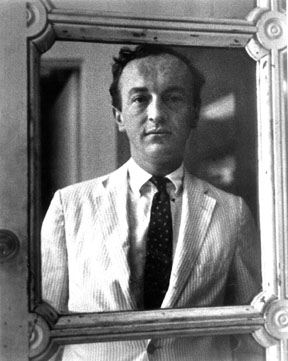 comes into American poetry in a big way in, or at least by, the mid-1950s. By this I mean not just the foreign but the obviously translated, the slightly awkward, the conspicuously non-American and non-English. Exhibit A: Frank O'Hara's Meditations in an Emergency (1957), particularly the poems "The Hunter" and "On Looking at La Grand Jatte, The Czar Wept Anew":
"He went to strange hills where
the stones were still warm from feet,
and then on and on. There were clouds
at his knees, his eyelashes
has grown thick from the colds,
as the fur of the bear does
in winter. Perhaps, he thought, I am
asleep, but he did not freeze to death." (CP, 167)
"He cannot, after all, walk up the wall. The skylight
is sealed. For why? for a change in the season,
for a refurbishing of the house. He wonders if,
when the music is over, he should not take down
the drapes, take up the rug, and join his friends
out there near the lake, right here beside the lake!
'O friends of my heart!'" (CP, 63)
The tone in these passages is odd but not too odd, less formally idiosyncratic than idiomatically off. A phrase like "the fur of the bear" could easily be made to sound less ridiculous (probably not O'Hara's purpose in this poem which, like so many others, verges on camp mockery) but the juxtaposition of images (frozen eyelashes and bear's fur) wouldn't be as striking if it were smoothed out that way. Even more noticeably, "For why?" is not exactly English: it's the sort of endearing mistake non-native speakers make all the time, but which in a poem achieves an uncanny effect unavailable to "Why?" or "What for?" The sense I get is that O'Hara is tentatively approaching, through parody, a style that in the 70s and 80s actually becomes a mainstream mode of American poetry, with Deep Image, Charles Simic et al: a style whose hallmark is the combination of a semi-colloquial simplicity coupled with a more formal-seeming resistance to contractions ("I am" not "I'm," "should not" not "shouldn't").
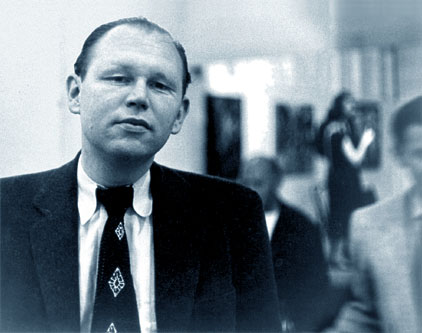 This is happening in other avant-garde work of the time, too. Exhibit B: Jack Spicer's After Lorca (1956), which purports to be an actual volume of translations though, as the ghost of Lorca writes in his introduction, "Mr. Spicer seems to derive pleasure in inserting and substituting one or two words which completely change the mood and often the meaning of the poem as I had written it" and "there are an almost equal number of poems that I did not write at all (one supposes that they must be his) executed in a somewhat fanciful imitation of my earlier style" (11). The poems themselves are good but, to me, unremarkable; however,
they are interspersed with fascinating micro-manifestoes, in the manner of Williams' Spring and All, which explicitly throw over Modernist precepts by declaring that the specific words of the poem, and whatever intricate changes are wrought on them, do not matter, since all such tinkering is doomed to be lost in translation anyway. Here's one of the more provocative moments:
Most of my friends like words too well. They set them under the blinding light of the poem and try to extract every possible connotation from each of them, every temporary pun, every direct or indirect connection — as if a word could become an object by mere addition of consequences. Others pick up words from the streets, from their bars, from their offices and display them proudly in their poems as if they were shouting, "See what I have collected from the American language. Look at my butterflies, my stamps, my old shoes!" What does one do with all this crap?
Words are what sticks to the real. We use them to push the real, to drag the real into the poem. They are what we hold on with, nothing else. They are as valuable in themselves as rope with nothing to be tied to. (Collected Books of Jack Spicer, 25)
Note that Spicer's reasons for writing in this style is not metaphysical but rhetorical: it's not that he values "the real" in and of itself, but that he wants his poems to last, and to travel. Haunting the first of these paragraphs is a judgment that two of the most influential strains of Anglo-American Modernism in the first half of the 20th century — the "blinding light" school of Eliot and Empson and the "stamp collection" school of Moore and Pound — are not aging, or translating, well. (This might also be the place to note that Spicer, like O'Hara, comes to this partial rejection of Modernist aesthetics through the oblique channels of camp. After Lorca is a very funny book.)
Final question: is this kind of thing really new? Though imitation of non-English sources had been going on for a long time (at least since Whitman, and probably earlier), most of those give the impression that the writer read those sources in the original: they imitate them as they were familiar with the work on its own terms, trying to replicate some quality in the language. Or, more rarely, they just ignore the poem's original linguistic presentation and engage them solely on the level of theme. But part of what interests Spicer and O'Hara, in different ways and for different reasons of course, is the style of translation itself, and the then-novel fact that they're even able to read poetry so geographically and linguistically remote from them as if it were written in English. (To my mind, this also distinguishes what they're doing from Pound's material reminders to the reader of his work's translatedness — "lie quiet Divus" and the like — which still imply a first-order encounter with the original text, won through the poet's own attention and labor.)
That's all I got for now. But the magazine New World Writing, which appeared from 1952 to 1959 and which O'Hara mentions in a later poem (he buys it in order "to see what the poets in Ghana are doing these days"), might be an interesting place to look in pursuing this question.
Monday, September 24, 2007
Howl, New Jersey, Holla
 Have either of you looked at a little book called The Poem that Changed America: "Howl" Fifty Years Later? Silly title, I know, but it's actually pretty useful. The collection is edited by Jason Shinder, Ginsberg's personal assistant from the late 70s on, and his introduction is kind of embarrassingly idolatrous and not very well-written. But the volume does bring together a number of interesting reactions to "Howl" (by, among others, Amiri Baraka, Marjorie Perloff (who argues that Ginsberg is a direct inheritor of Modernism [OK, fine, whatever] and that "Howl" is really about WWII [more interesting]), Billy Collins (!), John Cage, and Rick Moody) as well as including a facsimile of the original mimeographed edition, which "costed [sic] $10.00 typed by poet Robert Creely [sic] dittoed by Martha Rexroth transported by me to the hands of Robert Lavigne [sic] in exchange for several drawings," according to Ginsberg's inscription. (Doesn't $10 seem like kind of a lot of money for 1956? Seems like one could do a Lawrence Rainey-esque analysis of the economics of this first presentation.)
A couple of remarks about the poem itself: has anyone written on the possible influence of W.H. Auden on Ginsberg? Auden is mentioned in Shinder's preface as one of Ginsberg's "'enemies'," but also an "eternal presence": I don't know much about their personal relationship. But on this reading I notice quite a few touches which seem Audenesque; for one, the unexpected dropping and adding of definite articles (examples include "the drear light of Zoo" and "the last fantastic book thrown out of the tenement window"). This is something Auden does a lot, and I think the effect in his poems is usually to either particularize or universalize the rhetorical situation of any given poem: kind of a Zoom-In/Zoom-Out effect. In "Howl," Ginsberg utilizes this to keep the reader involved on a macrosociological level ("this is an important poem: it's about a generation, it's about a nation, it's about history") and on a more micro-, affective/emotional level ("this is about the author, his friends, his mother, or me"). It's a technique Whitman uses too, of course, but Ginsberg's interest in including shabby, sordid or ironic details which temporarily undercut the grandeur of the macro-phrases (e.g. "in beards and shorts with big pacifist eyes sexy in their dark skin passing out incomprehensible leaflets"; compare "Spain 1937") is closer to (early) Auden, I think.
Second idea: Ginsberg's insistent return to New Jersey place names ("Paterson," "Newark," "the filthy Passaic," etc.), among, admittedly, a lot of other place names, has to be understood, in its historical context, as a very complicated rhetorical move. Because New Jersey was not just where Ginsberg was from, and thus a signifier of the "real" or the "autobiographical," but also, by the mid-1950s, a landscape that was newly literary, thanks to the ecstatic critical reception of William Carlos Williams' still-in-progress Paterson. As Perloff points out her chapter on him in The Poetics of Indeterminacy, the publication of Paterson had finally secured a major reputation for Williams, long considered a marginal figure of the Modernist movement. Thus Paterson, which ten years earlier would have been fairly meaningless as a literary signifier, now evokes a whole complex of ideas about Modernism and American poetry that Ginsberg slyly insists upon. (And WCW also wrote the introduction to Howl's first commercial edition, as Adrienne pointed out months ago.)
Anyway, it's interesting to think of the symbolic capital that New Jersey acquires in this period, as the breeding ground of the only ideologically correct,* homegrown version of High Modernism (Williams') as well as the most incendiary updating/challenging of the academic version of Modernism: significantly a humble state, in proximity to a great metropolis but not containing it, a place synonymous with the simple, homely and plain, which also just happens to be the site of some of the worst industrial exploitation and ecological spoilage in the entire country. This is quite a different pole to orient us than London or New York, and the attitude of its writers to it is also significantly different: sure, it's a waste land, they tell us, but it's our waste land, and we like it that way. And this in turn might have something to do with the remarks by Leslie Fiedler that Adrienne just posted, about the American mediation (some would say adulteration) of Modernism through regionalism. But I'm getting hungry, so I'd better stop here and drag myself through some Brooklyn streets to go looking for a sandwich fix.
* If you ignore the Communism.
Monday, August 20, 2007
Writers who have been hit by cars
1. John Wheelwright
2. Renato Poggioli
3. Randall Jarrell
4. Frank O'Hara
5. Roland Barthes
6. Italo Svevo
7. James Weldon Johnson (by a train, while in a car)
2. Renato Poggioli
3. Randall Jarrell
4. Frank O'Hara
5. Roland Barthes
6. Italo Svevo
7. James Weldon Johnson (by a train, while in a car)
Sunday, July 29, 2007
The End of the 20s (Part 2)
Wednesday and Thursday: Hart Crane vs. Harold Bloom and R.P. Blackmur
 I took two days for Hart Crane, because I was determined that this time I was going to learn to like him. Without quite knowing why, I've never quite gotten the big deal about Crane; even Angus Fletcher couldn't convert me, and that guy is pretty persuasive, so I was more or less ready to give up on him after one final graduate-school try. That's not quite what happened, though; read on…
Part of the problem, I suppose, is that a lot of other people haven't quite decided whether they like Crane either. If most of the Modernists have clearly benefited from the influence of academic criticism, and the New Critics in particular, then Crane has probably mostly suffered. Certainly he suffers, in my opinion, from having such a pompous defender as the latter-day Harold Bloom, one of whose ubiquitous introductions adorns my copy of The Complete Poems of Hart Crane. It begins, unpromisingly: "Born in the year 1930, the year Hart Crane published The Bridge, I never reflect on that year of my birth without also meditating on Crane's visionary epic" (xi) — I know just what you mean, I feel the same way about The Muppet Movie. Bloom (who says he's been reading Crane since the age of ten!) spends much of his introduction talking not about Crane but about his critical reception, including (of course) Bloom's own late, heroic intervention in that reception, a story which allows him to do a lot of name-dropping about how he convinced Empson and Kenneth Burke to like Crane after all.
For all his trademark windbaggery, though, Bloom does put his finger on the big historical problem with Crane: as the one Modernist who openly embraces the heritage of Romantic-era American poetry — running from Whitman through Dickinson — he is easily detachable from the master-narrative of early 20th century literary history, which states that the important Modernists either rebelled against Romanticism or repressed it. Of course, this same apostasy makes him perfect for Bloom's counter-canon, which essentially regards Modernism as an enormous distraction from the genuine series of strong American poets, which goes (say it with me now) Emerson-Whitman-Dickinson-Stevens-Crane-Ashbery. Seen in this light, Crane is either everything or nothing: either the one visionary Romantic who saw through Modernism's revisionist narrative (Bloom's take), or an ambitious also-ran who failed to get with the program of the moment, to his work's and reputation's detriment (R.P. Blackmur pretty much sums it up when he attributes to Crane's work "the distraught but exciting splendor of a great failure," 316).
Both schools of criticism deal with Crane by treating him as an exception, and this seems unfair, because in the end Crane's not so radically (or conservatively) different from his Modernist compeers: he's clearly read a lot of the same books (White Buildings has epigraphs from Rimbaud and Ben Jonson); has the same love/hate relationship to democratic institutions and popular culture; in fact, on the evidence of The Bridge, he would've been a better standard-bearer for early Eliotic critical values than Eliot himself ultimately became.
What he is is slightly belated, in much the same way as Cummings: that is, his work emerges first into a climate of criticism founded on essentially the same tenets in which he himself believed. Presumably poets like Pound, Eliot, Moore and Williams gained something from bringing their work first in an atmosphere of general incomprehension: it allowed them to experiment more recklessly, and to exhibit a wider range of quality and "neatness of finish" (to borrow a borrowed phrase from Marianne Moore). They didn't have to worry about producing perfect poems, because there was no clear standard of perfection: the criteria to judge their poetry didn't yet exist. It's no wonder, then, that in some cases (notably the case of Eliot) their reputations would swell to gigantic sizes: such overcompensation was necessary to counteract the assumed prevailing hostility, whether it really existed or not. (This is, naturally, the story of postmodernism as well, as it was advocated for by cheerleaders like Charles Altieri and Marjorie Perloff. Thank you for allowing me a Jim Longenbach moment.)
By the time the likes of Blackmur and Burke were writing, though, Modernism had Modernist critics to contend with, critics eager to do something with their criteria besides enshrine new demi-gods. Thus poets who began publishing after 1922, lacking sufficient time to gain the prestige of incomprehensibility, were at a serious critical disadvantage. You can sense the passion which Blackmur brings to demonstrating that Crane is almost, but not quite, a great poet; he mercilessly picks apart Crane's obscurities in order to judge whether or not they are earned, and you can't help but feel that if he were to apply these same tests to many of his beloved Stevens' lines, he'd be forced to reach the same conclusions. (In this criticism of small differences you can really see the influence of Blackmur on his student Michael Fried: compare the famous ending of his 1968 attack on minimalism, "Art and Objecthood.")
So, in short, I think the problem is not so much that Crane was "a High Romantic in the era of High Modernism" (which is how Bloom puts it) as that he was a High Modernist in the era of High Modernism. He had the disadvantage to be writing in a period when, to some degree anyway, Modernism had become the norm: when the burden was not on the critics to find some redeeming value in the work of les jeunes but on the poets to measure up to the established recent canon. Many of Crane's poems, interestingly, include anxious references to books or pages, a habit he may have picked up from Mallarmé but which also places him as a reader of Modernism and not simply a writer of it, and which may bespeak a fear of close reading that his immediate predecessors didn't have to suffer (they were presumably more worried about being read at all). Examples include "Possessions" with its "page whose blind sun finally burns / Record of rage and partial appetites"; "Passage" which seems to meditate on some obscure connection between plagiarism ("my stolen book in hand") and self-plagiarism ("Memory, committed to the page had broke"); and the "scattered chapter" Crane tries to recover "At Melville's Tomb." (He also writes quite a lot about "hair," here and in The Bridge; not sure what to make of that.)
All that said, I think I basically agree with Blackmur that most of Crane's short lyrics in White Buildings don't really come off, though there are extraordinary lines in almost all of them. (Bloom would probably tell me to shut up and come back when I've read more Shelley.) The Bridge, though, is another story. I'm not sure that I've read the entire thing before, and on this reading I finally see why Crane's reputation rests on it: it really is one of the great long poems of the 20s. Blackmur's major criticism of it is that "Crane had the sensibility typical of Baudelaire and so misunderstood himself that he attempted to write The Bridge as if he had the sensibility typical of Whitman" (303-304); that is, he was a natural representative of "the school of tortured sensibility" writing in the affirmative heroic/patriotic mode of "Song of Myself." I wouldn't say Blackmur's wrong, but I would contend that this unlikely cross between Baudelaire and Whitman is exactly what's interesting about The Bridge. But of course I would say that, because in many ways it looks forward to what the New York School poets would eventually be doing: Frank O'Hara in particular, who absolutely insists on a productive tension between poétè maudit-esque "tortured sensibility" and Whitmanian democratic grandeur. (This was kinda, sorta what I wrote about in my paper on O'Hara for Jeremy's class; Jeremy, if you're reading this, I'm sorry I didn't make this clearer at the time.) A fuller reading of Crane's poem will have to wait until I have some more time on my hands, but let me just remind myself to consider it alongside O'Hara's "In Memory of My Feelings" some day — I think the contrast would be revealing.
Winner: Crane!
I took two days for Hart Crane, because I was determined that this time I was going to learn to like him. Without quite knowing why, I've never quite gotten the big deal about Crane; even Angus Fletcher couldn't convert me, and that guy is pretty persuasive, so I was more or less ready to give up on him after one final graduate-school try. That's not quite what happened, though; read on…Part of the problem, I suppose, is that a lot of other people haven't quite decided whether they like Crane either. If most of the Modernists have clearly benefited from the influence of academic criticism, and the New Critics in particular, then Crane has probably mostly suffered. Certainly he suffers, in my opinion, from having such a pompous defender as the latter-day Harold Bloom, one of whose ubiquitous introductions adorns my copy of The Complete Poems of Hart Crane. It begins, unpromisingly: "Born in the year 1930, the year Hart Crane published The Bridge, I never reflect on that year of my birth without also meditating on Crane's visionary epic" (xi) — I know just what you mean, I feel the same way about The Muppet Movie. Bloom (who says he's been reading Crane since the age of ten!) spends much of his introduction talking not about Crane but about his critical reception, including (of course) Bloom's own late, heroic intervention in that reception, a story which allows him to do a lot of name-dropping about how he convinced Empson and Kenneth Burke to like Crane after all.
For all his trademark windbaggery, though, Bloom does put his finger on the big historical problem with Crane: as the one Modernist who openly embraces the heritage of Romantic-era American poetry — running from Whitman through Dickinson — he is easily detachable from the master-narrative of early 20th century literary history, which states that the important Modernists either rebelled against Romanticism or repressed it. Of course, this same apostasy makes him perfect for Bloom's counter-canon, which essentially regards Modernism as an enormous distraction from the genuine series of strong American poets, which goes (say it with me now) Emerson-Whitman-Dickinson-Stevens-Crane-Ashbery. Seen in this light, Crane is either everything or nothing: either the one visionary Romantic who saw through Modernism's revisionist narrative (Bloom's take), or an ambitious also-ran who failed to get with the program of the moment, to his work's and reputation's detriment (R.P. Blackmur pretty much sums it up when he attributes to Crane's work "the distraught but exciting splendor of a great failure," 316).
Both schools of criticism deal with Crane by treating him as an exception, and this seems unfair, because in the end Crane's not so radically (or conservatively) different from his Modernist compeers: he's clearly read a lot of the same books (White Buildings has epigraphs from Rimbaud and Ben Jonson); has the same love/hate relationship to democratic institutions and popular culture; in fact, on the evidence of The Bridge, he would've been a better standard-bearer for early Eliotic critical values than Eliot himself ultimately became.
What he is is slightly belated, in much the same way as Cummings: that is, his work emerges first into a climate of criticism founded on essentially the same tenets in which he himself believed. Presumably poets like Pound, Eliot, Moore and Williams gained something from bringing their work first in an atmosphere of general incomprehension: it allowed them to experiment more recklessly, and to exhibit a wider range of quality and "neatness of finish" (to borrow a borrowed phrase from Marianne Moore). They didn't have to worry about producing perfect poems, because there was no clear standard of perfection: the criteria to judge their poetry didn't yet exist. It's no wonder, then, that in some cases (notably the case of Eliot) their reputations would swell to gigantic sizes: such overcompensation was necessary to counteract the assumed prevailing hostility, whether it really existed or not. (This is, naturally, the story of postmodernism as well, as it was advocated for by cheerleaders like Charles Altieri and Marjorie Perloff. Thank you for allowing me a Jim Longenbach moment.)
By the time the likes of Blackmur and Burke were writing, though, Modernism had Modernist critics to contend with, critics eager to do something with their criteria besides enshrine new demi-gods. Thus poets who began publishing after 1922, lacking sufficient time to gain the prestige of incomprehensibility, were at a serious critical disadvantage. You can sense the passion which Blackmur brings to demonstrating that Crane is almost, but not quite, a great poet; he mercilessly picks apart Crane's obscurities in order to judge whether or not they are earned, and you can't help but feel that if he were to apply these same tests to many of his beloved Stevens' lines, he'd be forced to reach the same conclusions. (In this criticism of small differences you can really see the influence of Blackmur on his student Michael Fried: compare the famous ending of his 1968 attack on minimalism, "Art and Objecthood.")
So, in short, I think the problem is not so much that Crane was "a High Romantic in the era of High Modernism" (which is how Bloom puts it) as that he was a High Modernist in the era of High Modernism. He had the disadvantage to be writing in a period when, to some degree anyway, Modernism had become the norm: when the burden was not on the critics to find some redeeming value in the work of les jeunes but on the poets to measure up to the established recent canon. Many of Crane's poems, interestingly, include anxious references to books or pages, a habit he may have picked up from Mallarmé but which also places him as a reader of Modernism and not simply a writer of it, and which may bespeak a fear of close reading that his immediate predecessors didn't have to suffer (they were presumably more worried about being read at all). Examples include "Possessions" with its "page whose blind sun finally burns / Record of rage and partial appetites"; "Passage" which seems to meditate on some obscure connection between plagiarism ("my stolen book in hand") and self-plagiarism ("Memory, committed to the page had broke"); and the "scattered chapter" Crane tries to recover "At Melville's Tomb." (He also writes quite a lot about "hair," here and in The Bridge; not sure what to make of that.)
All that said, I think I basically agree with Blackmur that most of Crane's short lyrics in White Buildings don't really come off, though there are extraordinary lines in almost all of them. (Bloom would probably tell me to shut up and come back when I've read more Shelley.) The Bridge, though, is another story. I'm not sure that I've read the entire thing before, and on this reading I finally see why Crane's reputation rests on it: it really is one of the great long poems of the 20s. Blackmur's major criticism of it is that "Crane had the sensibility typical of Baudelaire and so misunderstood himself that he attempted to write The Bridge as if he had the sensibility typical of Whitman" (303-304); that is, he was a natural representative of "the school of tortured sensibility" writing in the affirmative heroic/patriotic mode of "Song of Myself." I wouldn't say Blackmur's wrong, but I would contend that this unlikely cross between Baudelaire and Whitman is exactly what's interesting about The Bridge. But of course I would say that, because in many ways it looks forward to what the New York School poets would eventually be doing: Frank O'Hara in particular, who absolutely insists on a productive tension between poétè maudit-esque "tortured sensibility" and Whitmanian democratic grandeur. (This was kinda, sorta what I wrote about in my paper on O'Hara for Jeremy's class; Jeremy, if you're reading this, I'm sorry I didn't make this clearer at the time.) A fuller reading of Crane's poem will have to wait until I have some more time on my hands, but let me just remind myself to consider it alongside O'Hara's "In Memory of My Feelings" some day — I think the contrast would be revealing.
Winner: Crane!
Subscribe to:
Posts (Atom)


