Showing posts with label Baudelaire. Show all posts

Saturday, April 4, 2009

The Spy Who Loved Me


The best part about doing archival work on Cold War materials is that when you are allowed to use a digital camera to photograph documents, you feel like someone out of a John le Carre novel.

Fun fact: When the US Information Services Bureau, which ran the American Libraries across Europe in the post-WWII period (particularly in France and Austria), asked for donations of books representative of American culture, New Directions gave them a recently published translation of Baudelaire.

As James Laughlin's right-hand man Robert MacGregor put it, in a 1955 letter to Mr. L.L. Brady at the American Embassy in Paris, "Here is an excellent example of American scholarship. Bilingual editions are of inestimable value, and not only in schools. It therefore occurs to us that you might find FLOWERS OF EVIL a useful item for the New Year's presentations to people of importance, as well as for the end-of-the-year school prizes next June, the library loan collections and the lists of available titles circulated to the 21 French-speaking missions." (quoted from New Directions Publishing Corp. records, call # bMS Am 2077, Houghton Library, Harvard)

Thursday, September 13, 2007

C'mere, you

I have a tremendous critical crush on Lionel Trilling. It's the dangerous kind of crush, one where you're not quite sure you really ought to like the other person, or whether your friends would approve: a certain sense of "What am I getting myself into here?" attends my reading, especially of his more sweeping and impressive moments. After all, Trilling in many ways represents what the radical energies of the 60s and 70s swept away, not without some very good reasons; and his general theoretical bent, though emerging out of Trotskyism and addressing itself to fellow liberal intellectuals of the 1940s, is usually seen as a harbinger of neoconservatism (the most substantial recent article I could find on him is from the Weekly Standard, which gives you some idea).

But as Trilling points out in his preface, "a criticism which has its heart the interests of liberalism might find its most useful work not in conforming liberalism in its general sense of rightness but rather in putting under some degree of pressure the liberal ideas and assumptions of the present time" (x). And putting ideas under pressure is what Trilling does brilliantly. I read just four essays (five including the preface) from his 1950 book The Liberal Imagination — I borrowed my dad's copy; it's apparently, Yaron informs me, out of print — but they were real doozies: "Reality and America," "The Function of the Little Magazine," "The Sense of the Past" and "The Kinsey Report." Each of them is amazing and challenging in its own way, devoting itself to very specific contemporary issues while nonetheless making up part of an expansive, deeply felt and cogently defended view of literature. (Adrienne, you might want to check out the first one; it has some really interesting insights about the realist novel and the liberal preference for Theodore Dreiser over Henry James. And he also has pieces, in the same book, on Sherwood Anderson, Huckleberry Finn, and "Manners, Morals, and the Novel.")

Anyway, all of the essays have a lot to recommend them, not least for their usefulness in summing up late 40s critical and political attitudes (often in the process of critiquing them). "The Sense of the Past," for instance, is an ambivalent meditation on the New Criticism and its methods, which Trilling argues have to be tempered with an awareness of literary works as "historical facts" — pretty much the deconstruction/new historicism debate of the 1980s in embryo. The one on the Kinsey Report, on the other hand, is the most unsettling, in part because Trilling violently resists the report's attempt to destigmatize homosexuality, a stance he takes in part because of his own strong allegiance to Freudianism. This is where you begin to see the pernicious side of Trilling's neoconservative leanings; though one wonders if Trilling were alive today, when homosexuality as a social fact seems so much more evident and has been so much more cogently argued for, if he wouldn't temper his objections so much. Maybe that's wishful thinking. At any rate, its early considerations of the role science can and should play in social discourse are fascinating and valuable.

Anyway, I'm just going to end with a list of quotes I liked. And I'm going to let out a little sigh as I finish typing each of them.

from the preface:

"in the modern situation it is just when a movement despairs of having ideas that it turns to force, which it masks in ideology" (x)

"Charles Péguy said, 'Tout commence en mystique en finit en politique' — everything begins in sentiment and assumption and finds it issue in political action and institutions. The converse is also true: just as sentiments become ideas, ideas eventually establish themselves as sentiments." (xi)

"the literature of the modern period, of the last century and a half, has been characteristically political" (xii) [interestingly contra Edmund Wilson]

"The paradox is that liberalism is concerned with the emotions above all else, as proof of which the word happiness stands at the very center of its thought, but in its effort to establish the emotions, or certain among them, in some sort of freedom, liberalism somehow tends to deny them their full possibility." (xii-xiii)

"literature is that human activity that takes the fullest and most precise account of variousness, possibility, complexity, and difficulty" (xv)

from "Reality and America":

"the culture of a nation is not truly figured in the image of the current. A culture is not a flow, nor even a confluence; the form of its existence is struggle, or at least debate — it is nothing if not dialectic. And in any culture there are likely to be certain artists who contain a large part of the dialectic within themselves …" (9)

"In the American metaphysic, reality is always material reality, hard, resistant, unformed, impenetrable, and unpleasant. And that mind is alone felt to be truly trustworthy which most resembles this reality by most nearly reproducing the sensations it affords." (13)
[Greg, I think this might be usefully applied to Pound and the Objectivists — what do you think?]

"We live, understandably enough, with the sense of urgency; our clock, like Baudelaire's, has had the hands removed and bears the legend, 'It is later than you think.' But with us it is always a little too late for mind, yet never too late for honest stupidity; always a little too late for understanding, never too late for righteous, bewildered wrath; always too late for thought, never too late for naïve moralizing. We seem to like to condemn our finest but not our worst qualities by pitting them against the exigencies of time." (18)

from "The Function of the Little Magazine":

"… [in the nineteenth century] it was the natural expectation that a serious idea would be heard and considered. Baudelaire is the poet from whom our modern disowned poets have taken their characteristic attitudes, yet Baudelaire himself was still able to think of 'success,' to believe in the possibility of being seriously listened to by the very society he flouted, and he even carried his belief to the point of standing for election to the Academy" (96)

"the emotional space of the human mind is large but not infinite, and perhaps it will be pre-empted by the substitutes for literature — the radio, the movies, and certain magazines — which are antagonistic to literature not merely because they are competing genres but because of the political and cultural assumptions that control them. Further, the politics with which we are now [1946] being confronted may be of such kind as to crush the possibility of that interplay between free will and circumstance on which all literature depends. These conditions can scarcely encourage us. On the other hand, they must not be allowed to obsess us so that we cannot work" (96-97)

"It is a striking fact about [the] literature of contemporary liberalism that it is commercially very successful — at the behest of the liberal middle class, that old vice of 'commercialism,' which we all used to scold, is now at a disadvantage before the 'integrity' which it once used to corrupt. Our dominant literature is profitable in the degree that it is earnest, sincere, solemn. At its best it has the charm of a literature of piety. It has neither imagination nor mind." (98)
[Adrienne, you mentioned you guys were talking about WCW's "earnestness" the other day — does this quote have any resonances for that discussion?]

[on the apoliticality of the great Modernists]: "If tolerance is in question, I am inclined rather to suppose that it should go to those writers from whom, whatever their difficulty, we hear the unmistakable note of seriousness — a note which, when we hear it, should suggest to us that those who sound it are not devoting their lives to committing literary suicide." (99)

"to organize a new union between our political ideas and our imagination — in all our cultural purview there is no work more necessary … There are manifest dangers in doing this, but greater dangers in not doing it. Unless we insist that politics is imagination and mind, we will learn that imagination and mind are politics, and of a kind that we will not like." (100)
[could be a gloss on Auden]

"We are dealing again with power. The question of power has not always preoccupied literature … Quality is the first, and perhaps should be the only, consideration. But in our situation today, when we think of quality, we must ask what chance a particular quality has to survive, and how it can be a force to act in its own defense and in the defense of those social circumstances which will permit it to establish and propagate itself in the world. This is not a desirable state of affairs. 'Art is a weapon' and 'ideas are weapons' were phrases that a few years ago had a wide and happy currency; and sometimes, as we look at the necessities of our life, we have the sense that the weapon metaphor all too ruthlessly advances — food is now a weapon, sleep and love will soon be weapons, and our final slogan perhaps will be, 'Life is a weapon.' And yet the question of power is forced upon us." (101)
[and this almost demands to be read vis-à-vis Marianne Moore and her constant concern with metaphorical "weapons" — maybe we can talk about this a little on Tuesday?]

"The word coterie should not frighten us too much. Neither should it charm us too much; writing for a small group does not ensure integrity any more than writing for the many; the coterie can corrupt as surely, and sometimes as quickly, as the big advertisement appropriation. But the smallness of the coterie does not limit the 'human' quality of the work." (102)

"When we try to estimate the power of literature, we must not be misled by the fancy pictures of history. Now and then periods do occur when the best literature overflows its usual narrow bounds and reaches a large mass of the people … It is what we must always hope and work for. But in actual fact the occasions are rare when the best literature becomes, as it were, the folk literature, and generally speaking literature has always been carried on within small limits and under great difficulties … But whenever it becomes a question of measuring the power of literature, Shelley's old comment recurs, and 'it exceeds all imagination to conceive what would have been the moral condition of the world' if literature did not continue in existence with its appeal to limited groups, keeping the road open." (103)
[this is problematic, probably, but so so beautiful]

from "The Sense of the Past":

"All sorts of studies are properly ancillary to the study of literature. For example, the study of the intellectual conditions in which a work of literature was made is not only legitimate but sometimes even necessary to the perception of its power. Yet when Professor Lovejoy in his influential book, The Great Chain of Being, tells us that for the study of the history of ideas a really dead writer is better than one whose works are still enjoyed, we naturally pull up short and wonder if we are not in danger of becoming like the Edinburgh body-snatchers who saw to it that there were enough cadavers for study in the medical school." (182)

"in an age of science prestige is to be gained by approximating the methods of science" (182)

"The faults of [the New Critics] we know. Perhaps their chief fault they share with the scientific-historical scholars themselves — they try too hard. No less than the scholars, the critics fall into the error that [John Jay] Chapman denounced, the great modern illusion 'that anything whatever … can be discovered through hard intellectual work and concentration.' We often feel of them that they make the elucidation of poetic ambiguity or irony a kind of intellectual calisthenic ritual [a little smack at Empson, I think]. Still, we can forgive them their strenuousness, remembering that something has happened to our relation with language which seems to require that we make methodical and explicit what was once immediate and unformulated." (184)

"even in the lyric poem the factor of historicity is part of the aesthetic experience; it is not merely a negative condition of the other elements, such as prosody and diction, which, if they are old enough, are likely to be insufficiently understood — it is itself a positive aesthetic factor with positive and pleasurable relations to the other aesthetic factors. It is part of the given of the work, which we cannot help but respond to. The New Critics imply that this situation should not exist, but it cannot help existing, and we have to take it into account." (185)

"The question is always arising: What is the real poem? Is it the poem we now perceive? Is it the poem the author consciously intended? Is it the poem the author intended and his first readers read? Well, it is all these things, depending on the state of our knowledge. But in addition the poem is the poem as it has existed in history … This makes it a thing we can never wholly understand — other things too, of course, help to make it that — and the mystery, the unreachable part of the poem, is one of its aesthet

"we have … to open our minds to the whole question of what we mean when we speak of causation in culture … 'There is no subject,' [Hume] says, 'in which we must proceed with more caution than in tracing the history of the arts or sciences: lest we assign causes which never existed and reduce what is merely contingent to stable and universal principles.' … But there is one fact, he continues, which gives us the license to speculate — this is the fact that the choice spirits arise from and are related to the mass of the people of their time … This gives us our charter to engage in cultural history and cultural criticism, but we must see that it is a charter to deal with a mystery." (188)

"We have come to believe that some ideas can betray us, others save us. The educated classes are learning to blame ideas for their troubles, rather than blaming what is a very different thing — our own bad thinking. This is the great vice of academicism, that it is concerned with ideas rather than thinking, and nowadays the errors of academicism do not stay in the academy; they make their way into the world, and what begins as a failure of perception among intellectual specialists finds its fulfillment in policy and action." (192)


I could go on and on (I haven't even gotten to the Kinsey essay yet), but if you've cared to read this far you should probably just buy the book. I'll close, though, with a sentence which might serve as Trilling's manifesto, though he attributes its idea not to himself but to Nietzsche: that "culture [should] be studied and judged as life's continuous evaluation of itself, the evaluation being understood as never finding full expression in the 'operating forces' of a culture, but as never finding expression at all without reference to these gross, institutional facts" (197). From my perspective, this is as close as we can get — as close as we need to get, maybe I should say — to a justification of what we should be trying to do.

Sunday, August 5, 2007

Clement Greenberg on What Is Modernism


"What can be safely called Modernism emerged in the middle of the last century. And rather locally, in France, with Baudelaire in literature and Manet in painting, and maybe with Flaubert too, in prose fiction. (It was a while later, and not so locally, that Modernism appeared in music and architecture, but it was in France again that it appeared first in sculpture. Outside France later still, it entered the dance.) The "avant-garde" was what Modernism was called at first, but this term has become a good deal compromised by now as well as remaining misleading. Contrary to the common notion, Modernism or the avant-garde didn't make its entrance by breaking with the past. Far from it. Nor did it have such a thing as a program, nor has it really ever had one -- again, contrary to the common notion. Nor was it an affair of ideas or theories or ideology. It's been in the nature, rather, of an attitude and an orientation: an attitude and orientation to standards and levels: standards and levels of aesthetic quality in the first and also the last place. And where did the Modernists get their standards and levels from? From the past, that is, the best of the past. But not so much from particular models in the past -- though from these too -- as from a generalized feeling and apprehending, a kind of distilling and extracting of aesthetic quality as shown by the best of the past. And it wasn't a question of imitating but one of emulating -- just as it had been for the Renaissance with respect to antiquity. It's true that Baudelaire and Manet talked much more about having to be modern, about reflecting life in their time, than about matching the best of the past. But the need and the ambition to do so show through in what they actually did, and in enough of what they were recorded as saying. Being modern was a means of living up to the past.

But didn't artists and writers before these two look to the past for standards of quality? Of course. But it was a question of how one looked, and with how much urgency.

Modernism appeared in answer to a crisis. The surface aspect of that crisis was a certain confusion of standards brought on by romanticism. The romantics had already looked back into the past, the pre-eighteenth-century past, but had made the mistake in the end of trying to reinstall it. Architecture was where this attempt became most conspicuous, in the form of revivalism. Romantic architecture wasn't all that slavish, it wasn't the dead loss it's supposed to be, but still it didn't sufffice; it may have maintained a look of the past, but not its standards. It wasn't revised enough by later experience, or revised in the right way: as Baudelaire and Manet might have put it, it wasn't modern enough. There ensued finally an academicization of the arts everywhere except in music and prose fiction. Academicization isn't a matter of academies -- there were academies long before academicization and before the nineteenth century. Academicism consists in the tendency to take the medium of an art too much for granted. It results in blurring: words become imprecise, color gets muffled, the physical sources of sound become too much dissembled. (The piano, which dissembles its being a stringed instrument, was the romantic instrument par excellence; but it is as if precisely because it made a point of dissembling that it produced the wonderful music it did in romantic times, turning imprecision into a new kind of precision.)

Modernism's reaction against romanticism consisted in part in a new investigating and questioning of the medium in poetry and painting, and in an emphasis on preciseness, on the concrete. But above all Modernism declared itself by insisting on a renovation of standards, and it effected this by a more critical and less pious approach to the past in order to make it more genuinely relevant, more "modern." It reaffirmed the past in a new way and in a variety of new ways. And it belonged to this reaffirming that the balance was tipped toward emulation as against imitation more radically than ever before -- but only out of necessity, the necessity imposed by the reaffirmed and renovated standards."


---------------


"I haven't finished with my exposition and definition of Modernism. The most essential part of it comes, finally, now. Modernism has to be understood as a holding operation, a continuing endeavor to maintain aesthetic standards in the face of threats -- not just as a reaction against romanticism. As the response, in effect, to an ongoing emergency. Artists in all times, despite some appearances to the contrary, have sought aesthetic excellence. What singles Modernism out and gives it its place and identity more than anything else is its response to a heightened sense of threats to aesthetic value: threats from the social and material ambience, from the temper of the times, all conveyed through the demands of a new and open cultural market, middlebrow demands. Modernism dates from the time, in the mid-nineteenth century, when that market became not only established -- it had been there long before -- but entrenched and dominant, without significant competition.

So I come at last to what I offer as an embracing and perdurable definition of Modernism: that it consists in the continuing endeavor to stem the decline of aesthetic standards threatened by the relative democratization of culture under industrialism; that the overriding and innermost logic of Modernism is to maintain the levels of the past in the face of an opposition that hadn't been present in the past. Thus the whole enterprise of Modernism, for all its outward aspects, can be seen as backward-looking. That seems paradoxical, but reality is shot through with paradox, is practically constituted by it."

Sunday, July 29, 2007

The End of the 20s (Part 2)

Wednesday and Thursday: Hart Crane vs. Harold Bloom and R.P. Blackmur
I took two days for Hart Crane, because I was determined that this time I was going to learn to like him. Without quite knowing why, I've never quite gotten the big deal about Crane; even Angus Fletcher couldn't convert me, and that guy is pretty persuasive, so I was more or less ready to give up on him after one final graduate-school try. That's not quite what happened, though; read on…

Part of the problem, I suppose, is that a lot of other people haven't quite decided whether they like Crane either. If most of the Modernists have clearly benefited from the influence of academic criticism, and the New Critics in particular, then Crane has probably mostly suffered. Certainly he suffers, in my opinion, from having such a pompous defender as the latter-day Harold Bloom, one of whose ubiquitous introductions adorns my copy of The Complete Poems of Hart Crane. It begins, unpromisingly: "Born in the year 1930, the year Hart Crane published The Bridge, I never reflect on that year of my birth without also meditating on Crane's visionary epic" (xi) — I know just what you mean, I feel the same way about The Muppet Movie. Bloom (who says he's been reading Crane since the age of ten!) spends much of his introduction talking not about Crane but about his critical reception, including (of course) Bloom's own late, heroic intervention in that reception, a story which allows him to do a lot of name-dropping about how he convinced Empson and Kenneth Burke to like Crane after all.

For all his trademark windbaggery, though, Bloom does put his finger on the big historical problem with Crane: as the one Modernist who openly embraces the heritage of Romantic-era American poetry — running from Whitman through Dickinson — he is easily detachable from the master-narrative of early 20th century literary history, which states that the important Modernists either rebelled against Romanticism or repressed it. Of course, this same apostasy makes him perfect for Bloom's counter-canon, which essentially regards Modernism as an enormous distraction from the genuine series of strong American poets, which goes (say it with me now) Emerson-Whitman-Dickinson-Stevens-Crane-Ashbery. Seen in this light, Crane is either everything or nothing: either the one visionary Romantic who saw through Modernism's revisionist narrative (Bloom's take), or an ambitious also-ran who failed to get with the program of the moment, to his work's and reputation's detriment (R.P. Blackmur pretty much sums it up when he attributes to Crane's work "the distraught but exciting splendor of a great failure," 316).

Both schools of criticism deal with Crane by treating him as an exception, and this seems unfair, because in the end Crane's not so radically (or conservatively) different from his Modernist compeers: he's clearly read a lot of the same books (White Buildings has epigraphs from Rimbaud and Ben Jonson); has the same love/hate relationship to democratic institutions and popular culture; in fact, on the evidence of The Bridge, he would've been a better standard-bearer for early Eliotic critical values than Eliot himself ultimately became.

What he is is slightly belated, in much the same way as Cummings: that is, his work emerges first into a climate of criticism founded on essentially the same tenets in which he himself believed. Presumably poets like Pound, Eliot, Moore and Williams gained something from bringing their work first in an atmosphere of general incomprehension: it allowed them to experiment more recklessly, and to exhibit a wider range of quality and "neatness of finish" (to borrow a borrowed phrase from Marianne Moore). They didn't have to worry about producing perfect poems, because there was no clear standard of perfection: the criteria to judge their poetry didn't yet exist. It's no wonder, then, that in some cases (notably the case of Eliot) their reputations would swell to gigantic sizes: such overcompensation was necessary to counteract the assumed prevailing hostility, whether it really existed or not. (This is, naturally, the story of postmodernism as well, as it was advocated for by cheerleaders like Charles Altieri and Marjorie Perloff. Thank you for allowing me a Jim Longenbach moment.)

By the time the likes of Blackmur and Burke were writing, though, Modernism had Modernist critics to contend with, critics eager to do something with their criteria besides enshrine new demi-gods. Thus poets who began publishing after 1922, lacking sufficient time to gain the prestige of incomprehensibility, were at a serious critical disadvantage. You can sense the passion which Blackmur brings to demonstrating that Crane is almost, but not quite, a great poet; he mercilessly picks apart Crane's obscurities in order to judge whether or not they are earned, and you can't help but feel that if he were to apply these same tests to many of his beloved Stevens' lines, he'd be forced to reach the same conclusions. (In this criticism of small differences you can really see the influence of Blackmur on his student Michael Fried: compare the famous ending of his 1968 attack on minimalism, "Art and Objecthood.")

So, in short, I think the problem is not so much that Crane was "a High Romantic in the era of High Modernism" (which is how Bloom puts it) as that he was a High Modernist in the era of High Modernism. He had the disadvantage to be writing in a period when, to some degree anyway, Modernism had become the norm: when the burden was not on the critics to find some redeeming value in the work of les jeunes but on the poets to measure up to the established recent canon. Many of Crane's poems, interestingly, include anxious references to books or pages, a habit he may have picked up from Mallarmé but which also places him as a reader of Modernism and not simply a writer of it, and which may bespeak a fear of close reading that his immediate predecessors didn't have to suffer (they were presumably more worried about being read at all). Examples include "Possessions" with its "page whose blind sun finally burns / Record of rage and partial appetites"; "Passage" which seems to meditate on some obscure connection between plagiarism ("my stolen book in hand") and self-plagiarism ("Memory, committed to the page had broke"); and the "scattered chapter" Crane tries to recover "At Melville's Tomb." (He also writes quite a lot about "hair," here and in The Bridge; not sure what to make of that.)

All that said, I think I basically agree with Blackmur that most of Crane's short lyrics in White Buildings don't really come off, though there are extraordinary lines in almost all of them. (Bloom would probably tell me to shut up and come back when I've read more Shelley.) The Bridge, though, is another story. I'm not sure that I've read the entire thing before, and on this reading I finally see why Crane's reputation rests on it: it really is one of the great long poems of the 20s. Blackmur's major criticism of it is that "Crane had the sensibility typical of Baudelaire and so misunderstood himself that he attempted to write The Bridge as if he had the sensibility typical of Whitman" (303-304); that is, he was a natural representative of "the school of tortured sensibility" writing in the affirmative heroic/patriotic mode of "Song of Myself." I wouldn't say Blackmur's wrong, but I would contend that this unlikely cross between Baudelaire and Whitman is exactly what's interesting about The Bridge. But of course I would say that, because in many ways it looks forward to what the New York School poets would eventually be doing: Frank O'Hara in particular, who absolutely insists on a productive tension between poétè maudit-esque "tortured sensibility" and Whitmanian democratic grandeur. (This was kinda, sorta what I wrote about in my paper on O'Hara for Jeremy's class; Jeremy, if you're reading this, I'm sorry I didn't make this clearer at the time.) A fuller reading of Crane's poem will have to wait until I have some more time on my hands, but let me just remind myself to consider it alongside O'Hara's "In Memory of My Feelings" some day — I think the contrast would be revealing.

Winner: Crane!

Monday, June 25, 2007

Symbolism

Here are the names of some Symbolist authors I've been reading over the past couple of weeks: Charles Baudelaire, Stephane Mallarmé, Jules Laforgue, Paul Verlaine, Arthur Rimbaud, Auguste Villiers de l'Isle-Adam (on whom more later — this guy is insane). What do these writers have in common? Nothing really very definitive, I would say, other than their historical placement in late 19th century France, and certainly nothing that can be meaningfully summed up by the term "Symbolism." (Arthur Symons writes, unhelpfully, that “[w]ithout symbolism there can be no literature; indeed, not even language” (3); so, these Symbolists, they tend to use words, then?) A better term might be "Vague-ism" (la Vieille Vague?) since they all seem to make a point of avoiding the traditional precision of the French language in an effort to capture impressions, sensations, spiritual essences. Certainly there are some family resemblances beyond their vague interest in vagueness: viz., an orientation toward classicism and antiquarianism in general (Baudelaire, Mallarmé, Villiers); an abiding obsession with sin and apostasy left over from an (often lapsed) Catholicism (Baudelaire, Rimbaud, Villiers, Verlaine); a somewhat colloquial bent (Laforgue, Rimbaud, Verlaine); a tendency to compose lyric cycles (Baudelaire, Verlaine, Rimbaud); an interest in the English language, if not England itself (Verlaine, Mallarmé, Laforgue); a persistent attention to Paris and the habits of the bourgeoisie (Baudelaire, Laforgue); and, bien sur, a concern with modernity and the "new" (Baudelaire, Rimbaud, Laforgue).

The term "Symbolism" is probably most apt for Mallarmé, who specializes in multiply overdetermined, head-spinningly allegorical literary symphonies like L'Àpres-midi d'une jeune faune. Unsurprisingly he's the one Derrida likes best; see his essay "Mallarmé" in Acts of Literature, where he appreciates SM's syntactical ambiguities and "chains" of signification which are "as if without support, always suspended." I probably like him least, if only because he's the most untranslatable into English and because the criticism about him is the most fatuous (although do I note that his endlessly extended streams of syntax probably had some kind of substantive influence on Proust).


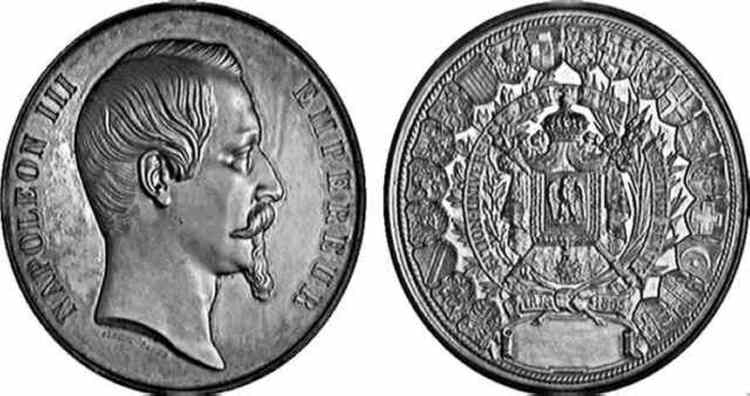
It's been interesting to juxtapose my exploration of this colorful cast of characters with my continued reading of Marx, and specifically “The Eighteenth Brumaire of Louis Napoleon,” his exhaustive account of the deterioration of the French Second Republic (1848-1852) into the neo-imperial era of Napoleon III. The impression I get from this essay is that Paris, beginning in the latter half of the nineteenth century, is largely struggling to deradicalize itself, even within the republic's own ranks. Marx brilliantly shows how every political move made by the bourgeois-controlled social republic was made in the name of restoring order, regularizing trade, and preventing another bloody revolution. Essentially it was this republican timidity and caution, Marx argues, that allowed Louis Bonaparte, Napoleon's nephew and (in Marx's view) a thoroughly uninspiring figure, to gain the support of the French peasantry and accomplish his coup d'état, thus establishing the Second Empire, the milieu of Baudelaire's Les fleurs du mal.

And it does seem to me that Baudelaire, and the Symbolists later on, for all their ostensible hatred of the bourgeoisie and deliberate provocation and strangeness, are essentially engaged in the same process of deradicalization that Marx describes so well in "The Eighteenth Brumaire." Baudelaire's, and later Laforgue's, cynical portraits of Parisian society in fact tend toward a reification of the social order: as if it were an easier way forward for artists to make themselves marginal in a capitalist society than risk being made irrelevant in a socialist one; or, worse, having their ultimate relevance endlessly deferred in the name of a society that never arrives.

I don’t know if you guys have read Walter Benjamin’s essay “The Paris of the Second Empire in Baudelaire,” but it very compellingly represents CB as a sort of ghostly figure walking through the limbo of early late capitalism, inhabiting an economically prosperous but spiritually barren period in which Republican ideals were being sacrificed to “order.” In such times, a lyric poet like Baudelaire is more or less forced to throw in his lot with the bourgeois, who are the ones trying to maintain a society in which poetry can have any kind of place; but this necessitates accepting a very marginal position within that order, and one which is gradually pushed further and further to the margins, in much the same way as the interests of the proletariat are betrayed over time by the compromises of bourgeois republicans (in Marx/Engels' view of things, at least). Hence Benjamin's great claim for Baudelaire, that he “was a secret agent — an agent of the secret discontent of his class with its own rule” (261): i.e., a poet who was fated not to envision a new society, but instead to reflect on and criticize the only order that would allow him to exist at all.


The big question here, I suppose, is why the Symbolists weren’t more politically engaged (in their work, I mean; Rimbaud, Villiers, and I think Verlaine did briefly fight alongside the Paris communards), given that they were so deeply dissatisfied with bourgeois society in an era in which there were more than a few opportunities to try and do something about it. The reason I’m inclined to give is that writers, when they’re being “political,” aren’t just reacting to political realities: they’re reacting to the history of literature, which is no less real to them for being essentially an illusion. In other words, the Symbolist ennui is not simply a reaction to bourgeois progress, it's also a reaction to Romanticism, a mode which they would have associated with a certain revolutionary fervor. It does seem like Romanticism, in France, was much more of a political project than it was in England (or in Germany? don't know much about Germany). There, the poetic "revolution" of Romanticism corresponds, roughly, to a political revolution: and this revolution is then exhaustingly prolonged, and partially betrayed, over the course of more than a century. By the time of Baudelaire, let alone that of Rimbaud and Verlaine, there is an exhaustion with the very concepts underlying the revolutionary and the “modern.” At the same time, there’s a sense that the modern has not yet really arrived: that the world heralded in the literary works of Hugo and c. is not in fact the one in which they themselves are living. This discrepancy manifests as an almost pathological hatred of the complacent bourgeoisie (as in Flaubert) but also as a hostility to idealism and to the narratives of progress that were so crucial to revolutionary politics (and certainly to Marxism).

To put it another way: French literature never had the time to really enjoy its Romanticism. It was too busy trying to maintain the state of human affairs that Romanticism had encouraged them toward, that Rousseau and Lamartine and Victor Hugo taught them to desire. England, on the other hand, had a little too much time to play around with the consequences of Romanticism, ironically as a result of refraining from demanding its ideals as a life-condition; and the result of this is the sort of hypertrophy of imaginative sensibility, unrealized but endlessly elaborated. Indeed, there's a surprising formality of French poetry even in the Symbolist period: I think part of what's interesting about the Symbolist poets, perhaps Verlaine and Rimbaud in particular, is that their elaborate self-involvement is forced into forms that don’t really lend themselves to it. They tend to favor sonnets and other strict metrical forms, and hardly ever abandon rhyme. As far as I know it doesn’t seem as though any French poet before 1900 even goes as far as blank verse — if they want to do away with rhyme, then they just write in prose. So there’s nothing comparable to Wordsworth’s Prelude in French, for instance, or (to choose a more contemporaneous example) Swinburne’s endless “narrative” poems.

This is the pragmatic, or formalist, or literary-historical, way of explaining Symbolism's apoliticality. But to try again, in a more theoretical register: maybe an aesthetic like Symbolism, by its very nature, can't be (politically) revolutionary: perhaps it needs an established order, to ground its flights into the empyrean and provide it with iconography to distort and deform: unlike Romanticism, it’s essentially not progressive but ruminative and speculative. Baudelaire writes in "Le Cygne": Paris change, mais rien dans ma mélancolie n’a bougé! (Paris changes, but it’s nothing compared to how my melancholy soul moves.) You can’t say something like that with conviction when you’re trying to make Paris change: your concern is with how fundamentally separate your soul is from the order which, nevertheless, goes on without and around you. (Ironically, though, it is nineteenth-century France’s unionizing tendency — its habit of grouping its citizens into movements, of issuing manifestoes — that renders even such a- or anti-political aesthetics as Symbolism and l’art pour l’art visible, and therefore possible; as Arthur Symons puts it in his introduction to The Symbolist Movement in Literature: “France is the country of movements, and it is naturally in France that I have studied the development of a principle which is spreading throughout other countries, perhaps not less effectually, if with less definite outlines.” And I would argue that the artists of England and America had to struggle to make their homelands into "countries of movements" to be able to have Modernism in the first place.)

Hope some of this makes some kind of sense; I feel like I'm starting to get somewhat "vague-ist" myself. What I want to register primarily, I guess, is the irony of the first stirrings of the twentieth century’s aesthetic avant-garde turning out to be so deeply intertwined with an antipathy not just for the modern (that we expect) but also for the revolutionary, and even the socially progressive.

Friday, June 8, 2007

Follow Up

Bill's response:

Wow -- that is *not* something I've heard connected before, which is not to say it's not out there, but still, sounds quite new to me. If you feel like following this thread a little farther, I would encourage you to take a look at a book by my dissertation advisor about Taylor and American Literature: Taylored Lives: Narrative Productions in the Age of Taylor, Veblen, and Ford, by Martha Banta (Chicago 1993). If that thread is there, she likely knew about it.

Isn't Generals reading fun??

Best, Bill


-Pretty cool, huh? I sent him the stuff you said, Greg. Well, if suburbs don't work out, I guess there's always time tables and effiicacy charts in my dissertation future.