Showing posts with label Hemingway. Show all posts

Monday, September 24, 2007

In literary love

Below is the basic argument of Leslie Fiedler's essay War, Exile, and the Death of Honor from his book Wating For the End: A portrait of Twentieth-Century American Literature and Its Writers". I want his brain.


"It is tempting to think of the practice of our writers of the Twenties as representing a decisive disavowal of the temptations of avant-gardism, and, in a sense, this is true; but it is not true enough. Hemingway and Gertrude Stein may have become at last, symbolically as well as personally, enemies; yet the example of her war on syntax and coherence made him to the end a more insidious subverter of common speech than the readers of Life magazine could ever permit themselves to recognize even if they were capable of doing so. And however stubbornly Faulkner insisted on reinventing stream-of-consciousness in his own home-made terms, the experiments of Joyce surely inspired the effort. The ostensible rejection and the abiding nostalgia, the pride and shame of the generation of the Twenties in its encounter with Europe, is, in fact, the reaction of the tourist, the provincial tourist. It matters little whether the writers played abroad for a long time like Fitzgerald, or retreated immediately to their home towns like Faulkner, or kept seeking on foreign continents images of Montana and Upper Michigan like Hemingway--the writers who came of age in WWI remained what they were to begin with: country boys perpetually astonished at meeting the Big City and the Great World, provincials forever surprised to discover themselves in London or Paris or Antibes, and afterward dazzled to remember that they had ever been in such improbable places."

Fiedler than goes on to recount the long tradition of American writers abroad (From Franklin to Irving, Hawthorne and Melville to Baldwin and Burroughs) "It is, indeed, astonishing how many especially American fictions were conceived or actually executed abroad from Rip Van Winkle through the Leather Stocking Tales, the Marble Faun of Hawthorne, Twain's Pudd'nhead Wilson to Fitzgerald's Tender Is the Night and The Sun Also Rises of Hemingway.

"Such novels of exile and return reflect the deepest truth, the mythical truth of the experience of Americans abroad, a truth of art which life does not always succeed in imitating, though it is one to which it aspires. TS Eliot may never go back to St. Louis to live out his declining years, while Pound, released from captivity in the States, seems set on dying in Rapallo. And if Rapallo looks, as Karl Shapiro has somewhere observed, just like Santa Barbara, California, that is just one of those irrelevant jokes which history plays on us all"

He goes on to flush out this theme of exile and return. "Even Eliot, Anglo-Catholic and Royalist, returns home in his imagination, making a pilgrimage in the Four Quartets not only to New England, but even, less forseeably, to Huck Finn's Mississippi, beside which he was born."

"In Paris, obviously different from the dream of Paris, the American discovers he can bear Kansas City, which he began knowing was different from all dreams of it; and this is worth his fare plus whatever heartache he pays as surtax."

"And though there is a sense in which the anti-war novel is merely a late sub-variety of the international theme (and another in which it is a sub-genre of the class-struggle book), we are compelled how to recognize it as the greatest and most characteristic literary invention of the Twenties."

"But pacifism, too, was a fiction of WWII, which saw thousands of young men, who earlier had risen in schools and colleges to swear that they would never bear arms, march off to battle--as often as not with copies of anti-warbooks in their packs. Those books were real enough, like the passion that prompted them, and the zeal with which they were read; only the promises were illusory."

"We inhabit for the first time a world in which men begin wars knowing that their avowed ends will not be accomplished, a world in which it is more and more difficult to believe that the conflicts we cannot avert are in any sense justified. And in such a world, the draft dodger, the malingerer, the goldbrick, the crap-out, all who make what Hemingway was the first to call 'a separate peace,' all who somehow survive the bombardment of shells and cant, become a new kind of anti-heroic hero. And it is precisely such sad sacks, such refugees from honor and glory, who returned to American to beget or become the generation of the Thirties."

Wednesday, August 1, 2007

Saul Bellow-Me


So I have an on-again off-again relationship with Saul Bellow. First Bellow I read was Humboldt's Gift as a sophmore in high school. Fed up with the few to none 20th century American courses that dealt with post-war fiction, I tried to do it on my own. I remember reading snippets of Humboldt's Gifts for months, between other books and things. It's so long, so so long...that's mostly what I remember about it. But I thought the prose was so beautiful. Certain lines I wrote down because I thought they were lyrical and unique and powerful. (these quotes are long lost now, however) Bellow, at the sentence level, is one of the geniuses of the 20th century. I see some of this in Michael Chabon, who can turn a sentence in just the right way at the right moment that it's kind of breathtaking.

So I read Augie March last year...another epic tome that took me months to read in snippets in between the avalanches of other novels I was reading. I had studied the opening in a creative writing class before and I was happy to return and read the whole thing. Like Humboldt's Gift, there were some amazing sentences. The plot turned me on more than Humboldt as well...a romp through the slums of Chicago into Mexico with antics by Trotsky thrown in. It's got everything I was looking for...commentary on the wonders of new urban spaces, the treatment of immigrants pre-homogenization of whiteness, ghostly black figures who haunt the text in weird ways, the interesting quasi-colonial relationship depicted between Americans and Mexicans in Mexico...it's a great coming of age story. Fiedler talks about the adolescent American 20th century novel (after the 19th century books written for kids) and praising that the novel is slowly growing up while he was writing in the 50s. Bellow is Fitzgerald of the hard knocks, the greaser to his prep. Same adolesence, however (even old Bellow, still writing about 50 year old men, wrote about them as if they were teenagers, in a perpetual mid-life crisis)

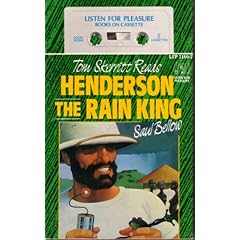
So I read Bellow this week. I made a last minute decision to swap Herzog for Henderson the Rain King, the least critically talked about of Bellow's works and I can see why. It's kind of an anti-book. Typical Bellow (anti)hero who is in a philosophical frenzy throughout most of the book with an almost manic fever that overwhelms the plot. But this time it also overwhelmed the sentences and there's none of the lyrical beauty of later Bellow. The characters oddities and actions move so quickly with so little reflection or completeness that there is little time for the nice sentences later Bellow perfected.

So Henderson the Rain King is about the white Wasp millionaire who doesn't care about his wife (his second), can't remember how many kids he has, turns his estate into a pig farm and is dealing with this voice in his head that constantly tells him "I want, I want" and won't let him be satisfied. He decides to solve his problems by going to Africa and learning how to "live" and not fear death and find satisfaction. Coming from an author who grew up poor and oppressed, before it was cool to be Jewish and a writer, it's easy to read this as a parody. However, right before it came about, Bellow wrote this article in the Times about how whacky readers are for looking too hard for symbols in literature. And then comes out with a book that could be read as a complete and utter allegory.

The book is absurdist (For example, Henderson tries to help an African tribe who has refused to use their water supply because it was infested with frogs, so he makes a bomb to kill the frogs and ends up destroying their levee, and Henderson quickly jumps town). Henderson runs around trying to "help" Africans but usually with terrible consequences, sometimes bumbling and sometimes deadly. There's no moralizing in the book, which is okay by me, but there's nothing else either, no interesting aesthetic in its place, no time or no thought anywhere. It's just a book of nothing. We follow a completely unsympathetic character in the first person for 350 pages. It kind of reminds me of the second Ace Ventura movie (i SWEAR some of the gags are the same)

Bellow majored in anthropology and sociology, so he knew what was up with the Other and the problems of primitivism. So is the book just a big joke...laughing for those who go in for the idea of this white rich man who becomes best friend with a well-educated English speaking African King who hates his own people? Is he purposefully laying red herrings throughout the book (in the first part, his daughter finds a colored baby in the back seat of a car and adopts it. After ignoring the baby's screams for weeks (SYMBOL) he finally sends his daughter back to boarding school and they return the child. He then escapes to Africa,--subtext being he didn't want to hear the cries of civil rights) But this red herring quickly gets lost in the millions of others. The whole book, I was just thinking "IS HE FUCKING WITH US??" No symbols, but symbols everywhere. What writer is this cruel?

We have no guide through the book but the likeable and hateable Henderson (and his African guide is silent most of the book and when not silent, praying for deliverance from the mad schemes his boss gets him into) It's an anti-book in the sense that it offers you zero fulfillment, a plot that leads nowhere (with an empty 'hopeful' ending, and a character who claims to be changed but you have a feeling his desires for an Other to show him the secrets of life are nowhere near to being quenched) When it's funny, it's funny in that roll-your-eyes kind of way of "is he serious??" followed by discomfort because you don't know if he or isn't and whether the joke's on Henderson or on you.

What makes this all the more troubling is that Henderson was Bellow's favorite book he wrote. And that he got into such hot water because of his comments on Africans later in his career:
"Who is the Tolstoy of the Zulus? The Proust of the Papuans? I'd be glad to read him." And it doesn't help that in general, Bellow was just kind of a dick. And that this book was rated #21 on the Modern Library's Top 100 Books. (whaaa?)

It's weird because its obvious Bellow is trying to change the novel in the same way that Nabokov is, but Nabokov hated Bellow, referring to him as a "miserable mediocrity". It's like Ellison's critique of Hemingway... Ellison critiques Hemingway for trying to unhinge Twain's dialect and style from Twain's content of the interrogation of the problems of America. And thusly, Hemingway is somewhat less than Twain for taking one lesson without the other. Hemingway's style is nice but comes across even deader than its meant to because of his lack of interest in social relationships outside of a closed system (versus Faulkner and Twain, Ellison says, whose interest in stereotypes involves accepting them in order to explode them. Hemingway doesn't even get around to accepting them, he just brushes past brutally)

While Bellow and Nabokov try to uproot the novel from it's modernist/academic swings, Nabokov does it with complex style and as well as complex content that tries to articulate something in a new way; Bellow does the beautiful style with muddled unreadable content beneath it with all the complexity and none of the moral meat to make you want to understand more. The content is complex, but instead of trying to articulate in a new way something meaningful, it tries to articulate nothing in a new way...and it's just not that good.

It's also so strange to me that so many writers praise Bellow so much. James Wood writes in his eulogy:

I judged all modern prose by his. Unfair, certainly, because he made even the fleet-footed—the Updikes, the DeLillos, the Roths—seem like monopodes. Yet what else could I do? I discovered Saul Bellow's prose in my late teens, and henceforth, the relationship had the quality of a love affair about which one could not keep silent. Over the last week, much has been said about Bellow's prose, and most of the praise—perhaps because it has been overwhelmingly by men—has tended toward the robust: We hear about Bellow's mixing of high and low registers, his Melvillean cadences jostling the jivey Yiddish rhythms, the great teeming democracy of the big novels, the crooks and frauds and intellectuals who loudly people the brilliant sensorium of the fiction. All of this is true enough; John Cheever, in his journals, lamented that, alongside Bellow's fiction, his stories seemed like mere suburban splinters. Ian McEwan wisely suggested last week that British writers and critics may have been attracted to Bellow precisely because he kept alive a Dickensian amplitude now lacking in the English novel. [...] But nobody mentioned the beauty of this writing, its music, its high lyricism, its firm but luxurious pleasure in language itself. [...] [I]n truth, I could not thank him enough when he was alive, and I cannot now.

For me, the weird thing is that all these writers mentioned by Wood are better than Bellow. I feel I should read some of the short fiction to make sure this is true, but I think it's odd that a writer that tries so hard to leave his audience cold should be the inspiration for so many writers whose goal is to make readers feel in an intellectual manner. (I dont know why this is underlined, by the way, i can't turn it off) I think Bellow was some of these writer's version of Salinger...teenage fiction that beautifully written, all aesthetic roar without an explict moral that leaves one feeling maudlin and coddled. Beat fiction without the dirty lifestyle and icky liberalness.

Monday, July 9, 2007

Naiveté, Irony, Repetition, Repetition


So I have finally started reading Paul Fussell's The Great War and Modern Memory, and I'm struck, as who wouldn't be, by this sentence at the end of his first chapter: "I am saying that there seems to be one dominating form of modern understanding; that it is essentially ironic; and that it originates largely in the application of mind and memory to the events of the Great War" (35).

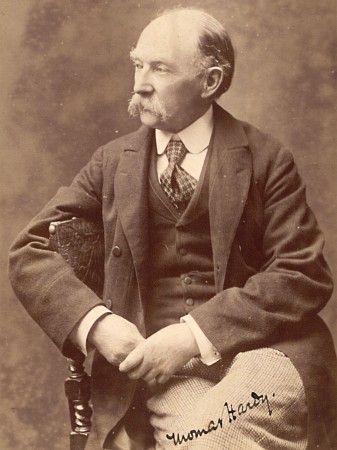
Yeah? You and what army? As always with this kind of pronouncement, it depends when, and where, you situate the "modern," and Fussell is situating it in the England of the 1910s, by which point modernity, by most people's lights, had already been going on for some forty years, if not fifty or sixty. (It's a weird experience to read critical texts semi-chronologically and see the date of the beginning of "modernity" recede further and further into the past; I think it's about at 1550 now.) All of this is just semantics, though, and doesn't affect Fussell's basic argument (in his first chapter; not in the whole book) that a form of irony associated primarily with Thomas Hardy became, as a result of the colossal social disillusionment by the events of World War I, the modern literary temperament, preparing the way for Eliot, the later Pound, and all the rest of the Modernist gloomy gusses. This irony, put in the simplest possible way, posits an innocent Before and a terrible After, with the author/speaker situated firmly on the latter side, the After (whether it be of war, modernity, death, classicism, revolution).

While not exactly disagreeing with this analysis, I'm interested in the fact that it so obviously doesn't apply to the two modernist writers I've been reading most intensively lately, namely Gertrude Stein and Guillaume Apollinaire. While Fussell locates the force of Hardy's irony in "a collision between innocence and awareness" (5), it seems to me that both Apollinaire and Stein skirt these categories in favor of a thoroughgoing, incorruptible naïveté which simply cannot be mapped on to the before/after structure Fussell sets up. This naïveté seems, more than anything else, to be what links these two seminal figures, and on Fussell's reading it is utterly opposed to the definition of "modern" sensibility that the Great War puts forward and that, on his reading, is apotheosized in a postwar modernist like Eliot. So, is it only because Stein and Apollinaire came of age well before the War that they are so invested not in knowingness (which is what irony, in Hardy's sense, is all about) but in ignorance, in lack of knowledge? Is it because they are American, and French/Italian/Polish, rather than British? Or what?
I'll start with Stein. I keep thinking of a remark made I think by Tristan Tzara in that amazing Pamphlet Against Gertrude Stein that Jeremy assigned us last semester, to the effect that Stein has a "baby style": not quite right, I don't think (she's more like an extremely excited and confident six-year-old) but close enough to suggest the lack of sophistication that Stein so willfully projects in her writing, a lack of sophistication coupled with a dogged urge to pronounce, to state, to display authority.

Two procedures seem important to Stein in maintaining this tricky balance between naïveté: repetition (yes, that again) and time-framing. I was very interested, Greg, in what you wrote a while back about Yeats "testing" his words through repetition, or, to quote you specifically, "asking his rhythm to test ideas and words til they become old in the way polished stones in creeks are old." It's tempting to apply this description to Stein as well: certainly, The Making of Americans (when it's not reminding me of a vacuum cleaner) has the feel of a verbal laboratory, in which the author tries tiny variations on a limited number of formulae, hoping to produce some long-promised extraordinary effect. But Yeats' testing, one could say, attempts to create a sort of eternal present through the construction of a usable mythic past; whereas Stein is always oddly oriented toward the future, at the expense of the past and present. What's interesting in The Making of Americans is how she continually dispels the incantatory power of her repetitions with little reminders that she's driving at something: "soon there will be a history of the Hersland children," "later it will become clearer the kind of being that each one had in them," etc. (I'm paraphrasing; you know how it is, the book's all the way on the other side of the room). These reiterations aren't allowed to seem old, or familiar, or even properly symbolic, the way Yeats' (or Eliot's or Pound's) repeated words are, because they're so obviously temporary: they're not mantras but coordinates on an enormous map we will soon (but when?) be able to step back and admire.

All this to say, Stein is not a Symbolist: where Mallarmé or Verlaine or Symons or Yeats take aesthetic pleasure in the symbol, the image and the word in and of themselves, Stein is so focused on her version of the novelist's traditional "big picture" that she refrains from putting too much weight on any one detail or image or construction. What's happening in The Making of Americans is happening sentence by sentence, but it's not happening within the sentence; and it is, for that reason, impossible to excerpt. One could say that it's happening in the next sentence, only by the time we get there it no longer is. Again and again, we confront Stein's "sometime," "someday," "soon," and, occasionally, a "now" that projects us into the next sentence or paragraph hopefully only to confront us with another delay, or another restatement. This stops being incredibly frustrating only once (and if) you begin to view Stein's progress as incremental, that is, that she is actually accomplishing what she claims to be putting off until later: viz., narrating the history of a family's progress.
Another kind of modernist naïveté is displayed by Stein's contemporary and friend Guillaume Apollinaire. Even more than poétès maudits like Rimbaud and Verlaine, Apollinaire writes a style of French that is intentionally awkward: polyglot, crude, often obscene, syntactically either overly simple or ridiculously muddled. (It may or may not be necessary to emphasize that he did this on purpose; his critical prose is perfectly literate, even elegant.) The title of his most famous volume is Alcools and I think more than a few times in it he is endeavoring to mimic drunkenness (and in the last poem he turns into the mouth of Paris and drinks the blood of Europe like wine). Like Stein, he uses repetition to an effect that is less authoritative than childlike ("Les anges les anges dans le ciel," e.g.). And he also likes to play with the time-frames of his works, most obviously in his landmark poem "La Chanson du Mal Aimé," which begins:

Et je chantais cette romance
En 1903 sans savoir
Que mon amour à la semblance
Du beau Phénix s'il meurt un soir
Le matin voit sa renaissance

(And I sang this ballad
In 1903 in ignorance
Of love's resemblance
To the Phoenix dead at evening
Resurrected by morning) (Alcools, 14-15)

Apollinaire is effectively beginning his poem with a disclaimer: this poem was written in 1903, when I knew less about the subject; I no longer feel this way. But somehow rather than undermining the lyric intensity of the poem that follows, this bizarre flash-forward heightens it (and the tension builds as Apollinaire goes on to interpolate three further poems, taking place further back in the speaker's past or in his fantasy, all of which complicate the lyrical "now" of his "Chanson"). The reason for this is that the ignorance of the speaker is exactly what conditions his utterance: it is Apollinaire's favored pose to be bewildered, melancholy, and slightly drunk-seeming, just as it is Stein's to be earnest, relentless, and positivistic. The poem works if we are affected by this state of confusion and ignorance, and identify with it. But unlike in traditional dramatic irony, where the speaker's ignorance helps us to attain a position of interpretive power over him (because we know more than he does), here the effect relies on us sharing for the most part in the speaker's ignorance, while still recognizing it as ignorance.

Like Stein, then, Apollinaire makes us feel that we aren't fully in possession of the equipment we need to read his work: that it would not just be a matter of understanding how he feels now, but also who he used to be. And of course this knowledge is not just difficult to acquire, it's impossible, and not just for us, but for the speaker himself. The proper time of understanding the poem is not now and not then, and not a simple mediation between the two (as in Hardy's customary irony). For in Apollinaire's poems, each line is an experience of its own: they float on the page, abutting but not intruding on each other (an effect which is enhanced by Apollinaire's removal of all punctuation from the book at the proof-correcting stage).

What I am (very provisionally) theorizing here is a sort of naïve irony common to Apollinaire and Stein, a chosen naïvete, one which always retains the suggestion of a state of greater knowledge to come but which prefers to write out of ignorance (thus, perhaps, anticipating Beckett and his epochal rejection of Joyce's "omniscience and omnipotence"); and that this stands apart from the essentially ironic, elegiac strain of Modernism that Fussell sees as coming to fruition during the Great War. I can't decide whether this type of irony — if it even is irony — is the opposite of Hardy's, or just a lot more complicated: for Hardy there is only before and after, now and then, while for Apollinaire there is a complex weft of nows and thens, perhaps as many as there are lines in the poem.

Question: does this kind of naïve attitude make irony, as such, impossible?

OK, I am probably sounding like Marjorie Perloff with a couple of drinks in her. Sorry to go on so long.

I haven't even gotten to Apollinaire's war poetry yet, but I think it will make a fascinating comparison with the kind of stuff Fussell writes about in his book (about which also more anon).