Showing posts with label Kenner. Show all posts

Saturday, September 27, 2008

The Spirit of Romance

"Ezra Pound once remarked to me that Shakespeare of the Sonnets may well have been 'a public letter-writer':  that's writing poetry-to-order -- a trade.  Pound told me this during the time he was imprisoned in a mental hospital in Washington, D.C.  'Sometimes,' he added, 'the guards come to me, for a piece of verse to give their sweethearts.'  'And do you write it?' I asked.  'Oh, yes.'"  (Hugh Kenner, The Elsewhere Community, pg. 150)

Say gal, happy valentine's day!  Look, I wrote ya somethin.
Aw shucks Stanley, I didn know you wrote no poetry.
Yeah, well, for a swell gal like you...
...oh Stan...it's...
Like it?
Sure I like it, but now when did you learn italian?
Aw...eh, I picked up a bit in the service.  You know.  Learned it from Uncle Sam.
Oh...I...sure.  Say, what's "usura"?
Eh...dat's, like, I wanted to say "you sura are a...nice girl" and all.
But Stanley, it's doesn't...
Oh it's just a nice thing I wrote you, why ya always gotta...What?
Stanley, most of our friends in the building are Jewish, how could you say this part here?
Lemme see that... ah shit.  Ezra Pound wrote it, alright?  Happy?
Who?

Thursday, August 30, 2007

Hugh and Ray

OK, so: two ways out of Modernist criticism: Raymond Williams and Hugh Kenner. Both start publishing in the early 50s, in England and America (via Canada) respectively, and can be seen as a sort of transition between the rapidly aging New Critical establishment and the theory-soaked generation that would emerge from the ruins of Existentialism. They both brought new intellectual leanings to the examination of familiar texts and problems and they both engaged, significantly and influentially, with Modernism — Kenner for the whole of his career, Williams at the very end of it.

Hugh first. Kenner liked the Modernists because they were geniuses, and he liked geniuses because he was one. The Marjorie Perloff quote that Adrienne posted last week noting that Kenner posited "a conjunction of literary innovation with that of the other arts, sciences, and technologies" is totally on the money: and while it's certainly a big part of his achievement and the fantastic connections he's able to make, especially in The Pound Era, it also occasionally borders on becoming a gimmick. He also, problematically, assumes that simply by virtue of living through an era in which such scientific revolutions were transpiring, men as Ludditic as Pound and Joyce must have absorbed their innovations by osmosis.

What makes up for this fast-and-loose historicism is his unquestionable awesomeness at close reading, in which he can run circles around the New Critics he succeeded (and whom he mocks in passing in A Homemade World). His typical critical method was dogged patience before the mysteries of a difficult text, coupled with complete faith that its creator had been, in every respect, on to something. (Incidentally, he has one of the most apt names in literature: over the course of his long and tireless career, more and more technical procedures, factoids and acts of random scholarship swim into his ken.) The results of this attitude are its own justification: Kenner finds and explicates problems in Ulysses and The Cantos that other readers hadn't even realized were there, and probably never would have.

But, here's the problem, as I see it, with Kenner's scientistic Modernism: if the Modernists invented a new kind of poem, then they conveniently forgot to tell us how to build one of our own; or rather, the instructions they left are so colored by the first flush of excitement at the discovery that they're often more or less indecipherable. HK admits at much by quoting at length from Williams's "explanatory" prose writing in Spring and All, which he back-handedly compliments as "homemade philosophy," but justifies thusly: "Yet as on a stage where we see nothing but a good mime leaning on the invisible mantelpiece can persuade us he knows where the fireplace would be, so Williams' gesturings around the Imagination are not random nor self-contradictory but compatible with the existence, located and perceived by him, of a reality he may not succeed in making us see" (66). The writing here is so good that you can forget what an easy time he's giving Williams, just as he does Zukofsky's "Sincerity and Objectification" in a later chapter; and, more broadly, how much he has to supply himself in order to make a coherent Modernist Weltanschauung.

In essence, then, he treated the Modernists not like scientists but like scientific phenomena, ineffably but exactly "behaving" the way molecules behave — and not like like people with ideas which could sometimes be drastically wrong. For all his emphasis on science, Kenner lacks any account of how scientific ideas are transmitted from one mind to another: it's all "Eureka" with him, all homemade breakthrough, with almost no interest in that other important aspect of science in the 20th century, the process by which radical new ideas are tested and contested in a public arena. Thomas Kuhn he ain't.

Williams, on the other hand, is all about the communication of ideas. He's considered important for, among other things, finding a synthesis of Leavisism and Marxism to combat the reactionary political climate of Britain in the 50s, which in practice meant rehabilitating the problematic ideas of "culture" and "tradition" for a progressive democratic agenda. In the late 50s and early 60s Williams became a sort of academic celebrity and spokesman for the British New Left, called by Edward Thompson "our best man" (a designation that recalls Auden's position in the mid-30s — there's something very English about this sort of left-wing hero worship, evidently). His 1958 essay "The Masses" (excerpted from the conclusion of Culture and Society), though specifically arguing against "mass-communication" and the conservative fear of a lowering of cultural standards due to the influence of film and television, can also be read as an insistence on communication over aesthetics, intelligent discourse about standards replacing — or rather, constituting — standards themselves. This is a version of Modernism, if it is Modernism, with a politics quite removed from the meritocratic bias of the Pound tradition championed by Kenner. Williams writes that "much of what we call communication is, necessarily, no more in itself than transmisson: that is to say, a one-way sending. Reception and response, which complete communication, depend on other factors than the techniques" (50). Ideas, or poetic styles, in other words, aren't just right or wrong, good or bad, or even qualitatively "of their time"; there are no self-evident "discoveries" in the realm of culture; they take hold only if they are presented and defended in such a way that the people receiving them realize their benefit. (This is close to sounding like John Dewey, but I can't tell if that's me or Williams.) Contra his Canadian contemporary's faith in "a reality [someone else] may not succeed in making us see," Williams would seem to say that there is no reality (in the realm of culture, anyway, which by any definition is where literature belongs) that is not communicated, and communicated well: not, at any rate, for other people.

Well, I hope I'm communicating some kind of reality, at least to myself (hello there, self) in the future. Bottom line: I see Kenner and Williams as engaged in two markedly different attempts to keep Modernism going, Kenner by ensuring that its texts remain influential (and readable), and Williams by keeping the communication channels it opened within the academy free and clear. Kenner makes his name by digging indefatigably into the texts of Pound, Eliot, Joyce, &c, revealing unsuspected depths in them; while, at approximately the same time, Williams takes up the philosophical concepts associated with Modernism, and particularly with Eliot — the volume's editor John Higgins notes that RW's 1958 manifesto "Culture is Ordinary" was a kind of late response to Eliot's 1948 Notes Towards the Definition of Culture — in an attempt to revise and broaden them so they can be applied to new texts and new fields of study (notably politics, sociology and film).

(And now this is really just a suggestion for further study, but it might be interesting to compare Williams and Kenner in the light of the rise of communication theory; Kenner's early association with Marshall McLuhan would be particularly important in such a narrative. And lookee here: that ever-reliable conduit of communication Wikipedia informs me that McLuhan's "interest in the critical study of popular culture was influenced by the 1933 book Culture and Environment by F.R. Leavis and Denys Thompson." It all goes back to Leavis, it appears. Gotta read Leavis now, I guess.)

Wednesday, August 29, 2007

CSI: Paterson


I spent a whole bunch of hours today in the archives! One thing on my long list of items to view was the 1934 Objectivist Press first edition of Charles Reznikoff's Testimony. A weird and wonderful book that I think Adrienne might really like. The copy in Rare Books was uncut, so I had the bizarre and thrilling opportunity to take a bone tool to the pages as I read. At this point my comments will be nowhere near so incisive, but I figured I would copy below various amazing quotations from the introductory essay by Kenneth Burke, "The Matter of the Document." The book begins with a short, comically modest note: "I glanced through several hundred volumes of old cases - not a great many as law reports go - and found almost all that follows. C.R." In the result, there's a whole other angle on Objectivism to be found here: of forensics and the "objectivity" of Law, which seems to me to be perhaps willfully muted in Zukofsky's rather easy assumption of ethical-lyrical care in "Sincerity and Objectification" and his account of "Rezi".

Before those quotes, tho, I want to give the first and last paragraphs of Testimony, to give a sense of what's going on here. The work is divided into three sections, "Southerners and Slaves," "Sailing Ships and Steamers," and "East and West." The first excerpt I give is just the first paragraph of a poem, the second is a complete section of the last poem in the book.

"Dun had been down to a sunken boat, and was coming back in his skiff about dark when he met Broadus and Lucas. He got out of his skiff, and went with them in theirs. He came back at one o'clock and when he got into bed, asked his wife where Elizabeth was. She was in the other bed in the room, but asleep, said Dun's wife, because she had called her and she did not answer. Dun then told his wife that they had shot 'Dutch,' but had not killed him. 'Dutch' was picking up wood when he was shot, and he ran and hallooed to those in the house, and cried out, 'Boys, I am shot!' Broadus, the damned fool, ran and left his hat." (1)


Do you think the first line, which is the first line of the book, recalls the opening of the Cantos? I love the sound patterns in the first line (Dun/down/sunken/coming, and the rep. of K's), but the book doesn't give an indication of what "poetic" work has been done to the extracts, so one cannot know if these are manipulations of Rezi's or felicities of the found prose. The interjection "Broadus, the damned fool" lends a sense of spoken witness and a seeming break from "objectivity" that is nevertheless still contained within the supposedly neutral, balanced gaze of the Law. (Important to point out, though: the book bears no judgments, shows no outcomes other than the often bloody remains of a crime scene - e.g. "The ax broke the teeth and left the lip hanging at one end. Ned then turned the ax in his hands and struck Ely on the back of the head with the eye of the ax and broke his skull." (6))

"As the case was turned over upon the wharf, a rattling was heard inside. The looking-glass was broken. The pieces were wedge-shaped; the cracks radiated from a center, as if the glass had been struck by a pointed instrument." (71 - "Depression" section 4, last lines of the book)


Imagine this lineated, cut out some of the verbs, and (at a stretch) you have a passable early poem by Oppen, or at least a note you'd find in an early Daybook. The cracked mirror image is an interesting one on which to end, as it suggests to me that Reznikoff is implying that law testimonies literalize and mediate the transition from realist or naturalist narratives to the "cracked mirror" of modernist prose and poetry (I know that's a bit swift, I can expand on that perhaps). This paragraph (stanza? vignette?) also, as in R's project here on the whole, reifies the evidentiary tradition of imagism, as highlighted by Kenner in The Pound Era -- the structural similarity between the "clue" or luminous detail in late Victorian detective fiction, providing a grammar with which to "read" the detritus of urban/late capitalist existence, and the imagist detail (cf. H.D.'s "Traces" in Sea Garden, on which I had meant to write something ages ago).

The cracked glass may also recall, and stand in tension with, Zuk's "Program: 'Objectivists' 1931", in which Zukofsky compares Objectivist poetry to the process of a "lens bringing the rays from an object into focus." The ref. behind both may be old lens-grinder Spinoza, about whom both Rezi and Zuk wrote poems, but if anyone (Evan, you philosophy buff you) can flesh out the bearing of that link, i'd be much obliged.

Here's Reznikoff standing on the bus:

Anyway, Burke it up!:

"As the 'scientific' quality of modern art came more and more into evidence, we began to note a progressive development of fiction towards the 'case history.' It is only recently that we have become aware of a complementary movement, the movement of the 'case history' towards fiction." (xi)


"In the end, any simplification of a human life is a fiction, and any case history is a simplification. And it is sometimes salutary for us to remind ourselves that even the vast 'world-historical' perspectives of a Spengler may be at bottom but the 'documentary substantiation' of an attitude as simple and moody as the lyric. Spengler is perhaps the ultimate instance of this process wherein a feeling or a metaphor is, by dint of industrious evidence, given massive intellectual backing. His 'morphology of history' is a poem, a pedant's dogged version of Shelley's Ozymandias, the Stimmung proper to one sonnet expanded inot a life work, plus a military pessimism that led the author to interpret existence in terms of a struggle (misleadingly called Werden, or Becoming) which necessarily made good times look like a battlefield and peace like decay." (xii)


[Reznikoff's] "profession itself [a lawyer] providing the principle of selectivity, he could leave the matter of 'truth' to the records as available." (xiii)


"'A few years ago,' he has explained, 'I was working for a publisher of law books, reading cases form every state and every year (since this country became a nation). Once in a while I could see in the facts of a case details of the time and place, and it seemed to me that out of such material the century and a half during which the United States has been a nation could be written up, not from the standpoint of an individual, as in diaries, nor merely from the angle of the unusual, as in newspapers, but from every standpoint - as many standpoints as were provided by the witnesses themselves.'" (xiii)


"In the large, however, his bare presentation of the records places us before people who appear in the meager simplicity of their complaints. They have grievances, they have brought those grievances before the law, whose abstract, forensic 'justice' will often treat their problems in a manner wholly alien to the subjective quality of their distress. And one is made to feel very sorry for them, a humane response which far too much of our contemporary literature has neglected, with its overemphasis upon dominance, conquest, the attainment or frustration of 'success.' (xiv)


"Whatever individual standpoints they may represent, be they plaintiff or defendant, interested or disinterested witness, slave or slave-owner, brutal sea-captain or recorders of his brutality, these bearers of testimony represent in the large the 'law court point of view.' In this respect Mr. Reznikoff's work embodies in miniature the problem of the 'whole truth' as it arises in a civilization marked by many pronounced differences in occupational pattern." (xv-xvi)

Tuesday, August 21, 2007

Perloff on kenner


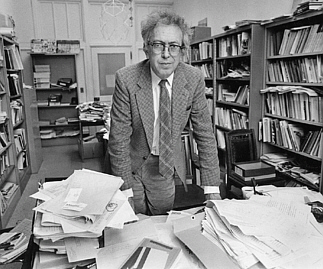
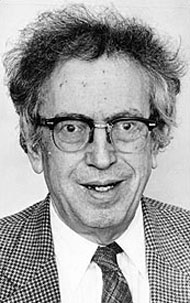
I read Perloff's article on Hugh Kenner today and found it to be really helpful. I find Marjorie Perloff in general to be just a helpful person. Am I wrong to like her so? (it's probably because she's my go to explicator for poetry. What do you poecritics think?) And who knew Kenner was so goofy looking.

A Snippet (real link at bottom):

What do these modernist poets have in common? Kenner never spelled it out, but he demanded two things from modernist literature. One was accuracy of presentation-what Pound called "constatation of fact"-which was by no means mere facticity. The other was a conjunction of literary innovation with that of the other arts, sciences, and technologies. No Modernist writer, Kenner felt, could be impervious to Einsteinian physics or to such technological inventions as the X-Ray, the Marconi wireless, the airplane, and the typewriter. In The Mechanic Muse (1987), Kenner studies the role the typewriter played in the invention of a new poetry with regard to lineation, stanza form, and page design. Thus Yeats, Kenner shows, was still a poet of the handwritten page, Pound of the typed one. And it was Kenner who established the chronology of the separate Waste Land manuscripts by studying the typewriters on which they were composed.

But perhaps the most important demand Kenner placed on the twentieth-century text-and this has not always been understood-is that it be international. To write only for or about one's countrymen was no longer enough. Here the key Kenner text is A Sinking Island (1988), a book whose dismissive treatment of twentieth-century British writing caused consternation, especially in London but also in New York, where Bruce Bawer responded with "Hugh Kenner: A Sinking Oeuvre."3 A Sinking Island argues that, unlike Continental Europe or the United States, Britain never underwent an avant-garde phase, and hence its post-World War II writing was largely tame and regressive. One can refute this argument readily; indeed, in recent years, British poetry and fiction have often been more adventurous than our own. Still, Kenner is onto something important: that the rigid class structure of England, which lasted well into the 1960s, was inimical to avant-garde innovation.

One key to understanding Kenner the critic is that he considered himself an outsider. A Canadian of Scottish-Irish descent who lost most of his hearing in childhood as a result of influenza, a Catholic convert among Protestant Anglo-Canadians, Kenner was never at home at Yale, where his Toronto mentor Marshall McEuhan sent him for his Ph.D, and even less at home in England, whose residual Imperialism and Oxbridge snobbery he found irritatingly oppressive. Not surprisingly, then, Kenner early on determined that the "real" British modernists were, with rare exceptions like D. H. Lawrence, who was working class, not English, but foreigners: James, Pound, and Eliot (American), Conrad (Polish), Ford (German), and especially the Irish: Yeats (when not engaged in theosophical mumbo jumbo), Joyce, and Beckett.


http://proquest.umi.com/pqdlink?did=907763401&Fmt=3&clientId=17210&RQT=309&VName=PQD

Tuesday, July 3, 2007

Godot, non-appearer

Also, my defense of Kenner will rest solely in the index to A Colder Eye: The Modern Irish Writers (1983), in which proper names are followed by a one-word summation of their existence. These range from the just ("Rosetti, Dante Gabriel, exhumer, 132") to the unjust ("Behan, Brendan, boozer, 9, 324") to the bizarre ("Laurel and Hardy, pseudocouple, 331").

Other faves:
  • Yeats, William Butler, founder
  • Stephens, James, leprechaun
  • Shaw, George Bernard, omniscient
  • Marlowe, Christopher, onomatechnician
  • MacNeill, Eoin, fussbudget
Does he do this in The Pound Era? Best Kenner-Indexism in the comments section, for a figure not in his index (literary or non-literary), wins a prize.

Monday, July 2, 2007

Mo' Modernism

I am loving Michael North's book 1922. It's like a sane version of Ann Douglas's very insane book on the Terrible Mongerelcy of the Jazz Age. Anyway, North talks a little bit about when Charlie Chaplin met Claude McKay (Documented in Chaplin's biography "My Trip Abroad") Apparently, "The Tropics of New York" was first published in C.K. Ogden's journal, Cambridge Magazine (Which was also one of the early publishes of Wittgenstein). Anyway, apparently Chaplin either starts or renews acquaintance with McKay and talks about how "Tropics" offered him a moment of escape from the pressures of celebrity and civilization.

North's style of scholarship really appeals to me. I guess it's because its the style of scholarship that is in right now, the kind that Jeremy and the critics we read for that class are engaged with--understanding how Modernism became "modernism" and reading against this master narrative...or at least understanding how complicated the networks of Modernism really were.

A taste. North is trying to understand the academic idea of Modernism and how it got there and why it's so valuable. North is making the argument that postmodernism, which relies on a notion of eclecticism, required the constructed foil of a modernism that was as exclusive as possible:

"Thus, the rivalry between postmodernism and modernism was read back into history, quite openly, as an antipathy between modernism and mass culture, one whose existence has always seemed more a matter of theoretical necessity than of empirical fact. The most widely influential formulation of this view, that of Andreas Huyssen, offers no specific discussion of conditions in the united States or Great Britain, and yet its conclusions are routinely repeated as if they were as applicable to Eliot as to Wagner. Thus, modernism has been transformed in the general estimation from Hugh Kenner's brilliant young technocrat into a doddering old paranoiac possessed by an 'anxiety of contamination by its other: an increasingly consuming and engulfing mass culture,' a life history that seems to match that of Howard Hughes better than that of Eliot of Joyce.


"In short, most of the scholarship that has challenged Kenner's formulation of modernism as the Pound Era has not tried to change his view but rather has begun from it. The result has been the preservation of something called 'modernism' in intellectual amber, something whose purported insulation from the cultural world into which it has introduced is now retrospectively accomplished by critical consensus. Modernism has so thoroughly come to mean that which rejects everything progressive and challenging in the early twentieth century that another term is needed, such as 'avant-garde' or even 'postmodern,' for those writers and artists friendly to change. This simply locks the modern in a tautological box, where it is what it is by definition and not by demonstration."


I'm not very far into the book yet, so who knows where it will go, but I'm thoroughly impressed so far. Also, anyone rush out and buy Rabate's 1913 book yet?