"What is an age but something to complain about?"
— Randall Jarrell, "The Age of Criticism"
Showing posts with label Jarrell. Show all posts
Showing posts with label Jarrell. Show all posts
Friday, April 10, 2009
Temporary Victory
 "The worst thing about such rhetorical devices, about any of the mechanisms and patented insights that make up so much of a style, is that they are habit-forming, something the style demands in ever-increasing quantities. The poet learns subtle variations or extensions he once would have thought unlikely or impossible; but he permits himself excesses, both quantitative and qualitative, that once would have appalled him. This is how styles and more than styles degenerate. Our victories are temporary victories; and nothing makes us more susceptible to a vice than the knowledge that we have already overcome it. (The fact that one once used an argument somehow seems to give one the right to ignore it.)"
— Randall Jarrell, Randall Jarrell on W.H. Auden, 50

Wednesday, April 16, 2008
Director's Cut
So I'm preparing my conference paper for the 26th, which is largely composed of quotations from letters by famous poets writing about little magazines, followed by tiny little commentaries from me. However, there a few choice quotes I'm not able to fit into the paper proper. Once again, legitimate academia's loss is the blogosphere's gain! Behold:
 Randall Jarrell on the Partisan Review coterie:
“Although its politics are doctrinaire and academic in that funny New York professional-left way, they haven’t prevented it from printing other groups, Stalinists excepted. It’s an awfully shrewd, professional, competent magazine, so far as the editing is concerned. The worst things about it are its extraordinary limitations and lack of imagination: everything is looked at from the point of view of someone who’s semi-Marxist, fairly avant-garde, reasonably Bohemian, anti-bourgeois, cosmopolitan, anti-Stalinist, lives in New York, likes Mondrian, etc., etc., etc. It assumes that New York is the Paris of America, that the United States is Europe all over again, a backward Europe: in fact, it’s barely an American magazine, and always sinks with a sigh of joy into the friendly harbor of Sartre, Camus, [unreadable], the great European writers. (This Sartre-Camus isn’t my joke: I heard two of the editors said to me saying that American writers would be as good as Camus and Sartre if they had a movement like existentialism to organize and inspire them.)”
 William Carlos Williams on Poetry:
“I have come to distrust the magazine Poetry. We are not fostering kindergartens and there’s no use paying good money for the sake of sentimentalizing over some new writer prodigy unless he produces. And if he does produce and is a prodigy there us [sic: is] no room for him in a mag like that because of ‘previous commitments’ with the young. It’s a rotten policy and produces unreadable drivel. The general criticism offered is litte [sic: little] better. Once in a while something does happen, of course, but that isn’t the point. The critical standards involved are woefully sophomoric. I don’t see any sense in paying good money for that. Perhaps such a first step should be retained because of its undoubtedly important history, perhaps there is no other way to serve the newcomer - keep the door open and all that. A hell of a lot of cheap stuff wanders in though. Certainly it’s unattractive to me.”
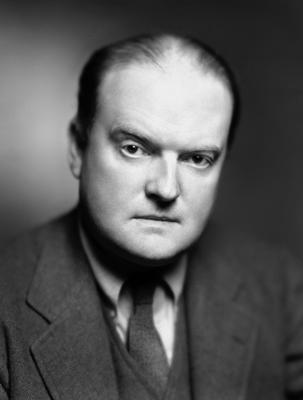 Edmund Wilson on The Kenyon Review:
“The Kenyon Review is indescribably awful.”
And on The Sewanee Review:
“Allen Tate, before he left the Sewanee, never succeeded in lifting the shadow of the influence of J.C. Ransom or being able to refuse filling its space with the writings of his cousins and aunts.”

 Similarly, Kenneth Burke on Kenyon:
“I can’t discuss the matter at any length. For, honest to God, I just don’t know. Ransom gets all the farm boys to wiping the mud off their shoes in the name of ‘nice’ thinking – and the choice seems to be between that and muddy thinking.”
And, finally, Williams on better days:
“The vistas are limitless. But had damn well better be limited if any good is to be done.
“I think I’d vote for Whitman, in his time."

Randall Jarrell on the Partisan Review coterie:“Although its politics are doctrinaire and academic in that funny New York professional-left way, they haven’t prevented it from printing other groups, Stalinists excepted. It’s an awfully shrewd, professional, competent magazine, so far as the editing is concerned. The worst things about it are its extraordinary limitations and lack of imagination: everything is looked at from the point of view of someone who’s semi-Marxist, fairly avant-garde, reasonably Bohemian, anti-bourgeois, cosmopolitan, anti-Stalinist, lives in New York, likes Mondrian, etc., etc., etc. It assumes that New York is the Paris of America, that the United States is Europe all over again, a backward Europe: in fact, it’s barely an American magazine, and always sinks with a sigh of joy into the friendly harbor of Sartre, Camus, [unreadable], the great European writers. (This Sartre-Camus isn’t my joke: I heard two of the editors said to me saying that American writers would be as good as Camus and Sartre if they had a movement like existentialism to organize and inspire them.)”
William Carlos Williams on Poetry:“I have come to distrust the magazine Poetry. We are not fostering kindergartens and there’s no use paying good money for the sake of sentimentalizing over some new writer prodigy unless he produces. And if he does produce and is a prodigy there us [sic: is] no room for him in a mag like that because of ‘previous commitments’ with the young. It’s a rotten policy and produces unreadable drivel. The general criticism offered is litte [sic: little] better. Once in a while something does happen, of course, but that isn’t the point. The critical standards involved are woefully sophomoric. I don’t see any sense in paying good money for that. Perhaps such a first step should be retained because of its undoubtedly important history, perhaps there is no other way to serve the newcomer - keep the door open and all that. A hell of a lot of cheap stuff wanders in though. Certainly it’s unattractive to me.”
Edmund Wilson on The Kenyon Review:“The Kenyon Review is indescribably awful.”
And on The Sewanee Review:
“Allen Tate, before he left the Sewanee, never succeeded in lifting the shadow of the influence of J.C. Ransom or being able to refuse filling its space with the writings of his cousins and aunts.”
 Similarly, Kenneth Burke on Kenyon:
“I can’t discuss the matter at any length. For, honest to God, I just don’t know. Ransom gets all the farm boys to wiping the mud off their shoes in the name of ‘nice’ thinking – and the choice seems to be between that and muddy thinking.”
And, finally, Williams on better days:
“The vistas are limitless. But had damn well better be limited if any good is to be done.
“I think I’d vote for Whitman, in his time."
Friday, October 5, 2007
Twee Postmodernism
 Moving
By Randall Jarrell
Some of the sky is grey and some of it is white.
The leaves have lost their heads
And are dancing round the tree in circles, dead;
The cat is in it.
A smeared, banged, tow-headed
Girl in a flowered, flour-sack print
Sniffles and holds up her last bite
Of bread and butter and brown sugar to the wind.
Butter the cat’s paws
And bread the wind. We are moving.
I shall never again sing
Good Morning, Dear Teacher, to my own dear teacher.
Never again
Will Augusta be the capital of Maine.
The dew has rusted the catch of the strap of my satchel
And the sun has fallen from the place where it was chained
With a blue construction-paper chain…
Someone else must draw the bow
And the blunderbuss, the great gobbler
Upside-down under the stone arrow
In the black, bell-brimmed hat —
And the cattycornered bat.
The witch on the blackboard
Says: “Put the Plough into the Wagon
Before it turns into a Bear and sleeps all winter
In your play-house under the catalpa.”
Never again will Orion
Fall on my speller through the star
Taped on the broken window by my cot.
My knee is ridged like corn
And the scab peels off it.
We are going to live in a new pumpkin
Under a gold star.
There is not much else.
The wind blows somewhere else.
The brass bed bobs to the van.
The broody hen
Squawks upside-down — her eggs are boiled;
The cat is dragged from the limb.
The little girl
Looks over the shoulders of the moving-men
At her own street;
And, yard by lot, it changes.
Never again.
But she feels her tea-set with her elbow
And inches closer to her mother;
Then she shuts her eyes, and sits there, and squashed red
Circles and leaves like colored chalk
Come on in her dark head
And are darkened, and float farther
And farther and farther from the stretched-out hands
That float out from her in her broody trance:
She hears her own heart and the cat’s heart beating.
She holds the cat so close to her he pants.
Monday, September 10, 2007
The indifference formal
And yet she's not just a Stevens clone: she's Stevens with a subject (quite a few of them, in fact: childhood, sex, war, motherhood, and of course race); Stevens with opinions about other people, and experiences of pain and injustice from which to draw; even Stevens with an interest in switching her technique up, and often (in fact, the only other 20th century poet I can think of with comparable stylistic versatility is Auden); in short, Stevens with an emotional ambition and range — just a fearlessness — to match the obvious technical facility. And she's also (hoping I don't sound too reactionary here) the first poet to figure out how to use the Modernist idiom as a truly effective narrative/communicative tool: that is, she writes highly wrought, subtle, varied and ambiguous verse with an awareness of the previous 50 years of poetic history which is nonetheless not the least bit obscure, or only when she really wants it to be. (Robert Lowell, on the other hand, the most praised young American poet of the 40s, tends to lack the verbal rigor of the Modernists while keeping their obscurity — an unprofitable development.)
I read Brooks' book fast and delightedly, with the aid of some caffeine stimulants (as the tone of this post may make clear) but I know I will be returning to it in the future for a more careful analysis. I also don't know too much about its critical reception (I understand it won the Pulitzer), although this page looks like an intriguing place to start. And I may still be hung up on this Stevens Era question, and thus embroiling Brooks in a thought-process-in-progress when she really deserves her own. But right now, in the heat of the blog, I'd go so far as to say that critics like Bloom, who cream all over the Emersonian philosophical posturing in Stevens' late poetry while ignoring the enormous technical and thematic potential his early work opens up, a potential fully realized only in a poet like Brooks, are just missing the point of Stevens entirely. They are, ironically, falling for his authorial persona (albeit a highly impersonal persona) rather than responding to what Stevens, surely, would have considered his key contribution: to expand the possibilities of modern poetry.
In fact, reading the heartbreaking untitled final poem in Annie Allen, which describes the understated racism of Brooks' reception in the academic world of the 1940s, it's hard not to think of Bloom and his like, carefully expatiating on the way of the world, the weight of poetic history, and the sanctity of "the line":
Men of careful turns, hater of forks in the road,
The strain at the eye, that puzzlement, that awe —
Grant me that I am human, that I hurt,
That I can cry.
Not that I now ask alms, in shame gone hollow,
Nor cringe outside the loud and sumptuous gate.
Admit me to our mutual estate.
Open my rooms, let in the light and air.
Reserve my service at the human feast.
And let the joy continue.
…
Next, the indifference formal, deep and slow.
Comes in your graceful glider and benign,
To smile upon me bigly; now desires
Me easy, easy; claims the days are softer
Than they were; murmurs reflectively, "Remember
When cruelty, metal, public, uncomplex,
Trampled you obviously and every hour…"
(Now cruelty flaunts diplomas, is elite,
Deliberate, has polish, knows how to be discreet):
Requests my patience, wills me to be calm,
Brings me a chair, but the one with broken straw,
Whispers, 'My friend, no thing is without flaw.
If prejudice is native — and it is — you
Will find it ineradicable — not to
Be juggled, not to be altered at all,
But left unvexed at its place in the properness
Of things, even to be given (with grudging) honor. What
We are to hope is that intelligence
Can sugar up our prejudice with politeness.
Politeness will take care of what needs caring.
For the line is there.
And has a meaning. So our fathers said —
And they were wise — we think — At any rate,
They were older than ourselves. And the report is
What's old is wise. At any rate, the line is
Long and electric. Lean beyond and nod.
Be sprightly. Wave. Extend your hand and teeth.
But never forget it stretches there beneath." (Blacks, 139-140)
Thursday, August 23, 2007
Jarrell on Moore

 Greg, I'm curious what you think of this passage by Randall Jarrell on Marianne Moore, written in 1945 in response to her volume Nevertheless. He's commenting specifically on her poem "In Distrust of Merits" (which is here, if you're unfamiliar with it) which Auden and others called the best war poem of WWII. Of particular interest is the end of the third paragraph, which puts Moore in the context of other Modernist poets who were reacting against the memory of the poets of the Great War.
Anyway:
"Miss Moore's war poem, 'In Distrust of Merits,' has been called the best war poem so often that it should be treated in detail.
"The title is humility, not understanding — she distrusts her own merits, but trusts, accepts almost as if she were afraid to question, those of the heroic soldiers of her poem. She does not understand that they are heroes in the sense that the chimney sweeps, the factory children in the blue books, were heroes: routine loss in the routine business of the world. She sees them (the recurring triplet is the major theme of the poem) fighting fighting fighting; she does not remember that most of the people in a war never fight for even a minute — though they bear for years and die forever. They do not fight, but only starve, only suffer, only die: the sum of all this passive misery is that great activity, War.
"Miss Moore thinks of the war in blindingly moral terms. We are fighting 'that where there was death there may be life.' This is true, in a sense; but the opposite is true in a more direct sense. She writes at the climax of her poem, 'If these great patient / dyings — all these agonies / and woundbearings and bloodshed / can teach us how to live, these dyings were not wasted'; and ends the poem with 'Beauty is eternal / and dust is for a time.' (The armies and the peoples died, and it meant that Beauty is eternal.) Since Pharaoh's bits were pushed into the jaws of kings, these dyings — patient or impatient, but dyings — have happened, by the hundreds of millions; they were all wasted. They taught us to kill others and die ourselves, but never how to live. Who is 'taught to live' by cruelty, suffering, stupidity, and that occupational disease of soldiers, death? The moral equivalent of war! Peace, our peace, is the moral equivalent of war. If Miss Moore had read a history of the European 'colonization' of our planet (instead of natural histories full of the quaint animals of those colonies) she would be astonished at nothing in the last world war, or in this one, or in the next. She would distrust us and herself, but not at the eleventh hour, not because of the war (something incommensurable, beside which all of us are good): she would have distrusted the peace of which our war is only the extrapolation. It is the peace of which we were guilty. Miss Moore's seeing what she sees, and only now, betrays an extraordinary but common lack of facts, or imagination, or something. But how honest and lovable — how genuinely careless about herself and caring about the rest of the world — Miss Moore seems in this poem, compared to most of our poets, who are blinder to the war than they ever were to the peace, who call the war 'this great slapstick,' and who write (while everyone applauds) that they are not going to be foolish enough to be 'war poets.' How could they be? The real war poets are always war poets, peace or any time.
"For this poem Miss Moore has given up her usual method, because of the emotion and generality that have overwhelmed her. I wish that she had — as the world has — taken her little animals, her bric-a-brac with all their moral and aesthetic qualities, her individuals with their scrupulous virtues, and shown them smashed willy-nilly, tortured, prostituted, driven crazy — and not for a while but forever: this is, till the day they died. As it is she has handled not these real particulars but abstractions she is unfamiliar with and finds it hard not to be heroic about; and her poem is neither good nor bad, but a mistake we sympathize with thoroughly.
"I don't want to finish my review of Miss Moore without saying what a good poet she is, and how lucky we are to have her." (Kipling, Auden & Co., 129-130, emphasis mine)
Tuesday, August 21, 2007
Change of plans
 I'm in a crisis. Originally I had planned to read English, American and a smattering of French poetry from 1870 straight through to 1970: basically the series that begins in Baudelaire and ends in John Ashbery, which we might reductively call French Poetry Coming In and Fucking With the English Tradition (or FPCIFWET for short). Piece of cake, right? In doing so, I'd hoped to avoid making a clear Modernism/Postmodernism break, basically relying on Ashbery's and the other New York Schoolers' productive re-readings of Modernism to help me tie it all up into a single revisionist Santa Claus narrative.
But now I think I need to stop at the 50s. It's just too hard to link it all together. Even by the beginning of the 40s the series is losing its internal coherence, everything is changing, you can feel it, the major Modernists are hardening into caricatures who can be toppled by the merest breeze of common-sense, England is a different England and America a different America and France is like the dozenth of a succession of different Frances, although not everybody in all of them seem to have realized it yet.
I'm reading Randall Jarrell's "The Obscurity of the Poet" today and the tone is so despairing and reactionary compared to earlier essays on Modernism and its social reception. The thing about this "early postmodern" period (let's say roughly 1940-1950) is that it can be easily overlooked because poetry doesn't actually change all that much: the work of Jarrell, Lowell, Berryman and Bishop seem pretty much like a natural outgrowth, maybe even a watering-down, of the expected Modernists like Yeats, Eliot and Auden, with Pound becoming ascendant in some of the more marginal quarters. But the self-justifications, and the climate in which such justifications seem necessary, are qualitatively different. The trajectory from Graves and Riding in 1927 (stubborn, brilliant resistance of Modernist dogma) to Burke and Wilson in 1931 (gentle skepticism about some of Modernism's larger claims combined with a firm laissez-faire attitude toward culture in general) to Jarrell in 1951 (hurt and freaked out that not just Modernism, but all poetry of all periods, is in danger of being permanently scrapped by the bourgeois democratic public) speaks volumes about the situation that eventually births full-fledged Postmodernism, in its heyday of 1960-1980, the simultaneous sprint into the arms of theory on the one hand and systematic dismantlement of Modernist prejudice and sense of superiority on the other.
Consider these representative excerpts from Jarrell's essay: "it is not just modern poetry, but poetry, that is today obscure" (3); "the poet seems difficult because he is not read, because the reader is not accustomed to reading his or any other poetry" (4); "Any American poet under a certain age, a fairly advanced age — the age, one is tempted to say, of Bernard Shaw — has inherited a situation in which no one looks at him and in which, consequently, everyone complains that he is invisible" (10); "today, many of the readers a poet would value most have hardly learned to read any poetry; and many of those who regularly read his poems have values so different from his that he is troubled by their praise, and vexed but reassured by their blame" (15); "the poet is a condemned man for whom the State will not even buy breakfast" (18); and finally, lazily, late-fortiesishly pinning it all on popular culture: "Boys who have read only a few books in their lives, but a great many comic books, will tell one, so vividly that it is easy to sympathize: 'I don't like books because they don't really show you things; they're too slow; you have to do all the work yourself.' When, in a few years, one talks to boys who have read only a few comic books, but have looked at a great many television programs — what will they say?" (19).
What these statements, en masse, add up to is an idea that Modernism, in its public character as a project of popular re-education, has utterly failed, not because of any lack of persuasiveness on its own terms but because the bottom fell out: there's no public worth convincing any more. As Jarrell himself admits, he can only be sure of this failure because he once passionately believed in such a project. (A quick perusal of his essays on Moore and Williams confirms this: he's drunk the Kool-Aid, all right.) As he puts it, "these are conclusions which I have come to slowly and reluctantly, as the world forced them on me. Would that I were one of those happy reactionaries, born with a Greek vocabulary as other children are born with birthmarks and incomes … But I had a scientific education and a radical youth; am old-fashioned enough to believe, like Goethe, in Progress — the progress I see and the progress I wish for and do not see. So I say what I have said about the poet, the public, and their world angrily and unwillingly." Even more discouraging is Jarrell's proposal for responding to this failure: "If my hearers say, 'But what should we do?' what else can I answer but 'Nothing'? There is nothing to do different from what we already do: if poets write poems and readers read them, each as best they can — if they try to live not as soldiers or voters or intellectuals or economic men, but as human beings — they are doing all that can be done" (21). In other words, the public apparatuses of Modernism are no longer worth wielding against a public that is more disinterested than it is hostile. Therefore, no more manifestoes, no more false claims to importance: the postmodern, for a while anyway, will take the path of least resistance. This is giving the argument up for dead, the argument for Modernism or for literature and art in general, not because art isn't something that can or should be argued about (Graves' and Riding's position, as I understand it) or because the argument is incorrectly framed (Burke's and Wilson's position), but because the argument is unwinnable. Which is a very different thing.
So: Postmodernism, for my purposes (for now), starts around about 1950, when all the arguments for and against Modernism (if not Modernism itself) are exhausted and familiar. There is an interregnum of a decade or so before there are theoretical issues to get worked up over again — namely, whether we ought not to do something to, and with, contemporary poetry after all — though this time they will be fought out almost entirely inside the academy, and be more markedly metaphysical than social in character.
And I need to stop here. I'm fascinated by this shift, I love some of the poetry that results from it, I want to know everything about it, but, for God's sake, you have to stop somewhere — sometimes. Plus we have World War II to worry about.
Next week I'm gonna read a lot of Hugh Kenner and try to make sense of my life.
Monday, August 20, 2007
Writers who have been hit by cars
1. John Wheelwright
2. Renato Poggioli
3. Randall Jarrell
4. Frank O'Hara
5. Roland Barthes
6. Italo Svevo
7. James Weldon Johnson (by a train, while in a car)
2. Renato Poggioli
3. Randall Jarrell
4. Frank O'Hara
5. Roland Barthes
6. Italo Svevo
7. James Weldon Johnson (by a train, while in a car)
Subscribe to:
Posts (Atom)


