That I love William Carlos Williams? I realized today that I hadn't ACTUALLY read any poems by him (though I thought I had...WRONG. Just Wheelbarrow. Can you believe that?!?!?). Anyway, because of time and whatnot, i'm only reading the small lil book edited by Pinsky. And I'm only up to some of the poems roughly around 1918, but i'm sold. Sign me up. Get me a t-shirt. Got the collected poems coming in the mail for some magical time when I have time to read more (along with Hughes, who I also feel deserves so much more time than I gave him). Honestly, I thought Wallace Stevens was a bit of a drag, so I was prepared for WCW to be draggish as well (guilty by national association). Well, that was wrong. Reading his poems makes me want to throw myself on a lawn and roll around in some daisies. And then get in a car and drive past people and make wonderful observations.
Also, read "The Man Who Lived Underground"--a short story by Richard Wright that in many ways functions as a kind of Ur-Text for Invisible Man. It's Great!!! Greg, you might be interested. It's only 60 pages or so and its trippy and out of this world and good, if you're still on the short fiction tip. It's in a book called "Eight Men".
And, finally, to wrap up this whirlwind, just finished The Color Purple. Which I always forget that i like a lot. I remember being really biased when I read it the first time as an undergraduate in a women's southern fiction class. (Where we also read Gone With the Wind and a bunch of O'Connor and Katherine Anne Porter (who by the way, needs to make her way back into the cannon). Anyway, I was prepared to write it off as sentimental, too full of feeling and womany stuff. WRONG. Perhaps its a woman in English dept. thing, but as an undergrad, i felt tremendous pressure that if I wanted to be a serious academic I had to be in the Harold Bloom camp of closed-mindedness. Alice Walker helped snap me out of that. Could Color Purple be...gasp...better than Beloved? It just might. In that way that Vonnegut just might be better than Faulkner sometimes. Who knows.
anyways, the color purple is grabbing every time. The way it is intentionally re-writing so many parts of canonical fiction. I also read Slaughterhouse Five recently and am finding all kinds of strange connections. Both Walker and Vonnegut in these books have interesting ideas on how shame and ethics work together. It's all tied up with personal responsibility, what it means to be a 'good person' in a fucked up world, how there can be room for aesthetics even if we are in an anti-aesthetic moment/era. And both need a touch (or more) of humor to make this all work out right.
Jumbled post, I know. Jumbled brain.
Saturday, September 8, 2007
Friday, September 7, 2007
Era-Prone
 Let me take this opportunity to recommend to both of you Marjorie Perloff's "Pound/Stevens: Whose Era?," the first piece in her 1985 collection The Dance of the Intellect: Studies in the Poetry of the Pound Tradition (the subtitle of which sort of gives away her answer to the essay's question, but never mind). Among other things, it's a very helpful recapitulation of where things stood Modernism-wise in the academic critical establishment of the early 80s. Basically, the findings can be summarized as follows: Pound stands for anti-Symbolism, form as content, acknowledgment of other minds, making it new, and "constatation of fact"; Stevens stands for the Romantic tradition, matter over manner (!), withdrawal from reality, "desperately triumphant humanism," and having a paraphrasable meaning. You cannot like both, or at least can't consider them both truly Modern.
Funny, this critical obsession with "eras," and with dominant figures to embody those eras; I guess this is what those New Modernist Studies people with their emphasis on "modernisms" rather than "modernism" are trying to sweep away, and good for them (us?). What seems particularly "80s" about this question to me is the assumption that canonical considerations like quality, cultural exemplarity and historical importance can be neatly subsumed under the heading of metaphysical correctness: the poet with the best theory of poetry is therefore the greatest of the era, and ergo is the only one we should read. One only needs to step back from this idea a little way to see that it's just as unsatisfactory as the idea that it's only the writers with the best political views (the closest to "ours") that we should read, which I guess was very "70s." And speaking of politics: Perloff, interestingly, ends her essay by proposing and then quickly dismissing Eliot as an alternative poster-boy to Pound and Stevens: "no one today, whether we look to critics like Bloom or Kenner or Vendler or poets like John Ashbery or James Merrill or Adrienne Rich or Allen Ginsberg, seems eager to call the first half of the twentieth century the Eliot Era." Perloff goes on to speculate that this is "because Eliot's poetry does not fully pose the problem that came to obsess Modernism: whether poetry should be lyric or collage, meditation or encyclopedia, the still moment or the jagged fragment" (23). But would it be too contrarian or anti-formalist to claim instead that this reluctance to enshrine Eliot is because his poetic and philosophical world view, objectionable and conservative as it is, actually makes sense and was well-developed and thus difficult to either answer or caricature, making him a less attractive representative for combatants in a vicious culture war than the more eccentric and reactionary Pound and Stevens? Just asking.
I want to note one other thing which really stood out, to me, in Perloff's essay: the unlikely temporary alliance between what Perloff calls "Romantic visionary humanism" (Frank Kermode, Helen Vendler) and the first wave of American deconstruction (J. Hillis Miller, Geoffrey Hartman) in the late 70s and early 80s, with Harold Bloom bridging the gap between these camps. A key part of the appeal of deconstruction to US English departments is that it let the recently discredited texts and tenets of Romanticism back into the game, under the cover of a concept to be, you know, problematized. I think in part this is a case of smuggling the poetry in with the philosophy: it's a short hop from Derrida's interest in Rousseau to Hartman's reappraisal of Wordsworth, for instance. Thus a "return of the repressed" could look like radical forward-thinking, and questions of canon formation could be shoved aside to make room for new methodological approaches to previously established texts. This is philosophically one of the meagerest, but structurally one of the most important, elements of the legacy of deconstruction in America.
On a related note, has there been any major, sustained criticism of Modernism from a deconstructionist perspective? (This is not totally a rhetorical question; there really might be some stuff I'm not thinking of.) I guess Derrida himself comes closest, having written on Kafka, Joyce, Ponge and Mallarmé, and Jonathan Culler has that book on Flaubert. Largely, though, it's remarkable how many of the big names connected with deconstruction past and present are Romanticists, or nineteenth-centuryists anyway (Miller, Hartman, de Man, Ronell, our buddy Eduardo). And given that deconstruction — it might be better just to say "Derrida" — emerged at roughly the historical point at which Modernism was shaped as a coherent canon of texts and concepts, it's particularly surprising that there hasn't been more overlap. (Marxism, on the other hand, which predates Modernism as an intellectual tradition, has had quite a lot to say about it over the years: Lukács, Benjamin, Adorno, Williams, Jameson, etc.) I guess part of the problem is that so much of the Modernists' philosophy was, as Kenner kindly puts it, "homemade": it's hard to deconstruct "no ideas but in things" because it's, um, not an idea. And so much of the scholarly work involved with Modernism, and especially with figures like Pound and Williams, has been to bring their ideas up to a certain minimal level of intelligibility, or constructedness, without which deconstruction could not begin to take place.
Hmm, this is getting pretty rambly. Maybe I'd better cut it off here. Hi, guys! Looking forward to seeing you soon!
(Final observation: we could never have "the Ashbery Era," because it's too hard to say.)

New set of skeletons
 From Erving Goffman's The Presentation of Self in Everyday Life, published in 1959, the same year as Life Studies:
"…interactive teams sometimes seem to be prepared to step out of the dramatic framework for their actions and give themselves up for extended periods of time to a promiscuous orgy of clinical, religious, or ethical analysis. We can find a lurid version of this process in evangelical social movements which employ the open confession. A sinner, sometimes admittedly not of very high status, stands up and tells to those who are present things he would ordinarily attempt to conceal or rationalize away; he sacrifices his secrets and his self-protective distance from others, and this sacrifice tends to induce a backstage solidarity among all present. Group therapy affords a similar mechanism… In-group solidarity tends to result, and this 'social support,' as it is called, presumably has therapeutic value. (By everyday standards, the only thing a patient loses in this way is his self-respect.) …
"It may be that these shifts from apartness to intimacy occur at times of chronic strain. Or perhaps we can view them as part of an anti-dramaturgical social movement, a cult of confession. Perhaps such lowering of barriers represents a natural phase in the social change which transforms one team into another: presumably opposing teams trade secrets so that they can start at the beginning to collect a new set of skeletons for a newly shared closet. In any case, we find that occasions arise when opposing teams, be they industrial, marital, or national, seem ready not only to tell their secrets to the same specialist but also to perform this disclosure in the enemy's presence." (204-205)
The second paragraph, in particular, deserves serious unpacking, which I don't quite feel up to at the moment. But I think it could be related to Adrienne's post back in July about poetry and self-display in the late 50s/early 60s.
Thursday, September 6, 2007
Fun New Game!
Prizes for best one-word half-pastoral-punning summations of a given poet's entire career/life:
Robert Frost: "wiseacre"
William Carlos Williams: "haywire"
[Note: Will also accept anagrams as a secondary fun new game.
Geoffrey Hill,
hellfire fogy,
holler effigy
ergo: hell iffy.]
Robert Frost: "wiseacre"
William Carlos Williams: "haywire"
[Note: Will also accept anagrams as a secondary fun new game.
Geoffrey Hill,
hellfire fogy,
holler effigy
ergo: hell iffy.]
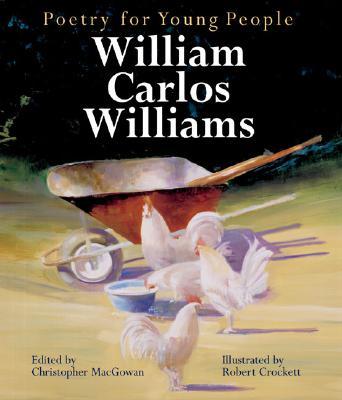
According to this, William Carlos Williams is perhaps the poorest reader of himself and others of the 20th century. Is this true? Discuss. And yes, I use Answers.com for biographical information. Solid.
Subscribe to:
Posts (Atom)


